


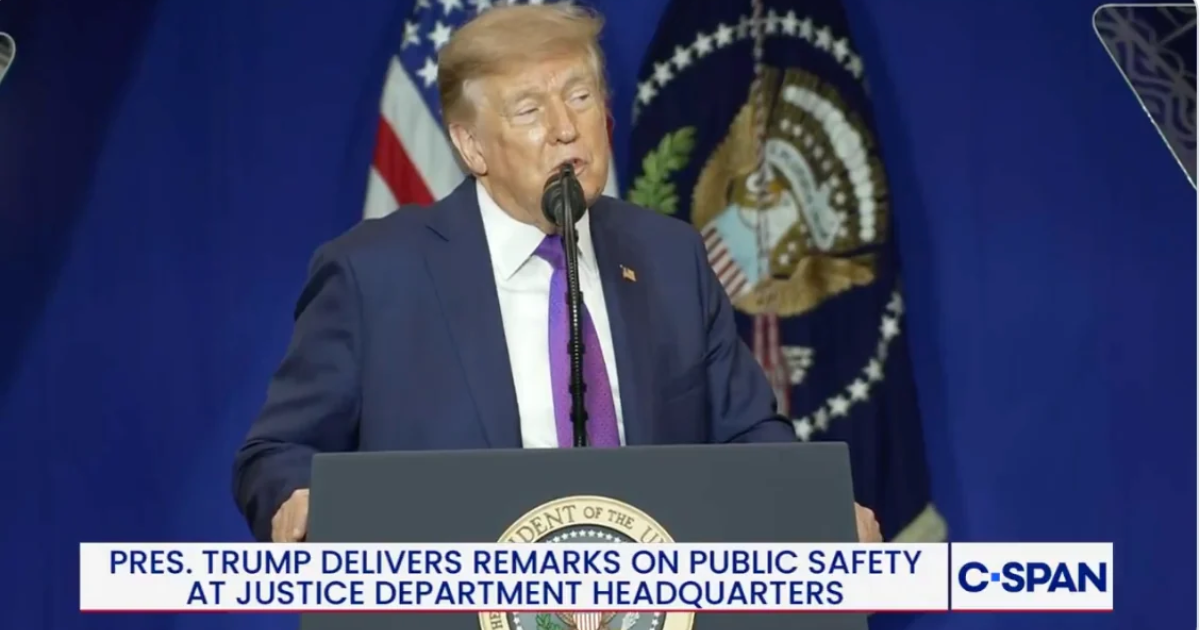
The president wants federal prosecutors to pursue capital punishment in more murder cases, accelerate executions and tighten security rules in public housing. The proposals could have significant implications for states that have abolished the death penalty and for millions of residents in federally assisted housing.
WASHINGTON, D.C., November 23, 2026 — President Donald Trump announced a new series of federal directives Monday aimed at expanding the use of the death penalty, accelerating executions and strengthening tenant screening procedures in public housing. The measures, presented during a speech at the Department of Justice, could affect federal criminal prosecutions and housing authorities across the country, including New Jersey and New York.
Speaking alongside Attorney General Todd Blanche, federal law enforcement officials and relatives of murder victims, Trump said his administration would pursue the harshest available penalties for people convicted of particularly serious crimes.
The president announced a directive ordering the Justice Department to seek the death penalty for those convicted of murdering children, as well as rapists and human traffickers who kill their victims.
He also directed federal officials to accelerate the execution of existing federal death sentences.
In a separate announcement, Trump called for stronger screening of applicants for federally assisted public housing and measures intended to make it easier to remove tenants who pose threats to their neighbors.
The announcements reflect the administration’s broader effort to strengthen federal law enforcement and reshape public safety policies.
Trump Calls for Expanded Use of the Death Penalty
The presidential memorandum signed Monday directs the attorney general to pursue federal jurisdiction and seek capital punishment in eligible cases involving the first-degree murder of minors, killings committed during rape or sexual abuse, and murders connected to kidnapping or human trafficking.
The measure expands an executive order Trump signed when he returned to office in January 2025, which directed federal prosecutors to prioritize capital punishment for certain crimes, including the murder of law enforcement officers.
The administration argues that the death penalty should be pursued more consistently in cases involving particularly violent crimes.
Trump also wants the Justice Department to move more quickly in carrying out federal death sentences.
The memorandum calls for faster consideration of appeals and other legal proceedings, opposition to litigation intended primarily to delay executions, and the elimination of unnecessary administrative delays.
Although the directive establishes a stronger federal prosecutorial policy, death sentences must still meet existing legal and constitutional requirements.
A Confrontation With California Governor Gavin Newsom
Trump’s announcement followed California Governor Gavin Newsom’s decision to commute the death sentences of 548 prisoners to life imprisonment without the possibility of parole.
The president strongly criticized Newsom during Monday’s event, arguing that the decision denied justice to the families of murder victims.
Newsom has defended his opposition to capital punishment, citing concerns about wrongful convictions, racial disparities and the fairness of the death penalty system.
The disagreement reflects a longstanding national debate over whether capital punishment serves justice and public safety.
Attorney General Todd Blanche praised Trump for fulfilling his promise to strengthen federal law enforcement.
Blanche said the administration was committed to giving prosecutors and law enforcement agencies the support needed to pursue violent offenders.
New Rules for Public Housing Tenants
Alongside the death penalty measures, Trump announced plans to tighten security procedures in federally assisted public housing.
He directed the Department of Housing and Urban Development, known as HUD, to strengthen tenant screening and make it easier for housing authorities to remove residents considered dangerous or disruptive.
The administration argues that families living in public housing should be protected from violent crime and serious threats to their safety.
Under the proposed approach, public housing authorities could face stronger expectations for reviewing applicants’ criminal histories and responding to serious misconduct by residents.
However, the precise screening standards, grounds for removal and procedures that housing authorities would be required to follow will depend on HUD’s implementation.
The announcement comes during a broader federal effort to change housing assistance rules, including eligibility verification and the administration of public housing programs.
Those policies have already generated legal challenges from state and local governments.
What Does This Mean for New Jersey and New York?
The new federal policies raise important questions for two neighboring states that have taken different approaches to criminal justice and tenant protections than the Trump administration.
Both New Jersey and New York have abolished capital punishment under state law. New Jersey eliminated the death penalty in 2007, while New York’s death penalty system had ceased operating following court rulings.
Trump’s directive does not restore the death penalty under either state’s criminal laws. Federal prosecutors, however, can still seek capital punishment in qualifying federal cases prosecuted within those states.
That distinction could become increasingly important if the Justice Department pursues more federal death penalty cases in the region.
The housing measures could have an even more immediate connection to residents.
New York City operates one of the country’s largest public housing systems through the New York City Housing Authority, while New Jersey has numerous federally assisted housing agencies serving communities such as Newark, Jersey City, Paterson and other municipalities.
Stricter federal screening and eviction requirements could change how those agencies review applicants and respond to allegations of dangerous conduct.
Newark is already experiencing significant federal intervention. Earlier this month, HUD removed the Newark Housing Authority’s governing board and assumed greater control of the agency, citing failures in management, occupancy and compliance.
Any additional federal housing rules would arrive during an already unsettled period for the city’s public housing system.
New Jersey and New York also became involved in another major housing dispute Monday when their attorneys general joined a multistate lawsuit challenging HUD’s new eligibility rules for families with mixed immigration status.
That lawsuit concerns a separate HUD policy, but it highlights the growing conflict between federal housing initiatives and state governments over who qualifies for assistance and how federal housing regulations should be enforced.
For residents of New Jersey and New York, the central questions will be how the new federal policies interact with existing tenant protections, what procedures housing authorities must follow and whether the measures produce meaningful improvements in public safety.
Legal Challenges and Questions Ahead
The death penalty and public housing announcements could produce separate legal debates.
Federal capital punishment is governed by criminal statutes, constitutional protections and judicial review. The president can direct prosecutorial priorities, but courts remain responsible for determining guilt and imposing sentences.
Housing policy involves a different legal framework, including federal regulations, state landlord-tenant laws and protections governing federally assisted housing.
Advocates for stronger screening argue that housing authorities must be able to respond quickly to violence and serious safety threats.
Tenant advocates, meanwhile, warn that overly broad screening and removal policies could unfairly penalize residents, including families who have not committed wrongdoing.
The administration has yet to establish all the operational details of the housing measures announced Monday.
Those details will determine how significantly the policies change existing practices.
A New Phase in Federal Public Safety Policy
Trump’s latest announcements bring criminal sentencing and housing security into the same broader political agenda.
The administration is seeking more aggressive prosecution of violent crimes, faster implementation of federal death sentences and stronger authority for housing agencies to address dangerous conduct.
The measures are likely to generate continued debate over public safety, constitutional protections, federal authority and the rights of residents receiving government housing assistance.
For New Jersey and New York, where capital punishment has been abolished at the state level and large numbers of families depend on federally assisted housing, the consequences could be especially significant.
The next steps will depend on how the Justice Department implements the death penalty memorandum, how HUD develops its housing requirements and whether the new policies withstand legal scrutiny.
Sources: The White House, Presidential Memorandum and Fact Sheet, November 23, 2026; Reuters, November 23, 2026; Associated Press, November 23, 2026; U.S. Department of Housing and Urban Development; New York Attorney General’s Office, November 23, 2026; Death Penalty Information Center.
By NJ RADAR Team