


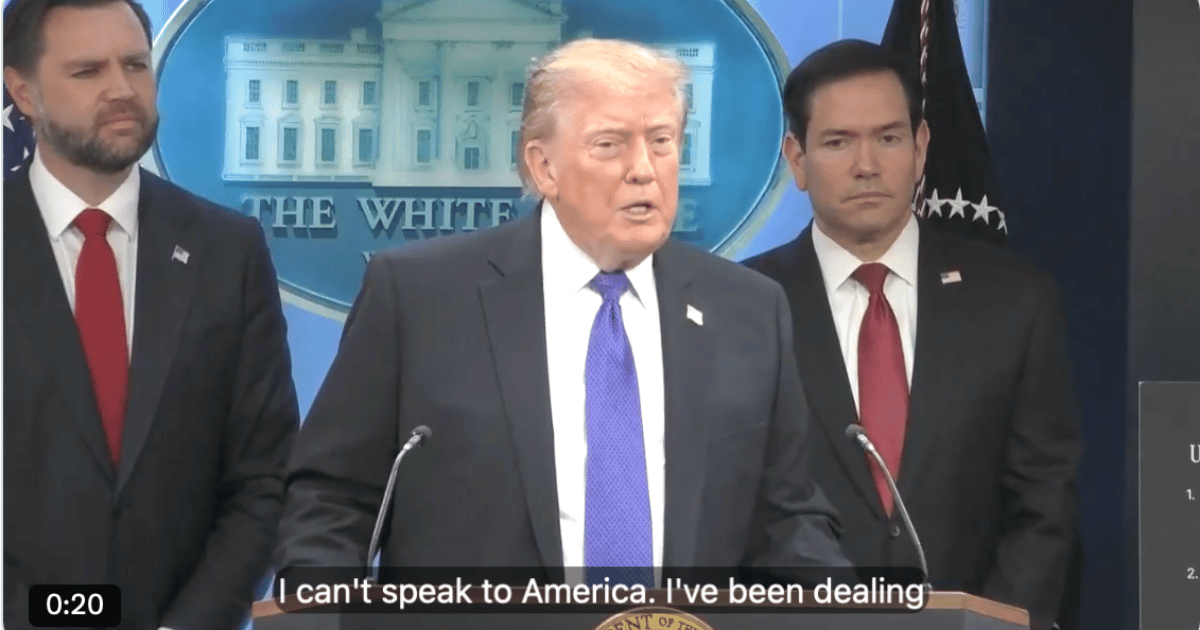
WASHINGTON, D.C. — November 20, 2026 — President Donald Trump defended his personal relationship with Russian President Vladimir Putin on Friday but avoided directly answering whether he considers Putin a friend of the United States.
The exchange took place during a White House news conference following Trump’s meetings with Putin and Chinese President Xi Jinping in China earlier this week.
CNN correspondent Kaitlan Collins questioned the president about his description of Putin as a friend, pointing to Russia’s close relationship with Iran.
“You said Putin is your friend. Russia is Iran’s biggest ally. Do you believe Putin is a friend to America?” Collins asked.
“I can’t speak to America,” Trump replied.
Rather than clarify whether he regarded Russia’s president as a friend to the United States, Trump emphasized his personal relationship with Putin.
“I consider him to be somebody that I have a very good relationship with,” Trump said, describing that relationship as beneficial to American security.
A Warm Welcome in China
Trump’s comments followed his enthusiastic greeting of Putin during an international summit in Shenzhen, China, where the two leaders met alongside Chinese President Xi Jinping.
Trump publicly referred to the Russian leader as his friend, drawing attention because of continuing tensions between Washington and Moscow over Russia’s war in Ukraine and its relationships with countries such as Iran.
During Friday’s news conference, Trump argued that maintaining personal relationships with powerful world leaders could help prevent conflict.
He also pointed to Russia’s nuclear arsenal, describing the ability to communicate directly with Putin as an important advantage.
Trump has repeatedly presented his relationships with Putin and Xi as assets in international diplomacy, particularly when discussing nuclear security and negotiations over Ukraine.
Questions About the War in Ukraine
The news conference also addressed Russia’s continuing war against Ukraine.
Trump said Putin wanted to end the conflict but suggested that both the Russian and Ukrainian presidents were struggling to reach an agreement.
He described the relationship between Putin and Ukrainian President Volodymyr Zelenskyy as deeply hostile and said the United States was attempting to help resolve the fighting.
Trump also defended his previous administration’s decision to provide Javelin anti-tank missiles to Ukraine, citing it as evidence that maintaining communication with Putin does not necessarily mean supporting Russian policies.
ABC News correspondent Rachel Scott pressed Trump about Russia’s continued military attacks on Ukraine following the summit.
Her question raised doubts about whether Putin’s stated willingness to negotiate would lead to meaningful progress toward ending the war.
Trump maintained that he believed an agreement remained possible, although he did not announce a new ceasefire or peace arrangement.
Personal Relationships Versus National Interests
The exchange with Collins highlighted an important distinction in international diplomacy: a president’s personal relationship with a foreign leader is not necessarily the same as the relationship between their countries.
Russia remains a major strategic rival of the United States, particularly because of its nuclear capabilities, its invasion of Ukraine, and its cooperation with Iran.
At the same time, American presidents have historically maintained diplomatic contact with rival governments to negotiate arms agreements, manage international crises, and reduce the risk of military confrontation.
Trump’s answer did not establish whether he considers Putin a friend or an adversary of the United States.
Instead, he returned repeatedly to the argument that his personal connections with foreign leaders strengthen America’s position.
His comments also revived debate over how personal diplomacy should influence U.S. foreign policy, especially when dealing with governments whose actions conflict with American security interests.
For now, Trump’s position on his personal relationship with Putin remains clear. Whether he considers the Russian president a friend of the United States is a question he left unanswered.
Sources: Associated Press, November 20, 2026; CNN White House news conference, November 20, 2026; Mediaite, November 20, 2026; The Washington Post, November 20, 2026.
By NJ RADAR Team