


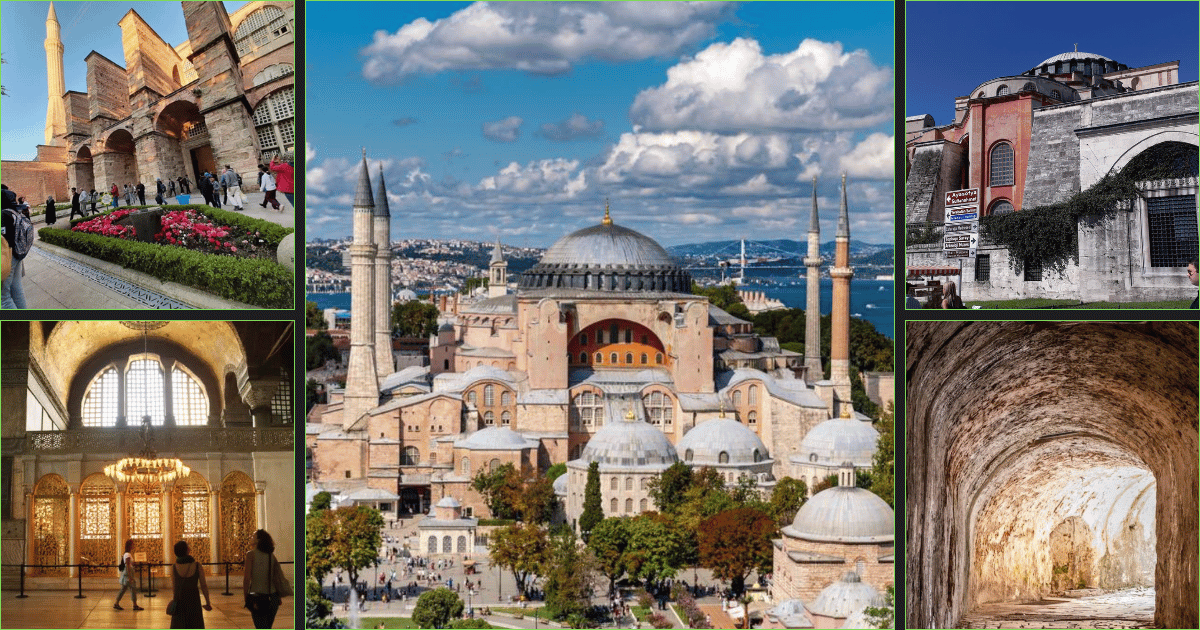
ISTANBUL, November 20, 2026 — For nearly 1,500 years, Hagia Sophia has preserved traces of different civilizations, empires, and historical eras. Yet even after centuries of study, much of its history remains unexplored. The latest discovery of 420 meters of underground passages offers another glimpse into the remarkable past hidden beneath one of the world’s most celebrated architectural landmarks.
During ongoing restoration and archaeological work, specialists cleared and documented an underground network containing nine tunnels and six chambers, removing approximately 3,000 tons of soil, rubble, and other accumulated material. Some structures may date back to the Roman period, although their precise age and original purpose have yet to be established.
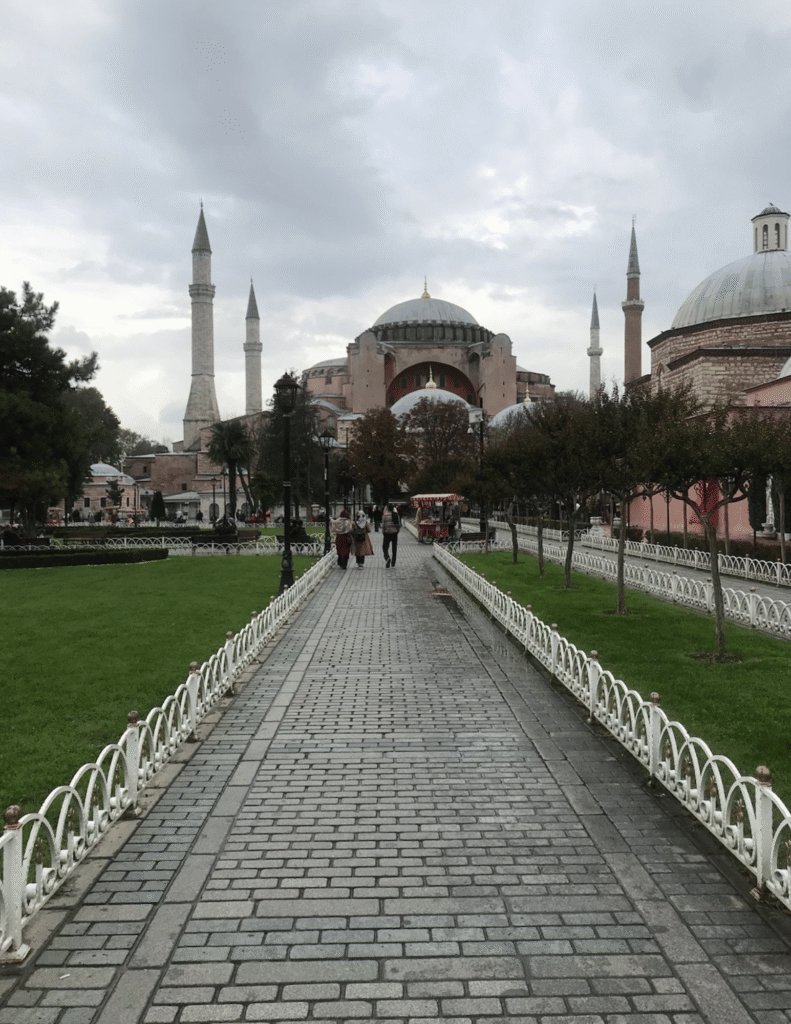
Turkish Minister of Culture and Tourism Mehmet Nuri Ersoy, who visited the underground areas, said the work is part of a broader effort to restore and preserve Hagia Sophia. Researchers have also encountered architectural layers that may predate the present building.
Hagia Sophia: A Historical Archive Written in Stone
Hagia Sophia is more than a monumental building approaching its 1,500th anniversary. It is a historical archive in which successive civilizations have left their mark. Its history survives not only in books and documents but also in columns, marble floors, mosaics, doors, walls, and passageways once used by Byzantine emperors, patriarchs, Ottoman sultans, and countless visitors.
Nearly every corner belongs to a different chapter of history.
A wide, gently sloping stone ramp leads to the upper galleries of what was once the imperial church. According to an old tradition, Byzantine emperors rode horses along this passage to reach the upper level. The ramp remains accessible today, offering a sense of how movement and ceremony were organized inside one of the Byzantine Empire’s most important buildings.
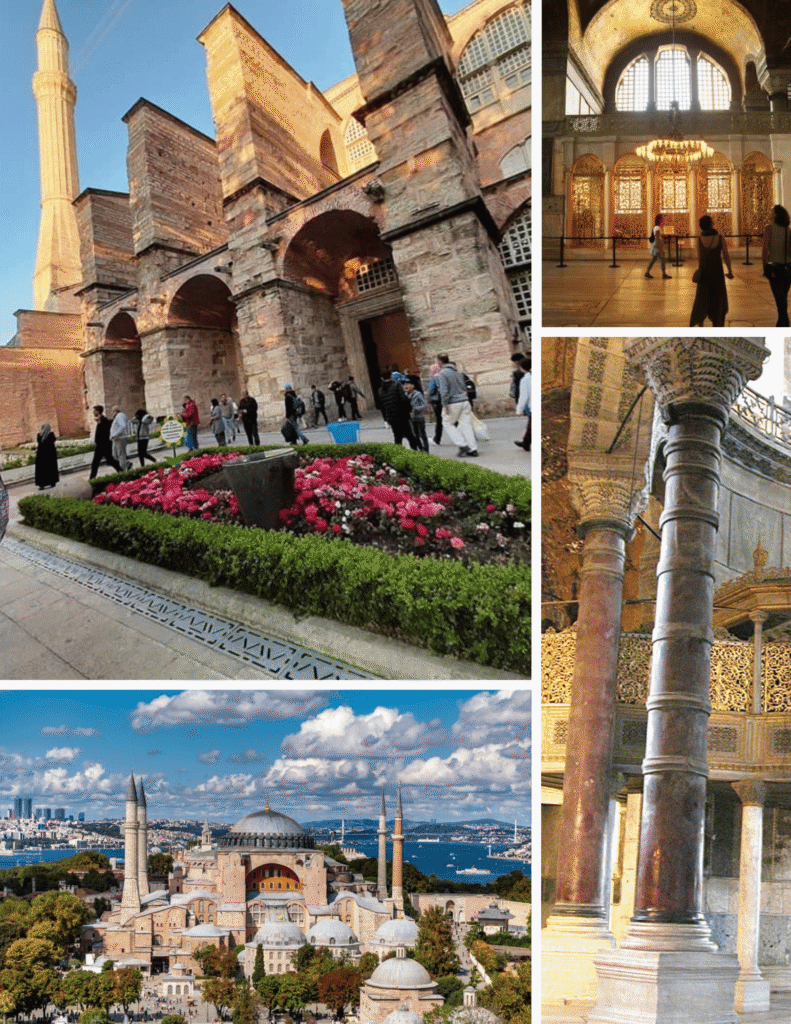
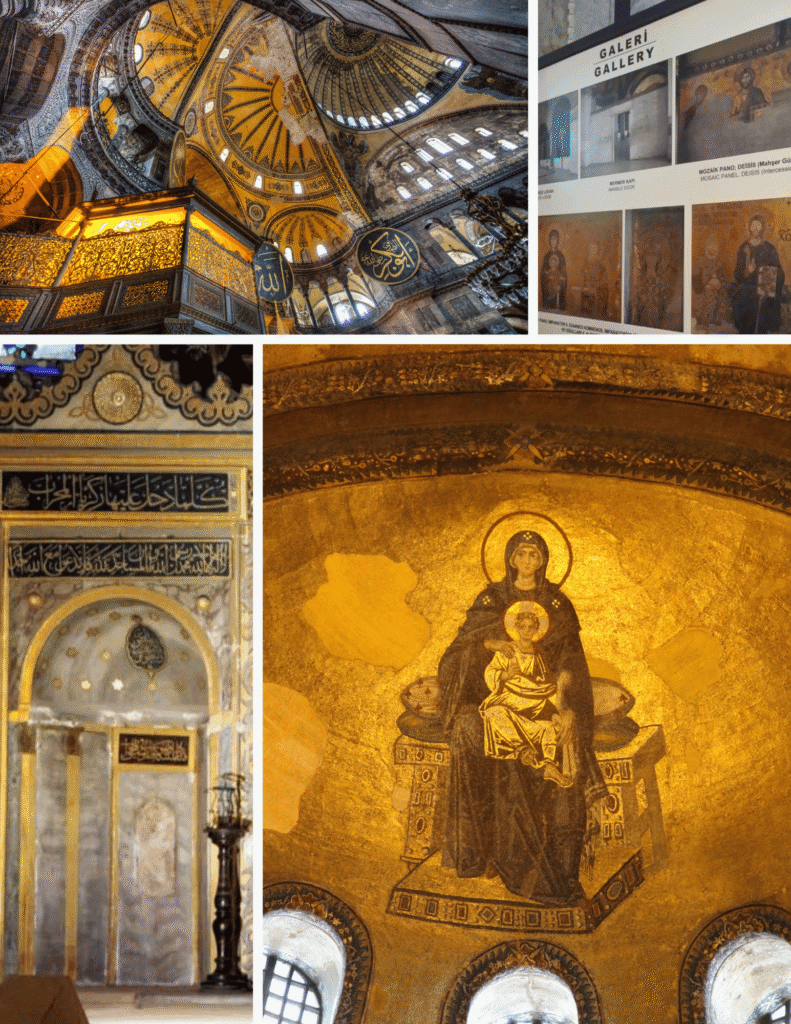
The upper galleries preserve some of the finest surviving examples of Byzantine art. Golden mosaics depict Christ, the Virgin Mary, emperors, and empresses. Among them are portraits of Emperor Constantine IX Monomachos and Empress Zoe, as well as Emperor John II Komnenos and Empress Irene. Another celebrated work is the Deesis mosaic, depicting Christ between the Virgin Mary and John the Baptist.
These images are more than religious works of art. They are portraits of the people who ruled one of the medieval world’s most powerful empires.
The Ottoman period left an equally distinctive architectural legacy. Intricately carved wooden and marble screens, the Sultan’s Lodge, monumental calligraphy, the mihrab, and the minbar reflect the centuries during which Hagia Sophia served as one of the Ottoman Empire’s most important mosques.
Particularly striking are the decorative screens and columns of the Sultan’s Lodge, along with the 18th-century Sultan’s Library, with its beautifully crafted tilework, marble, and ornamental details.
Inside the building stand monumental columns made from different types of stone and marble. Some of the construction materials came from older ancient buildings, while carved capitals and stonework provide valuable evidence of earlier architectural traditions.
Greek inscriptions, stonemasons’ marks, and graffiti have also survived on marble surfaces. Some date to the building’s construction, while others were left centuries later.
Among the most unusual are runic inscriptions associated with Scandinavian warriors who served in the Byzantine Empire. Researchers have identified the name Halfdan in one of these inscriptions.
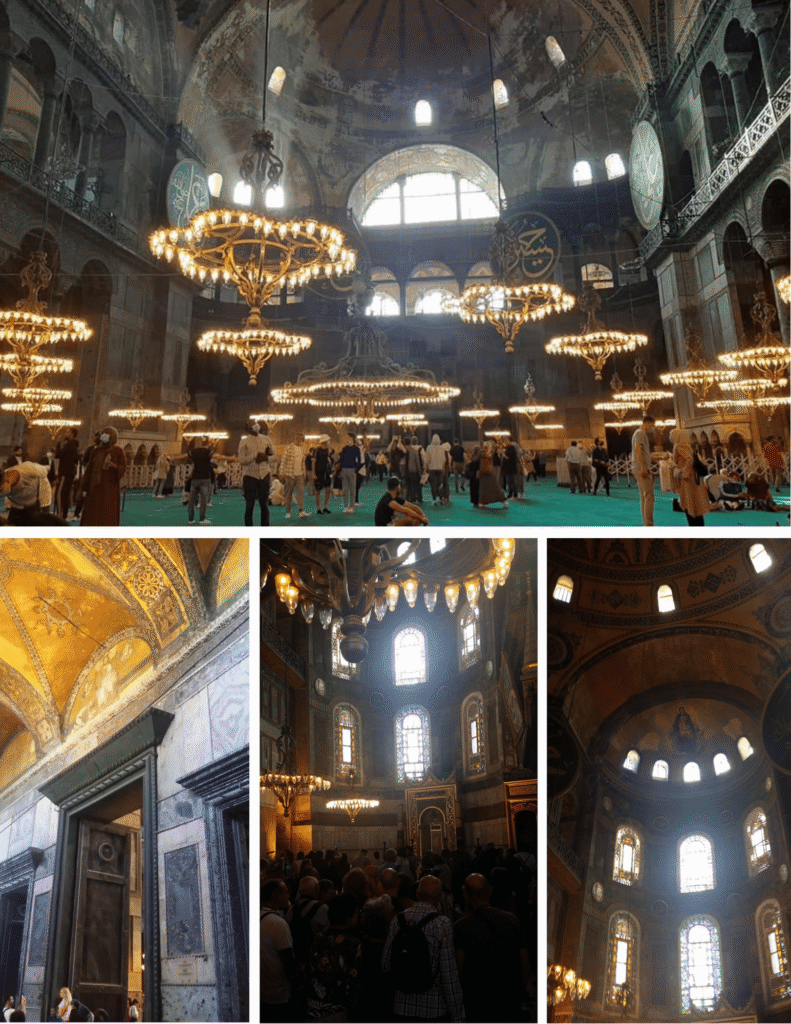
Hagia Sophia carries the signatures of countless generations, from ancient craftsmen and Byzantine rulers to Ottoman builders and visitors whose names have otherwise disappeared from history.
Its architectural details are accompanied by stories and traditions passed down through the centuries.
One of the most familiar surrounds the Wishing Column, also known as the Weeping Column, located in the northwestern part of the interior.
Part of the column is covered in bronze, and visitors have traditionally placed a thumb inside a small opening and tried to rotate their hand in a complete circle.
According to popular belief, anyone who succeeds without removing their thumb will have a wish granted. The moisture sometimes felt inside the opening is considered especially meaningful.
Other legends associate the column with miraculous healing. One tells of Emperor Justinian finding relief from a headache after leaning against it. Another connects the column with Saint Gregory the Wonderworker.
Although there is no scientific evidence for the column’s supposed healing powers, it remains one of Hagia Sophia’s best-known examples of the folklore that has developed around the building.
Built Three Times, Serving Four Main Purposes, and Restored Across the Centuries
Hagia Sophia’s history begins long before the structure that stands today.
According to some historical traditions, a pagan temple once occupied the site. However, archaeological evidence has not established that such a temple stood at this exact location.
The first major church was built in the fourth century under Emperor Constantius II, the son of Constantine the Great. Dedicated in 360, it was known as the Great Church.
That building, a basilica with a wooden roof, was destroyed by fire in 404 during unrest associated with the exile of John Chrysostom, the patriarch of Constantinople.
A second church was built under Emperor Theodosius II and dedicated in 415.
It, too, was destroyed by fire during the Nika riots in January 532, an uprising that nearly brought down Emperor Justinian I.
At that critical moment, Justinian’s wife, Empress Theodora, played a decisive role.
As the uprising spread through Constantinople, Justinian considered fleeing the city. According to the Byzantine historian Procopius, Theodora firmly opposed abandoning the throne.
In a speech attributed to her, she declared that the imperial purple made the noblest burial shroud, expressing her willingness to die rather than surrender her position.
Justinian remained in Constantinople, and the rebellion was violently suppressed.
On the ruins of the second church, he ordered the construction of a third Hagia Sophia — the building that survives today.
Construction took place between 532 and 537, an extraordinarily short period for a project of such scale and complexity.
The work was directed by Anthemius of Tralles and Isidore of Miletus, scholars whose knowledge of mathematics, geometry, and engineering made possible one of the greatest architectural achievements of late antiquity.
Its enormous dome, supported by a sophisticated system of arches and pendentives, represented a remarkable engineering accomplishment for the sixth century.
According to a later Byzantine tradition, when Justinian entered the completed church in 537, he exclaimed:
“Solomon, I have surpassed you!”
The words supposedly expressed his belief that Hagia Sophia exceeded the magnificence of Solomon’s Temple in Jerusalem.
For nearly a thousand years, Hagia Sophia was the largest church in the world, until the construction of the new St. Peter’s Basilica in Rome in the 16th century.
It was built before the formal East–West Schism of 1054, which divided the churches of Rome and Constantinople, although differences between Eastern and Western Christian traditions had developed much earlier.
Over the centuries, the building served as a Byzantine church, an Ottoman mosque, a museum, and once again a mosque. During the Latin occupation of Constantinople, from 1204 to 1261, it also served as a Catholic cathedral.
An Imperial Church, Coronations, and Legends of Hidden Passages
Hagia Sophia was no ordinary church. As the principal religious center of the Byzantine Empire, it was closely connected with the imperial court, state ceremonies, and the coronations of emperors.
Its interior was organized around an elaborate ceremonial protocol, with access to certain areas determined by a person’s position and role.
The monumental Imperial Gate was reserved for the emperor’s ceremonial entrance. Above it is a famous mosaic depicting an emperor kneeling before Christ.
Other entrances and parts of the sanctuary were reserved for the clergy, while imperial and religious ceremonies followed carefully established rules.
Ordinary worshippers did not have access to imperial chambers or areas reserved for priests, although they could attend services in parts of the church designated for the congregation.
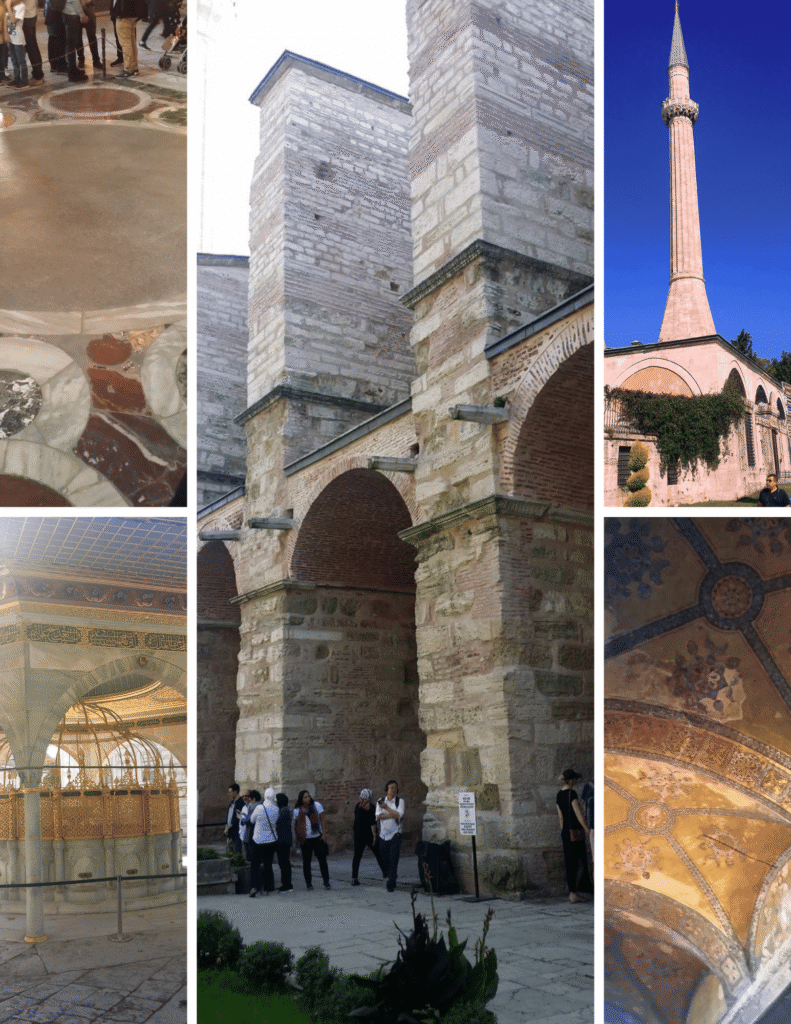
The upper galleries also played a significant role in ceremonial life. Members of the imperial court and other participants could observe religious services and processions from these elevated spaces.
Relations between the imperial government and church authorities were not always harmonious. Byzantine history includes conflicts between emperors and patriarchs, including disputes that affected rulers’ participation in religious rites.
The Imperial Gate itself is associated with an unusual legend.
According to tradition, the wood used to make the doors came from Noah’s Ark. There is no reliable material evidence supporting the claim, but the story became part of the building’s rich religious folklore.
Another tradition concerns the broad ramps leading to the upper galleries. For generations, stories circulated that Byzantine emperors could ride horses up these gently sloping passages to reach the second level.
Although historians have not established that the ramps were regularly used for horseback riding, their width and gradual incline reveal the careful planning behind movement through the enormous building.
A Monument Tested by Centuries of Earthquakes
Hagia Sophia has survived numerous powerful earthquakes, several of which caused serious structural damage.
In 558, just two decades after the church was completed, part of its great dome collapsed. Reconstruction was finished in 562, with a slightly higher dome and a modified structural design.
Another major earthquake damaged the building in 989. The Armenian architect Trdat, known for his experience with monumental construction, participated in the restoration.
Further earthquakes in the 14th century damaged the arches and sections of the dome.
During the Ottoman period, additional structural reinforcements were introduced. Particularly important were the works associated with the celebrated architect Mimar Sinan in the 16th century, which helped strengthen the building.
As a result of repeated damage and reconstruction, parts of Hagia Sophia’s dome and supporting structures differ from their original sixth-century form.
The building’s apse faces approximately east-southeast. Stories sometimes connect its orientation with the effects of centuries of earthquakes, but there is no reliable evidence that the entire structure gradually rotated from east toward southeast.
Hagia Sophia’s extraordinary survival reflects not only the skill of its original builders but also the continuing efforts of generations of architects, engineers, and craftsmen to preserve it.
Iconoclasm and the Mosaics That Survived
Natural disasters were not the only threats Hagia Sophia endured. The building also survived wars, political upheavals, and major religious conflicts.
Among them was Byzantine Iconoclasm, a period during the eighth and ninth centuries marked by intense disputes over the depiction and veneration of sacred images.
During the iconoclastic periods, many religious images were removed or destroyed, and Hagia Sophia was not exempt.
After the restoration of the veneration of icons in 843, monumental mosaics depicting Christ, the Virgin Mary, saints, and rulers again became prominent features of the church.
One of the most important surviving works is the mosaic of the Virgin and Child in the apse, publicly unveiled in 867.
Following the Ottoman conquest of Constantinople in 1453, Sultan Mehmed II converted Hagia Sophia into a mosque.
Over the following centuries, minarets, a mihrab, a minbar, imperial spaces, and other elements of Islamic architecture were added.
Many figurative mosaics were covered, while some were later uncovered and restored.
Today, these layers make it possible to study Byzantine art, Ottoman calligraphy, architecture, engineering, and the evidence of centuries of restoration within a single monument.
Hagia Sophia opened as a museum in 1935 and was converted back into a mosque in 2020. It is part of the UNESCO World Heritage-listed Historic Areas of Istanbul.
Underground Mysteries and the Legend of the Vanishing Priests
Hagia Sophia’s underground spaces have long attracted researchers, but they have also inspired extraordinary stories.
One of the best-known legends is associated with the Ottoman conquest of Constantinople in 1453.
According to the story, priests were celebrating the final liturgy inside Hagia Sophia as Ottoman soldiers entered the city.
One priest, carrying sacred objects, supposedly approached a wall that opened before him and then closed, hiding him from the approaching soldiers.
In some versions of the legend, several priests disappeared.
The story claims that the hidden priest will one day return to complete the interrupted service.
This tale survived for centuries in Greek Orthodox tradition, alongside other legends about secret chambers and underground passages supposedly connecting Hagia Sophia with former imperial palaces and distant parts of Constantinople.
There were also stories of concealed routes that allowed priests and senior church officials to move without being seen by the public.
These traditions are not historical evidence of hidden escape passages or disappearing priests, but they remain part of the cultural heritage surrounding Hagia Sophia.
That is one reason why the discovery of actual underground tunnels has attracted such interest.
What Lies Beneath Hagia Sophia?
Beneath and around the monumental building are passages, channels, cisterns, underground chambers, and other structures associated with different stages of Constantinople’s development.
The latest restoration work has allowed researchers to reach areas that were previously buried or difficult to access.
One of the cleared passages extends approximately 180 meters.
In areas known as Vezir Bahçe and Batı Bahçe, or the Vizier’s Garden and Western Garden, specialists removed accumulated material and documented underground structures.
Work continues on walls and vaults in some of these spaces. Particular attention is being paid to structural stability, construction materials, and the connections between different underground sections.
In an underground burial structure known as a hypogeum, researchers reached layers that may predate Justinian’s Hagia Sophia.
According to Minister Ersoy, specialists are trying to determine whether certain sections belong to the Roman period or to later phases of construction and restoration.
Some spaces may have changed function over the centuries or been connected to newer architectural structures.
Establishing their precise dates will require further archaeological and architectural investigation.
What Could the Tunnels Reveal?
Underground spaces in major historical buildings often served practical purposes that changed over time.
Some passages may have been used for drainage and water supply, while others could have provided storage, maintenance access, or connections between different parts of the complex.
Researchers will need to establish whether the newly examined spaces were originally built for those purposes or adapted later.
Understanding how they relate to Hagia Sophia’s foundations is especially important.
The building has survived nearly fifteen centuries of earthquakes and major reconstruction. A better understanding of its underground structures could help specialists assess its stability and plan future conservation work.
The discoveries may also provide new information about earlier buildings on the site, historical water systems, construction methods, and the urban development of Constantinople.
For now, there is no evidence linking the uncovered tunnels to legends about disappearing priests or secret ceremonies.
Their historical value lies primarily in the possibility of finding new physical evidence about the development of one of the world’s most important architectural complexes.
Will the Underground Spaces Open to Visitors?
Turkish authorities are considering whether some underground areas could eventually be opened to the public after research and necessary conservation work have been completed.
Such a project would require protective measures, assessments of the stability of walls and vaults, and carefully managed access to prevent damage to the historic structures.
For now, the priority remains documenting, studying, and preserving what has been uncovered.
For nearly fifteen centuries, Hagia Sophia has fascinated architects, mathematicians, historians, artists, and travelers. Its dome, mosaics, imperial passages, monumental columns, and Ottoman decorative features tell the stories of civilizations that shaped the city on the Bosphorus.
Despite being one of the most recognizable buildings in the world, its history has not yet been fully told.
The discovery of 420 meters of underground tunnels opens a new chapter in the study of Hagia Sophia. Beneath a monument that has connected different civilizations for nearly 1,500 years, traces of the past remain that may deepen or change our understanding of its extraordinary history.
Sources: Anadolu Agency, November 20, 2026; Euronews Türkiye, November 20, 2026; Republic of Türkiye Ministry of Culture and Tourism; The Metropolitan Museum of Art — Hagia Sophia, 532–37; Archnet — Hagia Sophia; UNESCO World Heritage Centre; Procopius — Historical accounts of Justinian and the Nika Revolt; Atlas Obscura — Hagia Sophia Wishing Column; Speros Vryonis Jr. — The Byzantine Legacy in Folk Life and Tradition.
Aziza Smailovic