


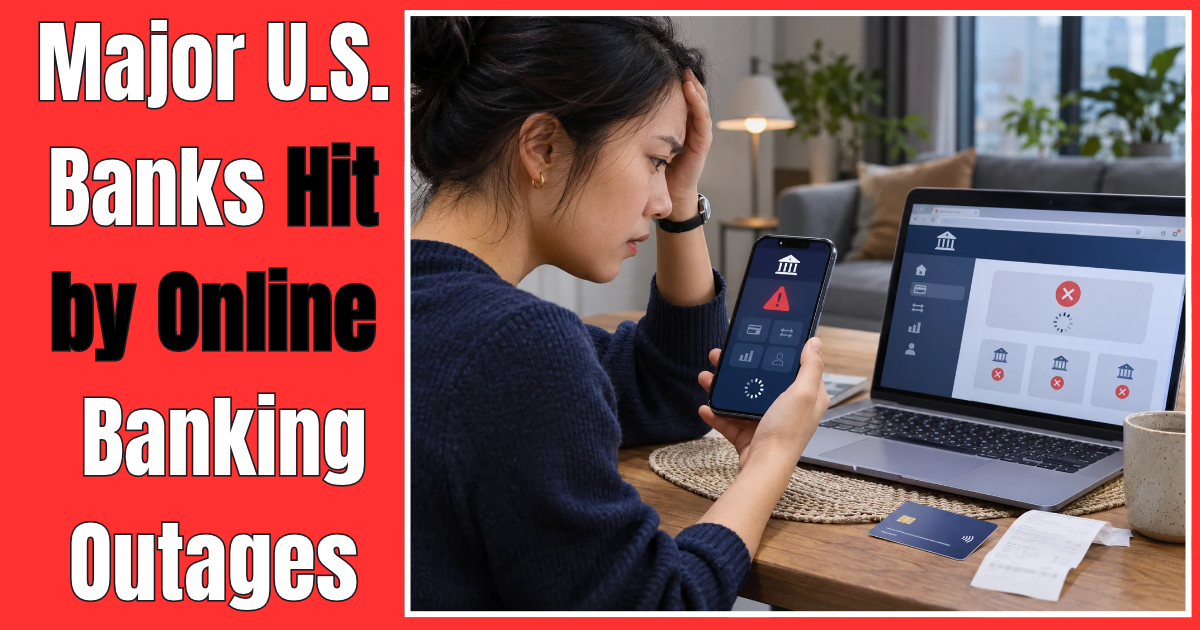
NEW YORK — Customers of several major American banks reported widespread problems accessing their accounts Monday, November 16, as technical disruptions affected online banking websites, mobile applications and some financial transactions across the United States.
The reports involved JPMorgan Chase, Bank of America, Wells Fargo, U.S. Bank and other financial services, including Zelle.
Thousands of customers turned to the outage monitoring website Downdetector to report difficulties logging in, checking account balances and completing transactions.
Chase appeared to be among the most heavily affected institutions, with more than 3,300 outage reports recorded during the disruption, according to the New York Post.
The interruptions raised concerns among customers who rely on digital banking services for everyday purchases, payments and access to their money.
Customers Report Problems Accessing Their Money
The disruption began Monday morning, with Chase customers reporting difficulties accessing their accounts through the bank’s website and mobile application.
Some users encountered error messages, while others were unable to view balances, review transactions or initiate transfers.
A message displayed to some Chase customers acknowledged that certain services were unavailable and advised them to try again later.
Chase also acknowledged an online banking issue through its customer support account on X and said it was working to restore service.
Reports of problems subsequently appeared for Bank of America, Wells Fargo, U.S. Bank and other financial platforms.
However, the number of reports varied considerably between institutions, and not every customer experienced an interruption.
Downdetector gathers reports submitted by users, meaning its figures represent reported service problems rather than a verified count of affected customers.
Chase Among the Most Affected Banks
According to outage data cited by the New York Post, more than 3,300 Chase customers reported service problems, while Bank of America and Wells Fargo together accounted for approximately 800 additional reports at the time of publication.
Other financial services also experienced smaller increases in complaints.
The interruptions affected customers in multiple states, demonstrating the potential reach of disruptions involving major national banking platforms.
For New Jersey residents, where Chase, Bank of America and Wells Fargo maintain extensive branch networks, the reports are particularly relevant to people who depend on mobile applications and online banking for routine financial activities.
Customers experiencing difficulties were advised to use official bank communication channels and avoid repeatedly submitting payments or transfers without first checking whether earlier requests had been processed.
What Caused the Banking Problems?
As of Monday afternoon, the precise cause of the disruptions had not been established.
Although several banks appeared on Downdetector at approximately the same time, authorities and financial institutions had not confirmed that the problems shared a common technical cause.
There was also no verified evidence that the outages resulted from a cyberattack.
The banking problems came shortly after other major technology disruptions affected essential services in the United States.
A Microsoft service outage beginning Friday disrupted access to business communication platforms, including Outlook and Teams.
The same day, a nationwide Federal Aviation Administration communications failure forced a temporary halt to aircraft departures, causing widespread flight cancellations and delays.
The timing of the incidents has attracted attention, but no confirmed evidence connects the banking disruptions to the Microsoft or aviation outages.
Why Online Banking Disruptions Matter
Digital banking has become an essential part of everyday financial activity.
Millions of Americans use mobile applications to deposit checks, pay bills, transfer funds and monitor their accounts without visiting a physical branch.
When those services fail, even temporarily, customers may be unable to confirm whether payments have been completed or whether scheduled transactions have gone through.
For people managing time-sensitive expenses, a disruption can create significant inconvenience and uncertainty.
However, an inability to access an account does not mean that deposited funds have disappeared or that the bank itself is experiencing financial instability.
The reported problems primarily concern access to banking services, not evidence of missing customer deposits.
What Customers Should Do
Customers who cannot access their accounts should check their bank’s official website or customer service channels for updates.
Those attempting transfers or bill payments should avoid submitting the same transaction multiple times without confirming its status.
Unexpected messages or links claiming to offer emergency access to accounts should also be treated cautiously, as scammers may exploit public concern during service disruptions.
As of the latest reports, Chase said it was working to resolve the problems, while the full extent and duration of the interruptions remained unclear.
The incident highlights how dependent modern financial services have become on digital infrastructure and how quickly a technical failure can affect customers across the country.
Sources: Associated Press; New York Post; San Francisco Chronicle; Downdetector; Chase Customer Support.
By NJ RADAR Team