


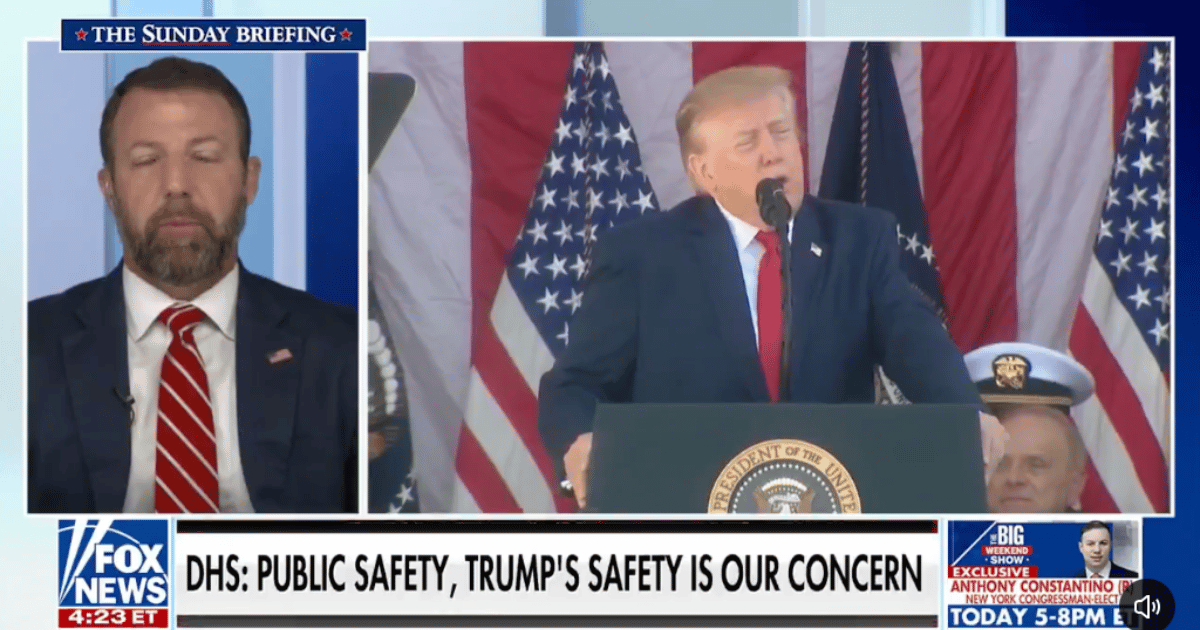
WASHINGTON, DC — President Donald Trump is preparing for a major diplomatic trip to Asia as American security officials monitor reports of a possible Iranian assassination plot involving explosive drones, while renewed Iranian attacks against U.S. military assets in the Middle East raise fears of another escalation.
The warnings come at a sensitive moment. Trump is scheduled to travel to the Philippines and China this week for meetings with Asian leaders, including a high-profile summit with Chinese President Xi Jinping and Russian President Vladimir Putin.
On Sunday, November 15, Homeland Security Secretary Markwayne Mullin acknowledged that federal authorities are closely monitoring possible Iranian threats against the president and senior administration officials.
His comments followed an Israeli media report claiming that Mossad had shared intelligence with the CIA concerning a possible Iranian operation targeting Trump and members of his administration.
Although American officials have acknowledged monitoring the threats, they have not publicly confirmed the existence of a specific, imminent assassination operation.
Israeli Intelligence Report Raises Alarm
The Israeli newspaper Israel Hayom reported on November 14 that Mossad had warned American intelligence officials about a possible Iranian plan involving drones carrying explosives.
According to the report, the alleged targets included President Trump and senior members of his administration.
The newspaper cited unidentified Israeli and American officials and claimed that additional security precautions had been introduced.
However, neither the White House nor the CIA has publicly confirmed the details of the alleged plot.
The available information does not establish that an attack is imminent or that a specific operation has been approved by Iranian authorities.
Homeland Security Secretary Responds
During an appearance on Fox News on Sunday, Mullin was questioned about the reported threats.
He said American security agencies receive intelligence concerning possible dangers to the president and his family on a regular basis.
“We watch this every single day,” Mullin said.
He also indicated that officials were familiar with concerns involving drone technology and that the United States had prepared security measures to address potential threats.
Mullin emphasized that authorities take such information seriously, even when some intelligence remains unverified.
His comments confirmed that the administration is monitoring possible threats, but they did not independently establish the specific assassination plan described by the Israeli newspaper.
Iranian Drones Target U.S. Military Facilities in Bahrain
While questions remain about the alleged assassination plot, Iran’s renewed military activity in Bahrain is a confirmed development.
On Sunday, Iran’s Islamic Revolutionary Guard Corps claimed it had launched six drones against an American air defense radar system at the Al-Rifaa helicopter base in Bahrain.
Iranian state media described the operation as retaliation for what Tehran called hostile American actions.
Bahrain’s military confirmed that its air defenses had intercepted Iranian aerial attacks, while the country’s Interior Ministry issued warnings urging residents to seek shelter.
However, American and Bahraini authorities had not confirmed Iran’s claim that the radar installation had been struck.
The incident followed another attempted drone attack on Friday, November 13.
In that case, the U.S. military said it had intercepted two Iranian drones and denied Tehran’s claim that an American radar installation had been destroyed.
Bahrain is strategically important to Washington because it hosts the headquarters of the U.S. Navy’s Fifth Fleet, which operates across the Persian Gulf and surrounding waters.
The renewed attacks come after months of conflict between Iran, the United States and Israel, despite efforts to reduce hostilities.
Trump Prepares for High-Level Meetings in Asia
The growing security concerns coincide with Trump’s preparations for a significant international trip beginning November 16.
His itinerary includes the Philippines and China, where he is expected to meet foreign leaders and discuss major diplomatic, economic and security issues.
One of the most closely watched events will be a planned meeting involving Trump, Xi Jinping and Vladimir Putin.
Nuclear arms control is expected to be among the central topics, following the expiration of the New START agreement between Washington and Moscow earlier this year.
The war involving Iran is also expected to feature in the discussions.
The timing creates an additional security challenge for American officials responsible for protecting the president during international travel.
Presidential trips already involve extensive coordination among the Secret Service, military personnel, American intelligence agencies and security services in host countries.
Any credible threat information can lead to additional precautions, changes in security arrangements or restrictions on publicly available travel details.
The specific protective measures planned for Trump’s upcoming trip have not been publicly disclosed.
A History of Iranian Threats Against Trump
The latest warnings are not the first reports concerning alleged Iranian plans to target Trump.
American authorities have previously investigated threats associated with Iran and individuals accused of planning attacks against U.S. officials.
Tensions intensified after the United States killed Iranian General Qassem Soleimani in a January 2020 drone strike in Baghdad.
Iranian officials repeatedly promised retaliation for Soleimani’s death, while American law enforcement agencies investigated alleged plots involving former and current U.S. officials.
That history provides important context for the latest warnings.
However, earlier threats and investigations do not establish that the newly reported drone plot is genuine.
Each allegation must be assessed on its own evidence.
Could the Situation Escalate?
The developments in Washington and Bahrain highlight two related but distinct security concerns.
The first involves the personal protection of the American president and senior officials.
The second concerns direct military confrontation between Iran and U.S. forces in the Middle East.
The drone attacks in Bahrain demonstrate that regional tensions remain active despite diplomatic efforts.
They also underscore the vulnerability of military installations to relatively inexpensive unmanned aircraft, even when sophisticated air defense systems are in place.
For Washington, a successful attack on American personnel or facilities could create pressure for another military response.
For Iran, additional confrontation could undermine prospects for negotiations and increase regional instability.
At present, however, there is no publicly verified evidence connecting Sunday’s attacks in Bahrain to the alleged assassination plan against Trump.
The two developments should therefore not be treated as parts of a single coordinated operation without further evidence.
Security Questions Remain Ahead of Departure
As Trump prepares to leave Washington, U.S. officials face the task of maintaining presidential security while responding to renewed Iranian military activity in the Gulf.
The administration has acknowledged that threats are being monitored, but significant questions remain unanswered.
Is the alleged assassination plan supported by independently verified intelligence? Have specific targets or operational preparations been identified? And could the latest attacks in Bahrain lead to further military confrontation?
For now, the clearest confirmed developments are the Iranian drone attacks intercepted by Bahrain, the American government’s continued monitoring of possible threats and Trump’s scheduled diplomatic trip.
The concern is real, but the alleged assassination plot remains unconfirmed. As the president prepares for meetings with some of the world’s most powerful leaders, the distinction between verified intelligence and speculation is especially important.
Sources: Reuters; Associated Press; CBS News; Israel Hayom; Iran International; The Washington Post; U.S. Central Command; U.S. Department of Homeland Security; The Wall Street Journal.
By NJ RADAR Team