


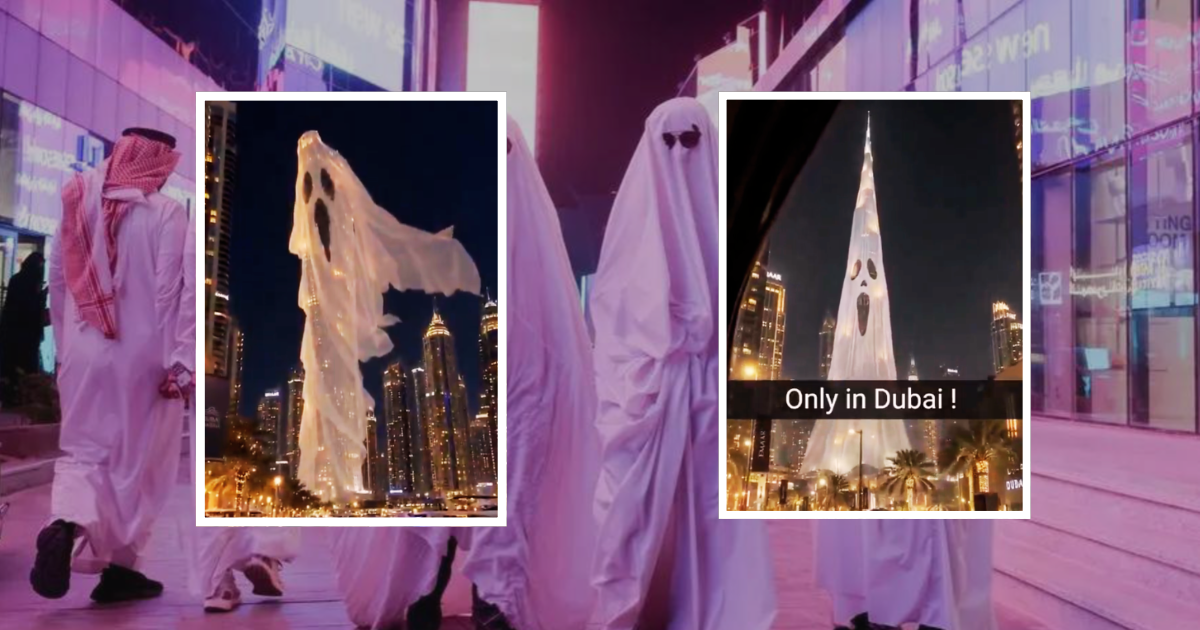
DUBAI / RIYADH, November 1, 2026 — Halloween celebrations are becoming increasingly visible in parts of the Middle East, including the United Arab Emirates and Saudi Arabia, where a holiday traditionally associated with Western culture is finding a place in shopping centers, restaurants, hotels, and entertainment venues.
This year’s celebrations brought costumes, ghost-themed decorations, family activities, and elaborate entertainment to Dubai and Riyadh, reflecting changing approaches to international cultural traditions in the Gulf region.
While Halloween is not a traditional Islamic celebration or an official public holiday in either country, its growing commercial presence illustrates how entertainment, tourism, and globalization are influencing social life.
Dubai Turns Buildings and Entertainment Venues Into Halloween Attractions
Dubai, already known for its elaborate seasonal decorations and international entertainment events, marked Halloween with activities throughout the city.
Social media videos circulating during the holiday showed unusual ghost-themed decorations, including what appeared to be buildings draped in large white coverings resembling giant cartoon ghosts.
The displays recalled Casper, the friendly ghost popularized through American animated films and television.
Beyond the striking visual decorations, Halloween-themed entertainment was offered at hotels, restaurants, shopping centers, and amusement parks.
MOTIONGATE Dubai organized its annual Fright Nights experience, while LEGOLAND Dubai introduced seasonal activities for families.
Restaurants and entertainment venues across the city also hosted costume competitions, themed dinners, and special performances.
In Dubai, Halloween has increasingly become part of the city’s international entertainment calendar, particularly in businesses catering to tourists, expatriates, and families.
Halloween Celebrations Reach Saudi Arabia
Perhaps more surprising is the growing visibility of Halloween-related activities in Saudi Arabia, a country where such celebrations were historically discouraged and were largely absent from public entertainment.
In Riyadh, restaurants, hotels, and entertainment centers organized Halloween-inspired events throughout the final days of October.
The celebrations included costume parties, pumpkin decorations, family workshops, themed dinners, and children’s entertainment.
Among the venues advertising Halloween activities were the Ritz-Carlton Riyadh, Fairmont Riyadh, and several restaurants and recreational facilities.
The events reflect broader changes in Saudi Arabia’s entertainment sector, which has expanded significantly in recent years.
However, Halloween has not become an official Saudi holiday, and participation remains a personal or commercial choice rather than a national tradition.
From Restrictions to Commercial Entertainment
Saudi Arabia’s changing approach to public entertainment has attracted international attention.
For decades, Halloween celebrations were uncommon in the kingdom, partly because of religious and cultural objections to the holiday.
In recent years, however, costume events and themed entertainment have become more visible.
In 2022, Riyadh hosted a widely reported event called Scary Weekend, where participants dressed in costumes and attended Halloween-style celebrations.
The event became a symbol of the kingdom’s expanding entertainment industry and changing public social environment.
By 2026, Halloween-themed activities were being advertised by numerous restaurants, hotels, and family entertainment businesses.
A Cultural and Religious Debate
Halloween originated from historical European traditions and later developed into a widely commercialized holiday, particularly in the United States.
Today, it is often associated with costumes, pumpkins, candy, haunted attractions, and entertainment rather than religious observance.
Nevertheless, Halloween is not part of Islamic religious tradition, and some Muslims object to celebrating it on religious or cultural grounds.
Others view modern Halloween activities primarily as secular entertainment.
These different perspectives demonstrate that growing commercial participation does not necessarily mean the holiday has gained universal cultural or religious acceptance.
The distinction is particularly important in Saudi Arabia and the United Arab Emirates, where religious traditions continue to play an important role in society.
Global Entertainment Meets Local Traditions
The appearance of Halloween celebrations in Dubai and Riyadh illustrates a broader trend in which international entertainment traditions increasingly cross cultural and geographic boundaries.
Tourism, social media, international businesses, and the expansion of leisure industries have contributed to the visibility of events that were once uncommon in parts of the Gulf.
For some residents, these celebrations provide opportunities for creativity, family activities, and social gatherings. For others, they raise questions about cultural identity and the influence of foreign traditions.
Halloween’s growing visibility in the Gulf does not mean that it has become a traditional or universally accepted celebration. Instead, it reflects the changing relationship between local customs, global entertainment, and commercial culture in two rapidly evolving societies.
Sources: Condé Nast Traveller Middle East, October 2026; What’s On Dubai, October 2026; What’s On Saudi Arabia, October 27, 2026; Destination Saudi, October 29, 2026; United Arab Emirates and Saudi Arabian entertainment coverage.
By NJ RADAR Team