


Artificial intelligence is becoming one of the biggest dividing lines in education. Some U.S. school districts have paused or restricted student access to certain AI tools while they work through concerns about privacy, cheating, safety and how much technology should be involved in learning. New York City and Los Angeles, for example, have paused some student AI use while reviewing those questions. At the same time, other American schools are actively introducing AI into classrooms rather than banning it.
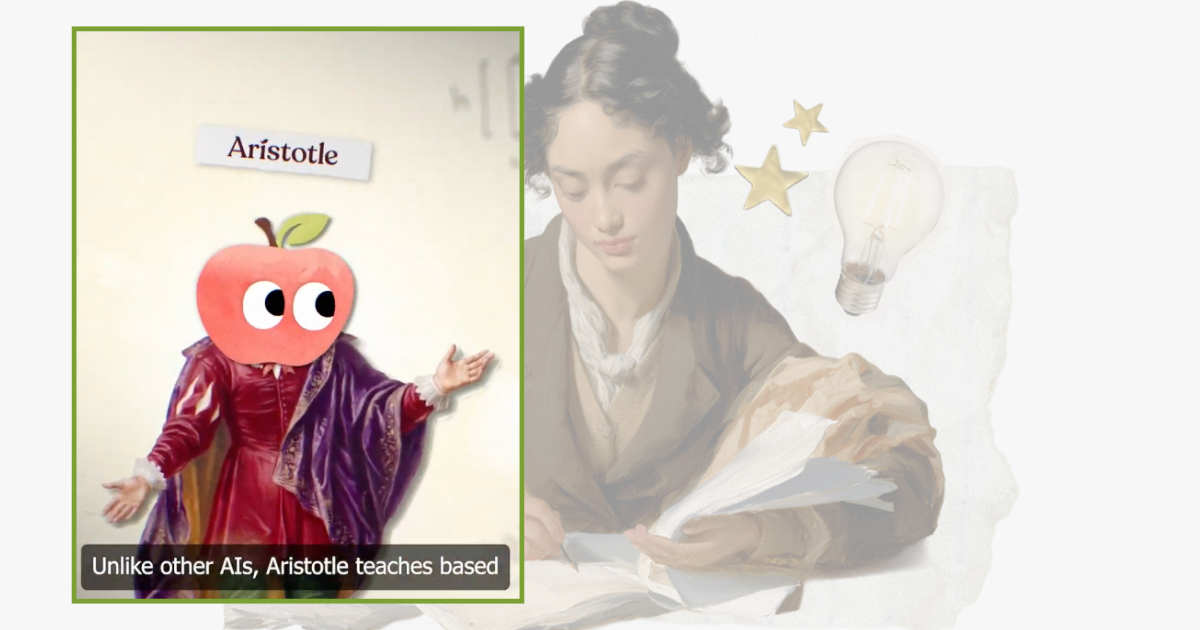
Against that backdrop, a promotional post for a new AI tutoring platform called Aristotle is making a much more provocative argument: while America debates restrictions, China is moving aggressively to integrate AI into education and prepare students for an AI-driven future.
The slogan is intentionally dramatic. The claim that America is “banning AI in schools” is too broad, and the phrase that China is using AI to create “geniuses” is promotional rather than a measurable educational conclusion. But the post points to a real debate over whether schools should restrict AI or teach students how to use it effectively.
What Is Aristotle?
Aristotle is an AI tutor designed for students in grades 6 through 12. Its creators say the goal is not to function like a conventional chatbot that simply provides an answer, but more like a private tutor that guides students through the reasoning process.
Students can speak to Aristotle instead of only typing. The system listens to how they explain a problem, asks follow-up questions and provides hints rather than immediately giving away the solution.
It also includes a shared digital whiteboard where the AI can draw diagrams, graph functions, balance equations and work through mathematical or scientific problems visually.
Another important feature is memory across tutoring sessions. Aristotle says it tracks the skills a student has already mastered, identifies missing prerequisite knowledge and uses that information to decide where to begin the next lesson. Parents can also receive session summaries showing what the student worked on and where difficulties occurred.
The platform currently covers subjects including mathematics, physics, chemistry, biology, English, history, world languages, AP courses and SAT/ACT preparation. Its creators say the system is built around Socratic-style teaching — asking students questions and pushing them to explain their thinking rather than treating AI as a shortcut for homework.
The Larger Education Debate
The emergence of tools like Aristotle reflects a much larger question facing schools: Should AI be kept away from students because it can do their work for them, or should students be taught how to use it as part of learning?
That debate is far from settled in the United States. Some districts are tightening rules, while others are experimenting with AI tutors, classroom assistants and personalized learning platforms. Even the federal debate over AI increasingly revolves around whether strict restrictions could leave the United States technologically behind China.
Aristotle’s promotional message clearly takes one side of that debate: AI should not replace learning, but it should become part of how students learn.
Whether AI tutors ultimately improve education will depend on evidence that goes beyond promotional claims. But one thing is already clear: the question facing schools is rapidly shifting from whether students will use AI to how they should use it.
Tags: Artificial Intelligence, AI Education, Aristotle AI, AI Tutor, Education Technology, U.S. Schools, China, Students, Personalized Learning, Future of Education
Sources: Aristotle | Associated Press | Reuters
By NJ RADAR Team