


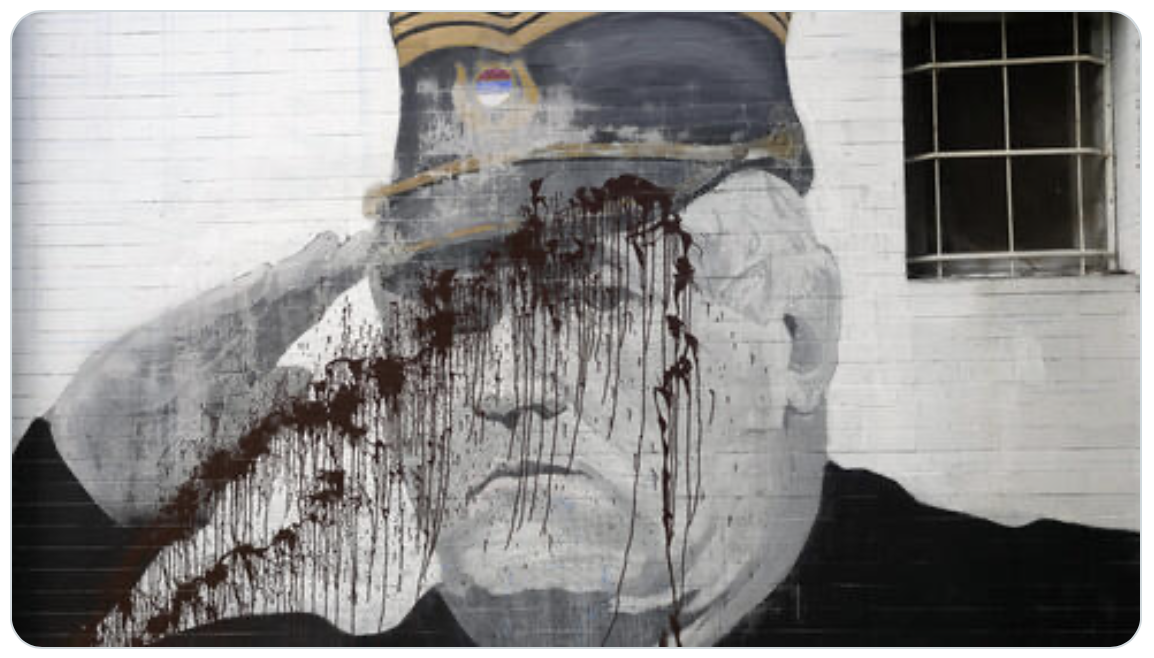
Israeli outlet Ynet Global described Ratko Mladić in stark terms: “The ‘Butcher of Bosnia’”, writing that the former Bosnian Serb military commander terrorized Sarajevo and oversaw the Srebrenica genocide, where more than 8,000 Bosniak men and boys were murdered while the international community failed to stop the killings.
The article’s headline — “The ‘Butcher of Bosnia’: Ratko Mladić and the Genocide Europe Failed to Stop” — reflects the historical record established not merely by journalists or political opponents, but by international courts.
Convicted of Genocide, Crimes Against Humanity and War Crimes
Mladić died on August 27, 2026, while in United Nations custody in The Hague, where he was serving a life sentence.
He was convicted in 2017 by the International Criminal Tribunal for the former Yugoslavia, and his conviction and life sentence were upheld on appeal in 2021.
His final convictions included genocide in Srebrenica, crimes against humanity and violations of the laws or customs of war. The crimes included persecution, extermination, murder, deportation and forcible transfer, as well as terrorizing Sarajevo’s civilian population, unlawful attacks on civilians and taking United Nations personnel hostage.
In Srebrenica alone, more than 8,000 Bosniak Muslim men and boys were systematically murdered after the enclave, which had been declared a United Nations “safe area,” fell to Bosnian Serb forces in July 1995. International courts determined that the killings constituted genocide.
Mladić was also held responsible for his role in the nearly four-year siege of Sarajevo. Reuters notes that approximately 10,000 people were killed during the siege, in which civilians were subjected to sustained shelling and sniper fire.
From a UN Prison to Serbia on a Government Plane
What happened after his death has now created a new controversy.
Mladić’s body was transported from the Netherlands to Belgrade aboard a Serbian government aircraft. His coffin was draped in the Serbian national flag and was received by relatives and Serbian government officials. Serbia’s justice minister was involved in the return of the body, while the coffin was taken for procedures at a military hospital.
This was therefore far more than the quiet return of a body arranged solely by a private family.
The Serbian state provided its aircraft and officials for the return of a man who died while serving a final international conviction for genocide and other war crimes.
A military commemoration has also been announced in Belgrade ahead of his burial. AP reports that his return and the military component of the commemoration have already caused international outrage.
The Serbian government has, however, not formally declared the funeral a state funeral, an important distinction when describing the event precisely.
Crowds Welcome a Convicted War Criminal as a Hero
Perhaps even more disturbing for survivors and victims’ families is the public glorification accompanying Mladić’s death and return.
Mladić continues to be celebrated by sections of Serbian society as a military hero despite the final judgments of the international tribunal. Reuters notes that he remains revered among many Serbs, while public displays honoring him have continued following his death.
DW reports that murals glorifying Mladić remain widespread across Serbia, illustrating how deeply his public heroization has become embedded in parts of society.
Following his death, supporters publicly gathered, displayed Serbian flags and messages praising him, and celebrated a man whose responsibility for genocide and other crimes is not an allegation awaiting trial. It is the conclusion of a final international judgment.
Yet this public glorification has been able to take place openly. There has been no broad state effort to prevent the public celebration of Mladić as a hero; instead, Serbia’s own institutions have participated in the ceremonies surrounding the return of his body.
Europe Responds
The controversy has already produced diplomatic consequences.
EU Enlargement Commissioner Marta Kos canceled a planned visit to Serbia, specifically criticizing the glorification of Mladić and saying that such conduct contradicts the European principles of reconciliation and respect for victims of war crimes.
The reaction is significant because Serbia remains a candidate for European Union membership.
UN Secretary-General António Guterres has also called for respect for the tribunal’s judgments and historical truth and condemned both genocide denial and the glorification of convicted war criminals.
A Judgment That Did Not Die With Mladić
Ratko Mladić died in prison.
But the judicial record did not die with him.
He was not merely a controversial general, nor simply a commander accused by his wartime enemies. He was a finally convicted war criminal sentenced to life imprisonment for genocide, crimes against humanity and war crimes.
That is why the images now coming from Serbia matter.
A government aircraft carrying his body, a Serbian flag covering his coffin, military involvement, public commemorations and crowds celebrating him as a hero are not simply questions about funeral customs.
They raise a much larger question about how a society and its institutions confront — or refuse to confront — crimes that have already been established beyond reasonable doubt by an international court.
Sources: Ynet Global; Reuters; Associated Press; International Residual Mechanism for Criminal Tribunals (IRMCT); Deutsche Welle
By NJ RADAR Team