


Rosh Hashanah, the Jewish New Year, is one of the most important holidays in the Jewish calendar. It marks the beginning of the High Holy Days, a period of reflection, prayer, renewal and preparation for Yom Kippur.
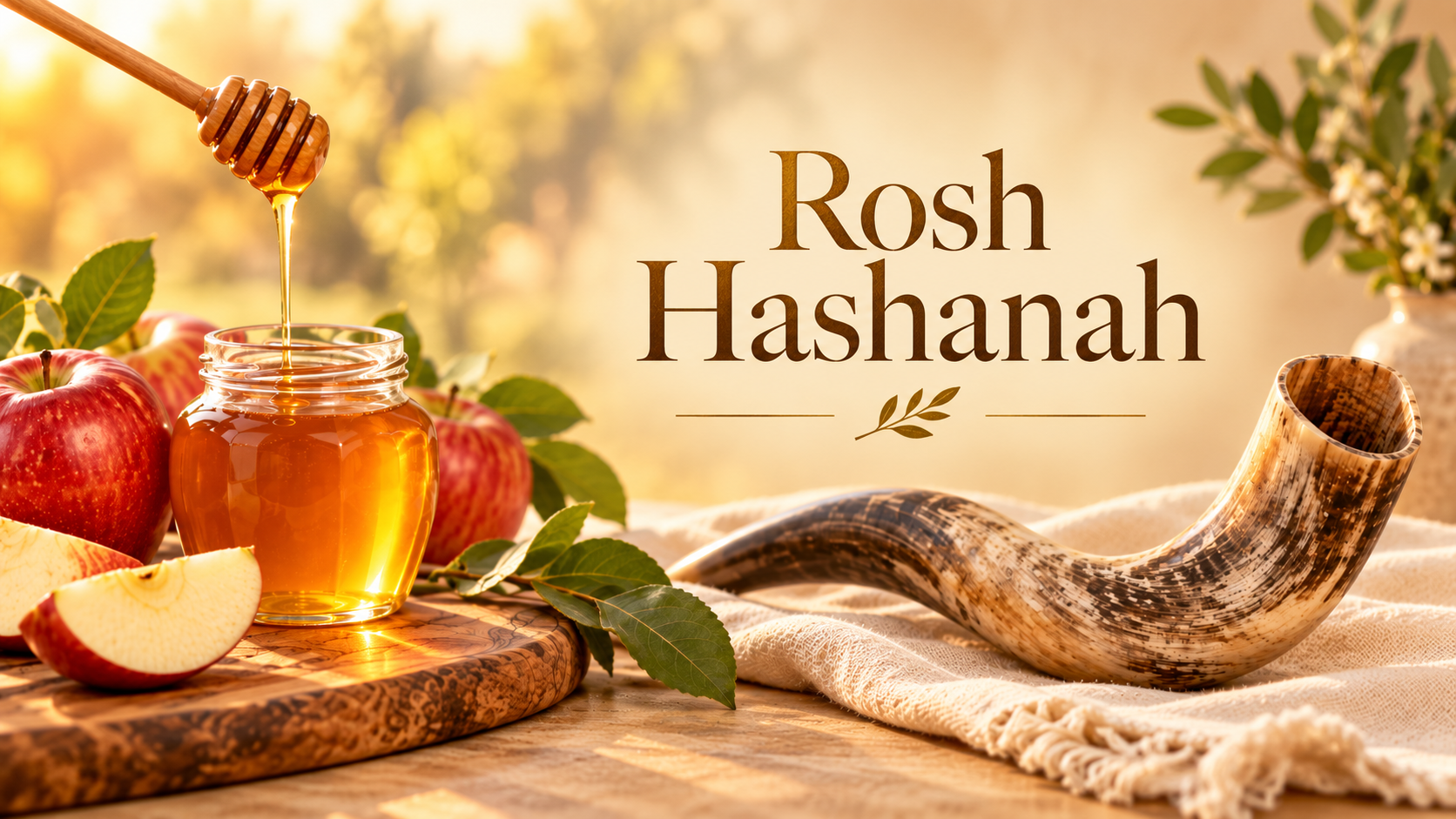
One of the best-known Rosh Hashanah traditions is eating apples dipped in honey.
The symbolism is simple but meaningful: the apple represents a fresh beginning and hope for the year ahead, while the honey expresses the wish for a sweet, good and peaceful new year.
Before eating, many families recite a blessing over the fruit and add a traditional wish that the coming year be good and sweet.
Rosh Hashanah traditions can vary from family to family and across Jewish communities around the world. In addition to apples and honey, the holiday may include round challah bread, pomegranates, dates, carrots and other symbolic foods connected with abundance, blessing and renewal.
Another important part of Rosh Hashanah is the shofar, traditionally made from a ram’s horn. Its sound is one of the most recognizable symbols of the holiday and is associated with awakening, reflection and spiritual renewal.
Rosh Hashanah is also a time for families and communities to gather, attend synagogue services, share festive meals and reflect on the year that has passed.
A common greeting is “Shanah Tovah,” meaning “Have a good year.” Another phrase often used is “Shanah Tovah Umetukah,” meaning “A good and sweet year.”
At its heart, Rosh Hashanah is about more than the beginning of a new calendar year. It is a time to think about one’s actions, relationships and hopes for the future — and to begin again with intention.
The simple combination of apples and honey has become one of the clearest symbols of that hope: may the year ahead be sweet.
Sources: My Jewish Learning | Chabad.org | Encyclopaedia Britannica | DaysBehindHQ / X
By NJ RADAR Team