


Scientists have created the most detailed wiring map yet of the brain and central nervous system of an adult male fruit fly, reconstructing more than 166,000 neurons and roughly 125 million connections.
The achievement, developed through a collaboration involving Google Research, HHMI Janelia Research Campus, the University of Cambridge and other research teams, gives scientists an unprecedented look at how signals travel from sensory input through the brain and into movement and behavior.
The digital map, known as a connectome, covers not only the brain but also the fly’s ventral nerve cord — roughly comparable in function to a spinal cord.
Researchers say the dataset could help scientists better understand how neural circuits generate behavior and may eventually contribute to the study of much more complex nervous systems.
But once the data became publicly accessible, the story took an unexpected turn.
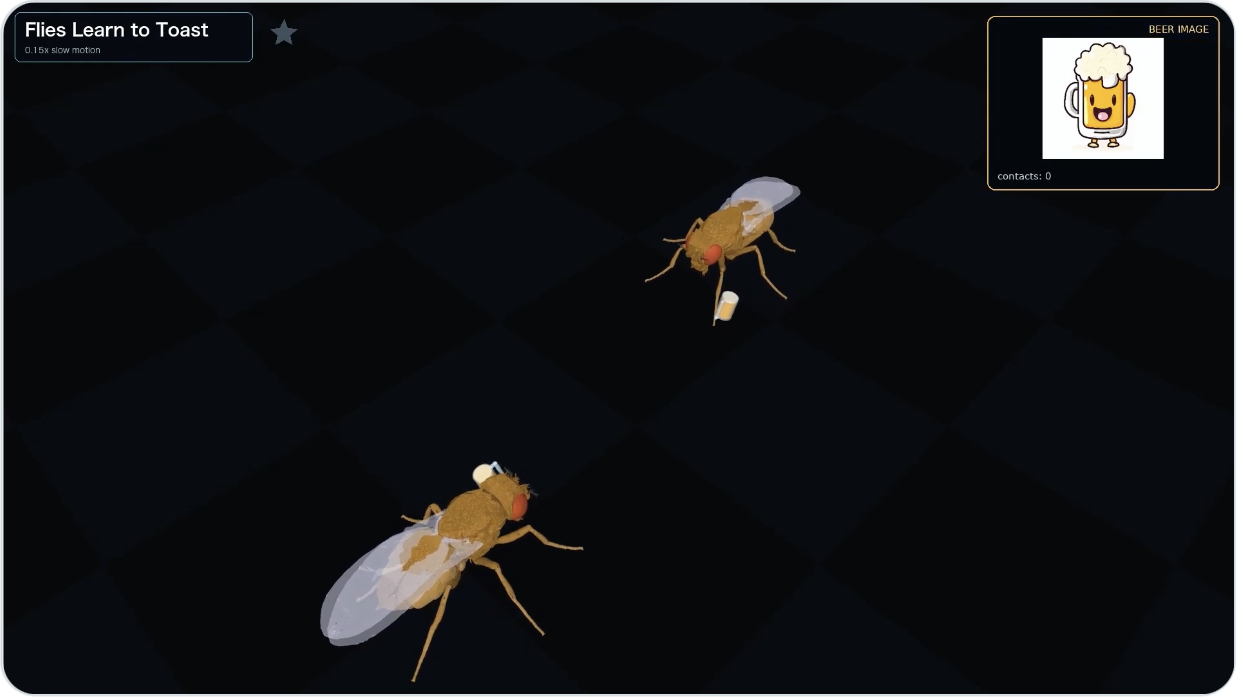
Software developers began experimenting with the digital neural network, connecting versions of the fly-brain model to computer simulations and video games. Demonstrations have included experiments involving games such as Doom, Super Mario 64 and Beat Saber.
The fly itself, of course, is not alive and is not literally playing a video game. These are simulations in which researchers and programmers map digital inputs onto reconstructed neural pathways and observe how the model responds.
Behind the internet jokes, however, is a serious scientific milestone: researchers can now trace neural pathways across essentially the entire central nervous system of an adult male fruit fly, from sensory signals to motor responses.
For neuroscience, a tiny fly has suddenly become a very large map.
Sources: Google Research | HHMI Janelia Research Campus | Cell | UK Research and Innovation; NEXTA/X
By NJ RADAR Team