


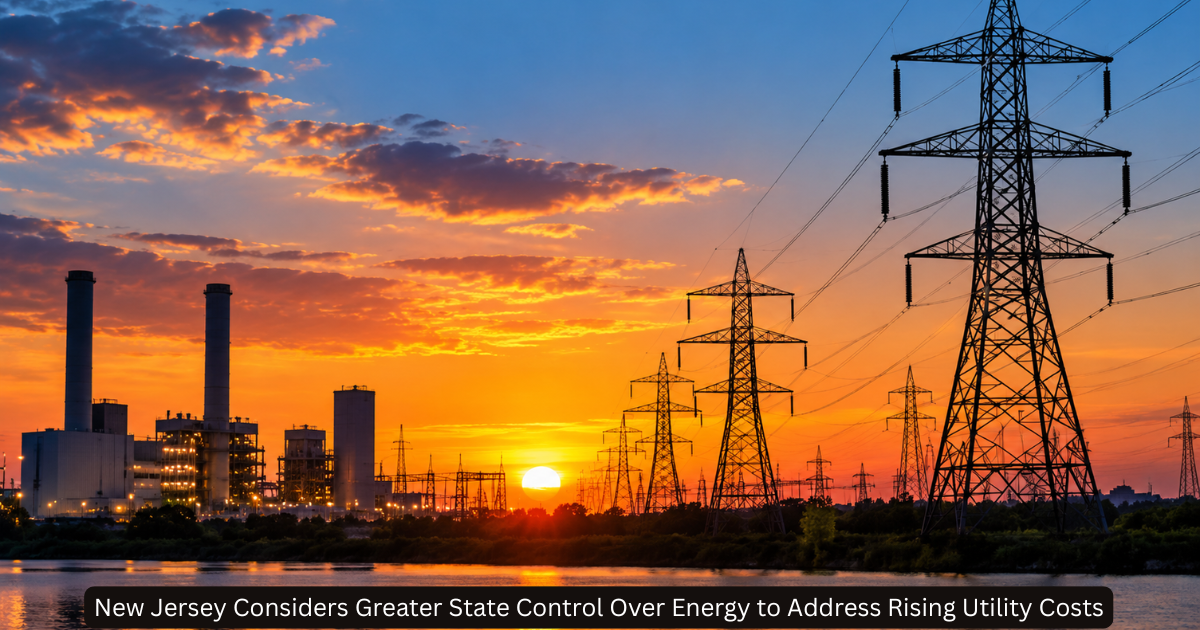
New Jersey lawmakers are considering the creation of a new state energy agency as rising electricity bills and increasing demand for power put additional pressure on households and businesses.
During a legislative hearing in Trenton on Monday, October 5, members of the Assembly Telecommunications and Utilities Committee examined two proposals aimed at giving the state greater control over energy development, production and long-term planning.
The proposals come amid growing concerns about electricity affordability and whether New Jersey has sufficient generating capacity to meet its future needs.
New Jersey Produces Only Two-Thirds of the Electricity It Uses
One of the central concerns raised during the hearing was the state’s dependence on electricity generated outside its borders.
According to testimony reported by the New Jersey Monitor, New Jersey currently generates approximately two-thirds of the electricity it consumes.
The remaining demand must be met through the regional electricity grid.
At the same time, the rapid expansion of data centers, which require enormous amounts of electricity to operate computer systems and artificial intelligence infrastructure, is creating additional pressure on energy supplies.
Supporters of the proposed legislation argue that New Jersey needs a more coordinated strategy to increase electricity production and reduce its vulnerability to regional price fluctuations.
A New Department of Energy?
Lawmakers are examining two different legislative proposals.
Assembly Bill A3610 would establish a separate New Jersey Department of Energy responsible for coordinating state energy policy.
Assembly Bill A4004 would create a Division of Energy Resource and Development and transfer certain responsibilities from the New Jersey Board of Public Utilities.
Both proposals seek to strengthen the state’s ability to plan and develop energy resources.
Currently, the Board of Public Utilities (BPU) regulates electricity, natural gas, water and telecommunications utilities.
However, some lawmakers believe that protecting consumers from excessive utility rates and developing new energy resources should be handled by separate government bodies.
Why Are Electricity Bills Increasing?
Electricity prices in New Jersey are influenced by several factors, including the cost of generating power, regional electricity demand and infrastructure expenses.
Another important factor is PJM Interconnection, the regional grid operator responsible for coordinating electricity supplies across New Jersey and 12 other states.
Electricity prices have increased during PJM’s capacity auctions, raising concerns about the long-term affordability of energy.
Some lawmakers believe New Jersey should explore ways to reduce its dependence on regional electricity markets.
Others argue that expanding energy production within the state could help stabilize prices over time.
Not Everyone Supports Creating Another State Agency
Although lawmakers generally agree that rising electricity costs require attention, there is disagreement over how the state should respond.
Representatives of the New Jersey Business and Industry Association questioned whether establishing an entirely new government department would be the most cost-effective solution.
Consumer advocates also expressed concerns.
Brian Lipman, director of the state’s Division of Rate Counsel, warned that developing new renewable energy projects could create additional expenses for consumers unless appropriate financial protections are included.
The concern is that efforts intended to make electricity more affordable in the future could initially increase costs for households and businesses.
Supporters of the proposals, however, argue that failing to invest in new energy capacity could leave New Jersey facing even greater challenges as demand continues to grow.
What Would This Mean for New Jersey Residents?
For residents, the most important question is whether the proposed changes could eventually lead to lower electricity bills.
Creating a new state agency would not automatically reduce electricity prices.
Any potential savings would depend on how effectively New Jersey increases its energy supply, manages infrastructure investments and protects consumers from additional costs.
The debate also raises broader questions about the future of energy production, renewable resources and the growing electricity demands associated with artificial intelligence.
New Jersey previously operated a Department of Energy, but it was eliminated in 1987 as part of an effort to reduce government spending.
Now, nearly four decades later, lawmakers are reconsidering whether a dedicated energy department could help address the state’s changing needs.
No vote was taken on the two proposals during Monday’s hearing. The committee gathered testimony to help determine the next steps.
Sources: New Jersey Monitor (Dana DiFilippo, October 6, 2026); New Jersey Legislature, Assembly Telecommunications and Utilities Committee (October 5, 2026).
By NJ RADAR Team