


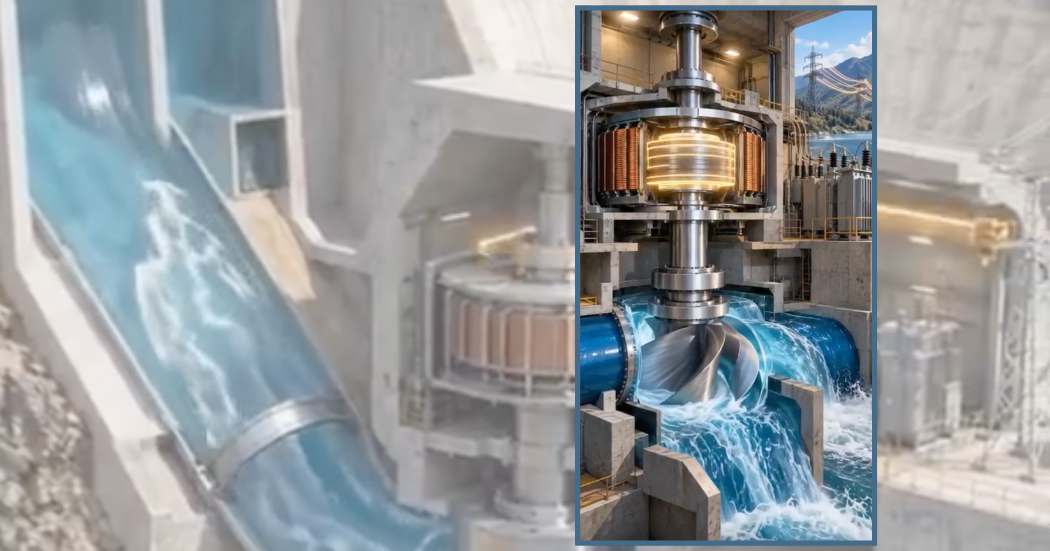
A hydroelectric dam converts the energy of stored water into electricity by using gravity, flowing water, turbines and generators.
Water is stored in a reservoir behind the dam, often at a much higher elevation than the river below. Because of that height difference, the water contains gravitational potential energy.
When electricity is needed, water is released through large pipes or tunnels called penstocks. As the water rushes downward, its potential energy is converted into kinetic energy — the energy of motion.
The fast-moving water then strikes the blades of a turbine, causing it to spin. The turbine is connected to a generator, which converts the turbine’s mechanical rotation into electrical energy.
Inside the generator, rotating magnets and coils of wire create an electric current through electromagnetic induction.
The electricity is then sent through transformers, which increase the voltage so it can travel efficiently through power lines to homes, businesses and industries.
After passing through the turbine, the water is released back into the river downstream. It is not “used up” in the process — its energy is extracted from the change in height and motion.
The basic sequence is simple:
Stored water → gravity-driven flow → turbine rotation → generator → electricity
Hydroelectric power is one of the oldest large-scale renewable energy technologies and remains an important source of electricity in many parts of the world.
Sources: U.S. Department of Energy | U.S. Energy Information Administration | International Hydropower Association
By NJ RADAR Team