


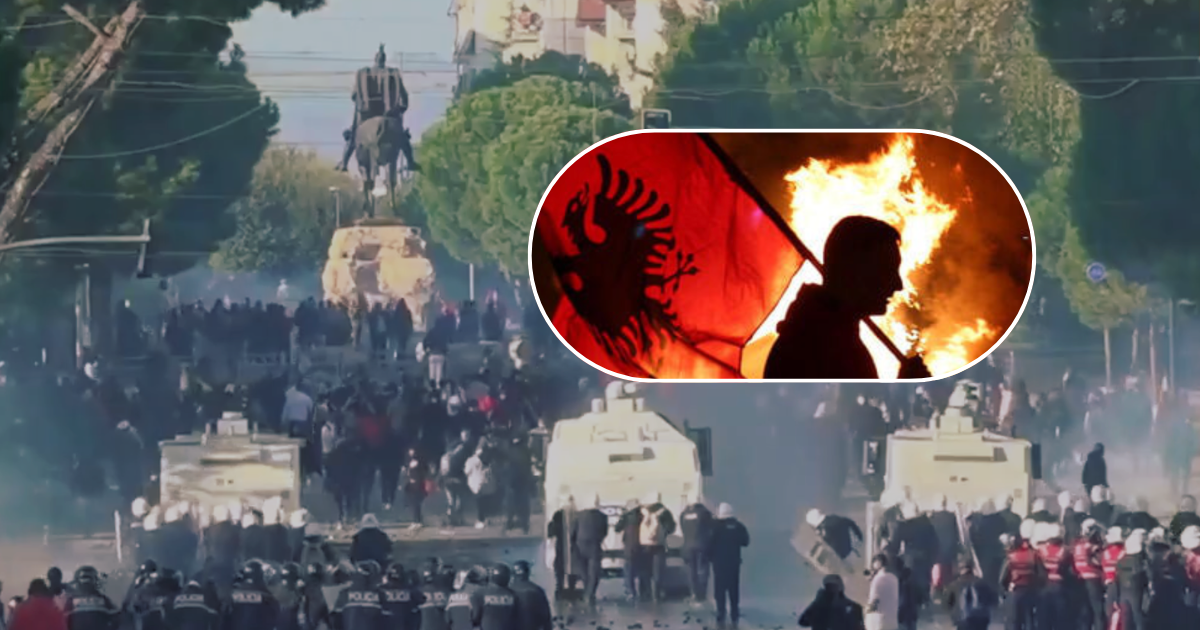
Anti-government protests in Albania continued for a sixth consecutive day on Sunday, October 18, as demonstrators demanding the resignation of Prime Minister Edi Rama clashed with police in the capital, Tirana.
What began as a student-led movement over education, unemployment, and corruption has developed into a broader political crisis, with demonstrations spreading beyond the capital to other Albanian cities.
The unrest has resulted in injuries, arrests, damage to public buildings, and growing tensions between protesters and the government.
Violent Clashes in Tirana
Hundreds of demonstrators gathered outside Albania’s Ministry of Education on Sunday, chanting for Prime Minister Edi Rama to resign.
Police responded with tear gas, water cannons, and rubber bullets as confrontations intensified.
During previous demonstrations, protesters threw rocks, fireworks, and Molotov cocktails at police officers. Government buildings and businesses were damaged, with some structures set on fire.
Thousands of people participated in demonstrations during the preceding days.
Authorities reported that 388 individuals had been charged with offenses related to the unrest, while numerous police officers and demonstrators were injured.
Why Are Albanians Protesting?
The demonstrations reflect growing frustration among young Albanians over unemployment, economic difficulties, corruption, and poor conditions in the education system.
Students have criticized the lack of opportunities for young people and what they describe as the government’s failure to address their concerns.
The movement has also attracted support from other citizens dissatisfied with living conditions and government policies.
Earlier demonstrations had remained largely peaceful for months before escalating into violent confrontations in mid-October.
Prime Minister Rama Refuses to Resign
Prime Minister Edi Rama, whose Socialist Party has governed Albania since 2013, has rejected demands for his resignation.
Rama argues that the violence threatens Albania’s progress toward membership in the European Union rather than the stability of his government.
He has also accused unspecified foreign interests of contributing to the unrest, although those allegations have not been independently substantiated.
The prime minister has offered dialogue with students while condemning attacks on police officers, public institutions, and private property.
Albania’s European Future at Stake
Albania is among the Balkan countries seeking membership in the European Union and has set an ambitious target of joining by 2030.
Rama has warned that continued violence could damage the country’s international reputation and complicate its European integration efforts.
The European Union has emphasized the importance of peaceful demonstrations, public safety, and respect for democratic rights.
Meanwhile, protesters continue demanding political accountability and improvements in education and economic opportunities.
Uncertain Days Ahead
With demonstrations entering their sixth day, there is no immediate indication that the political confrontation will end soon.
The government has refused to step down, while student groups and other protesters have continued mobilizing.
The situation highlights growing tensions in Albania as the country faces demands for domestic reforms while pursuing its long-term goal of European Union membership.
Sources: Reuters | Al Jazeera | Associated Press
By NJ RADAR Team