


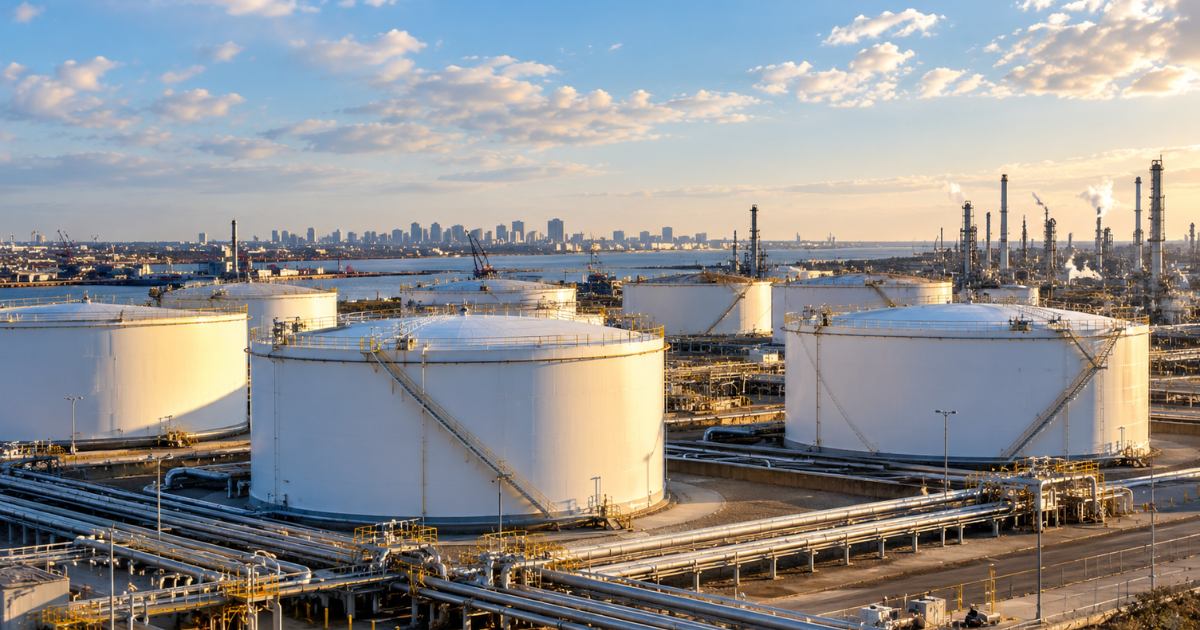
The United States is drawing down one of its most important emergency energy safeguards at a time when the war with Iran continues to disrupt global oil supplies. The immediate goal is to keep oil flowing and contain fuel prices. The longer-term question is how much protection the country will have left if another crisis emerges.
America’s Strategic Petroleum Reserve has fallen to 282.7 million barrels, its lowest level since October 1982, according to Department of Energy data reported by Reuters on October 19.
The figure is striking not simply because it is the lowest in more than four decades, but because it comes during a period of unusually high uncertainty in international energy markets.
The United States has committed to releasing 172 million barrels from its emergency reserves as part of a coordinated international response to supply disruptions linked to the war with Iran.
That decision is helping put additional oil into the market. But it also means Washington is using a resource originally designed to protect the country against extraordinary disruptions in energy supplies.
A Reserve Built for Emergencies
The Strategic Petroleum Reserve was established in 1975, following the Arab oil embargo that exposed America’s vulnerability to disruptions in foreign oil supplies.
Unlike ordinary commercial inventories, the reserve is controlled by the federal government. Its purpose is to provide emergency supplies when major events threaten the availability of crude oil.
The oil is stored primarily in underground salt caverns along the Gulf Coast in Texas and Louisiana.
The reserve has an authorized storage capacity of 714 million barrels. At its current level, it holds less than 40% of that amount.
This does not mean the United States is running out of oil.
America remains a major producer of crude oil and has extensive commercial inventories, refineries, pipelines, and import and export infrastructure. The strategic reserve serves a different function: it gives the government an additional option when normal supply channels are disrupted.
As that emergency stockpile shrinks, so does the country’s flexibility to respond to another major shock.
Why Washington Is Releasing So Much Oil
The most immediate reason is the war with Iran.
Since the conflict began, disruptions in the Middle East have affected oil production, shipping routes, and international trade.
The Strait of Hormuz, one of the world’s most important oil transportation corridors, has become a particular source of uncertainty. Interruptions to shipping through the region can quickly affect prices far beyond the Middle East.
Oil is traded internationally. When a major supply route is threatened, prices can rise even in countries that produce substantial quantities of their own crude.
In March, members of the International Energy Agency agreed to a coordinated release of 400 million barrels from emergency stocks.
The United States committed 172 million barrels, a significant portion of the international response.
By mid-October, approximately 132.5 million barrels had already been released under the American program, according to Reuters.
Washington is now working to make additional barrels available through arrangements that allow energy companies to borrow oil and return it later.
The strategy is intended to address an immediate shortage without permanently giving away all the oil withdrawn.
However, replacing those barrels will take time.
Today’s Relief Could Become Tomorrow’s Problem
There is a fundamental difficulty with using emergency reserves to influence energy prices.
Releasing oil can help reduce immediate supply pressure, particularly when international shipments are interrupted. But it cannot resolve the political or military conditions causing those interruptions.
If a conflict continues, the government may face repeated pressure to release additional supplies.
At the same time, replenishing the reserve requires oil to be returned or purchased, potentially at considerable expense.
The Trump administration has emphasized that its exchange arrangements require companies to return borrowed oil, often with additional barrels included.
This approach could help restore inventories over time. Yet some deliveries are not expected to be completed until 2028.
The timing matters.
A reserve can be rebuilt after a crisis, but rebuilding it while energy markets remain unstable presents a different challenge.
There are also physical limitations. The reserve’s underground storage facilities and related infrastructure are aging, and maintenance requirements can affect how quickly oil can be withdrawn or replaced.
Reuters reported earlier this year that energy experts were increasingly concerned about the reserve’s effectiveness if inventories continued falling toward 250 million barrels.
The question is therefore not only how much oil remains, but how much can be delivered when it is urgently needed.
Why Oil Prices Remain High
The release of strategic oil supplies has not eliminated pressure on global prices.
International benchmark Brent crude remained above $100 per barrel on October 19, reflecting the continuing uncertainty surrounding Middle Eastern production and shipping.
Damage to energy infrastructure, threats to tankers, rising transportation costs, and disruptions involving other major producers have complicated efforts to stabilize the market.
Recent decisions to ease certain restrictions on Russian oil have also highlighted how governments are searching for additional supplies.
But allowing more oil to reach the market is not the same as restoring normal market conditions.
Traders and energy companies must consider not only how much oil is available today, but whether it can be delivered reliably tomorrow.
As long as that uncertainty remains, oil prices may continue to reflect a significant geopolitical risk.
What This Means for American Households
For consumers, the effects are most visible at the gas station.
Higher crude oil prices can contribute to more expensive gasoline, diesel, aviation fuel, and transportation services.
Businesses that depend heavily on fuel may pass some of their increased operating expenses on to customers.
Over time, energy costs can influence food prices, delivery charges, airline tickets, and other everyday expenses.
For New Jersey residents, the issue is especially relevant.
The state has large numbers of commuters, extensive highway networks, major shipping facilities, and businesses that depend on regional and international transportation.
Higher fuel costs can affect both household budgets and commercial activity.
Still, gasoline prices do not depend on crude oil alone. Refining costs, distribution, taxes, seasonal demand, and local market conditions also influence what drivers pay.
The decline in strategic reserves does not automatically mean another increase at the pump. It does, however, leave the government with less emergency oil available to address future disruptions.
A Problem That Did Not Begin This Year
The current situation cannot be explained by the Iran war alone.
American presidents have used the Strategic Petroleum Reserve during previous energy emergencies, and inventories were already well below historical highs before the latest conflict.
The Biden administration authorized major withdrawals in 2022 following Russia’s invasion of Ukraine and the resulting disruption in global energy markets.
The Trump administration is now relying on the same emergency resource as it confronts another international crisis.
The circumstances differ, but both periods illustrate a recurring dilemma: governments face strong pressure to provide immediate relief when energy prices rise, even when doing so reduces supplies reserved for future emergencies.
Rebuilding the reserve has often proved more complicated than drawing it down.
The Bigger Question: How Much Protection Is Enough?
The United States is not facing an immediate exhaustion of its oil supply. It remains one of the world’s most important energy producers.
But energy independence in production does not eliminate exposure to global prices or international crises.
A disruption in the Middle East can affect American consumers, just as decisions made in Washington can influence oil markets around the world.
Strategic reserves are intended to provide protection against that uncertainty. They are not a permanent replacement for stable production, reliable transportation routes, or a functioning international energy market.
The latest figures reveal the difficult position facing American energy policy.
Releasing more oil may help contain prices today. Holding on to the remaining barrels may provide greater protection tomorrow.
Neither choice comes without consequences.
After more than four decades of building and maintaining an emergency oil stockpile, the United States is now confronting an uncomfortable question: how much of its future energy security should it use to manage the crisis of the present?
Sources: Reuters, October 19, 2026 | Reuters, October 16, 2026 | Reuters, August 31, 2026 | U.S. Department of Energy, SPR Quick Facts | The Wall Street Journal, October 19, 2026.
By NJ RADAR Team