


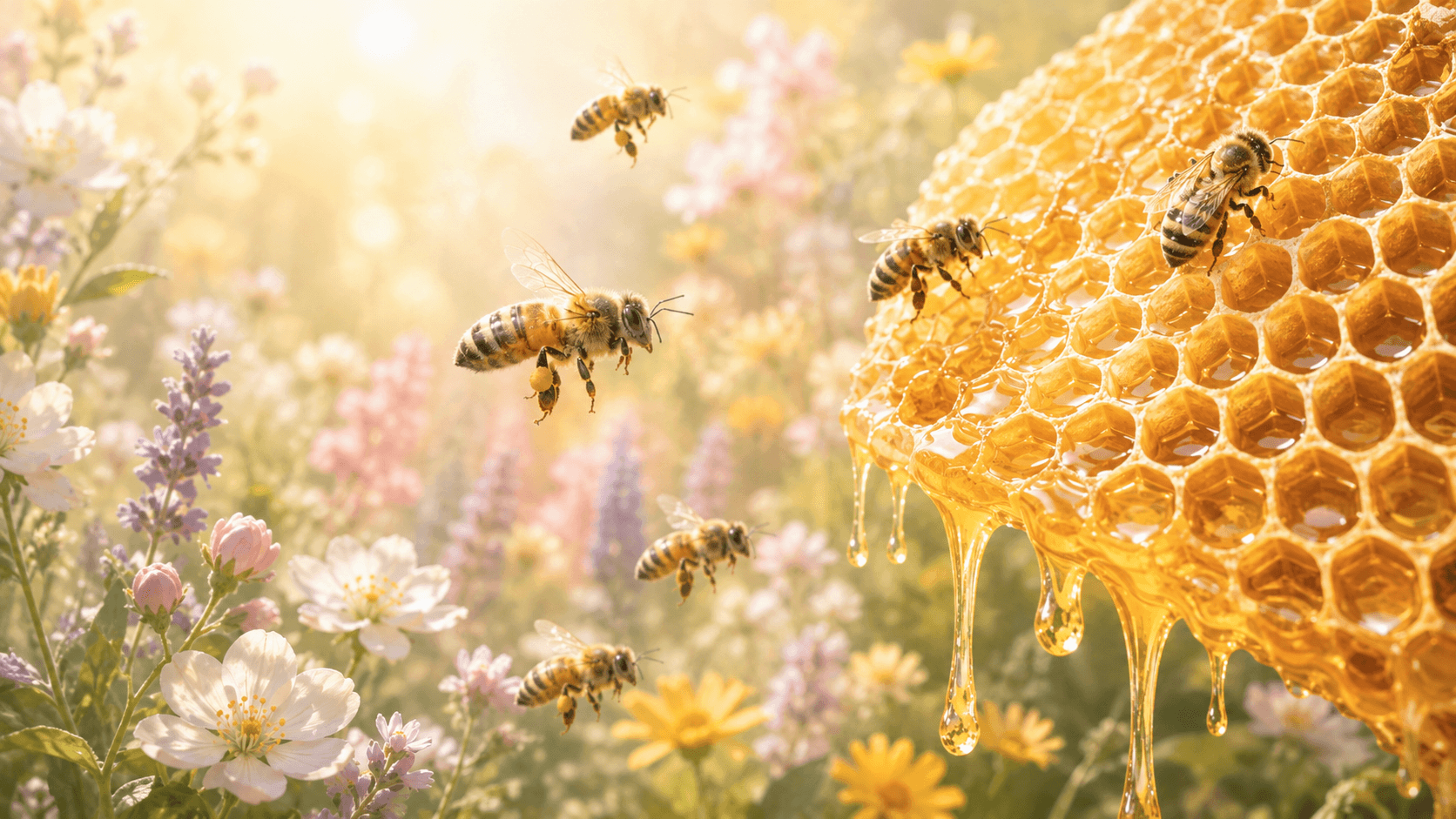
They are tiny, easy to overlook and usually noticed only when they buzz a little too close. But bees and other pollinators help support much of the food we eat — from fruits and vegetables to nuts, seeds and even some of our favorite everyday treats.
On Honey Bee Day, there is a good reason to pay a little more attention to one of nature’s hardest-working creatures.
Bees do far more than make honey.
As they move from flower to flower collecting nectar and pollen, they also carry pollen between plants, helping those plants reproduce and eventually produce fruits, seeds and new generations of vegetation.
That seemingly simple process has enormous consequences for the global food system.
According to the United Nations Food and Agriculture Organization, about 75 percent of the world’s food crop types depend at least partly on pollinators. Pollination also affects about 35 percent of global crop production by volume.
Imagine Breakfast Without Them
The importance of pollinators becomes much easier to understand when we stop thinking about percentages and start thinking about what is on the kitchen table.
Apples, berries, almonds, many vegetables, nuts and seeds all benefit from animal pollination. Coffee and cocoa production also depend on healthy ecosystems that include pollinators.
FAO has pointed out that without pollinators, foods such as coffee, chocolate and apples could become much harder to produce.
So the familiar buzz of a bee in a garden is connected to something much bigger: what eventually appears in grocery stores, farmers markets and our kitchens.
And It’s Not Just Bees
Honey bees may get most of the attention, but they are part of a much larger team.
Butterflies, moths, beetles, birds, bats and other animals can also carry pollen between plants.
FAO estimates that around 200,000 animal species act as pollinators, including more than 25,000 species of bees. (FAOHome)
Their role also extends far beyond agriculture.
Nearly 90 percent of the world’s wild flowering plant species depend entirely or at least partly on animal pollination, making pollinators essential to biodiversity and healthy ecosystems. (FAOHome)
Small Creature, Very Big Job
That is perhaps the most remarkable part of the story.
A bee does not know that it is helping maintain global food production.
It simply flies to a flower.
Then another.
And another.
Yet multiplied across millions of pollinators and countless plants, those tiny daily journeys help sustain farms, ecosystems and food supplies around the world.
So if you see a bee hovering around the flowers this weekend, maybe don’t think first about the sting.
Think about the strawberries, apples, almonds — and perhaps that morning cup of coffee.
For something so small, the bee carries an astonishing amount of the world on its wings.
Source: Food and Agriculture Organization of the United Nations (FAO)
By NJ RADAR Team