


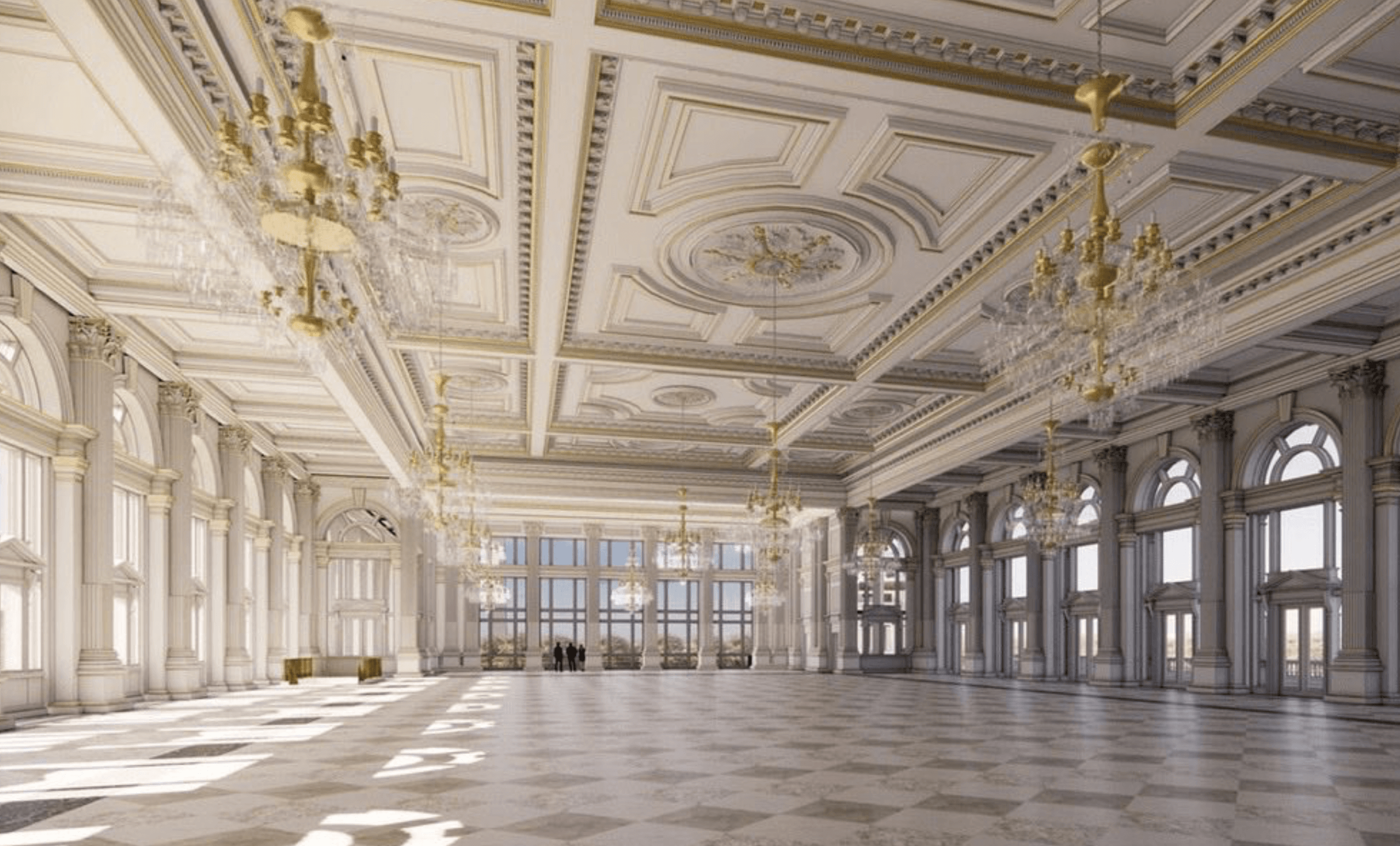
WASHINGTON, D.C. — A federal appeals court has ordered a halt to construction of President Donald Trump’s proposed White House ballroom, ruling that the administration must first obtain congressional approval before moving forward with the project.
In a 2-1 decision, the U.S. Court of Appeals for the District of Columbia Circuit found that the administration could not proceed with major changes to the White House complex without authorization from Congress. The ruling represents a significant legal setback for President Trump’s plan to add a new ballroom to the historic executive residence.
The lawsuit that led to the ruling was brought by the National Trust for Historic Preservation, the nation’s leading historic preservation nonprofit, which sued last year in an attempt to stop construction of the ballroom before it began without congressional approval. Judges Patricia Millett and Bradley Garcia, writing for the majority, sharply rebuked the administration for making unprecedented changes to the historic structure without consulting Congress.
“Each President is a temporary tenant, not the owner, of the White House and its Executive Residence,” they wrote. “The President has no — and claims no — constitutionally assigned authority over that property.”
Judge Neomi Rao dissented, concluding that the National Trust lacked jurisdiction to bring the lawsuit and that the administration would be harmed by the halt in construction, calling the ruling “a clear abuse of discretion.”
The proposed ballroom, estimated to cost approximately $400 million, is intended to provide a larger venue for official state dinners, diplomatic receptions, and other ceremonial events. However, opponents argued that such a major alteration to the White House complex requires congressional approval under federal law.
Although the court ordered a halt to above-ground construction, it temporarily stayed its ruling for 14 days, giving the Trump administration time to seek emergency relief from the U.S. Supreme Court. During that period, certain underground work related to security infrastructure may continue.
The decision does not permanently block the project but instead requires the administration to follow the appropriate legal process before construction can proceed. The case is expected to remain the subject of further legal proceedings and could ultimately be decided by the Supreme Court.
The White House has defended the project, arguing that the new ballroom would modernize the complex and improve its ability to host official events. Critics, however, contend that a project of this scale cannot move forward without congressional oversight and approval.
The ruling marks the latest chapter in the legal dispute over the proposed expansion of one of America’s most historic and closely protected government buildings.
Sources: Reuters; U.S. Court of Appeals for the District of Columbia Circuit; AllenAnalysis (@allenanalysis) on X.
[…] for Historic Preservation challenged the project, arguing that the administration failed to follow required legal and historic-preservation procedures. A lower court agreed that congressional authorization […]