


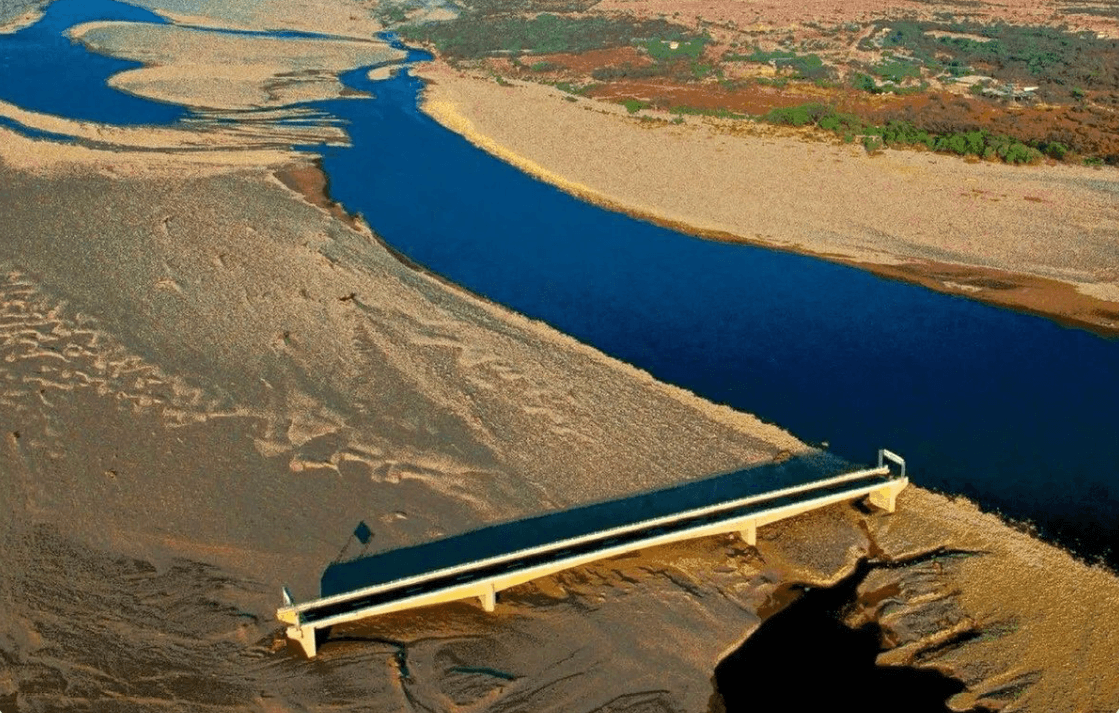
When Hurricane Mitch struck Honduras in 1998, it left behind one of the worst natural disasters in Central American history. More than 9,000 people across the region were killed, thousands more went missing, and economic losses exceeded $7.5 billion. Honduras suffered the greatest devastation, with more than 5,000 deaths, tens of thousands of homes destroyed, and roads and bridges washed away by catastrophic flooding.
Yet one bridge managed to survive.
The Choluteca Bridge had been designed and built just two years earlier by Japanese engineers from Hazama Corporation, specifically to withstand the most extreme weather conditions in a region frequently hit by tropical storms and hurricanes. Ironically, its durability was put to the ultimate test almost immediately after its completion—during one of the most destructive storms ever to strike Central America.
While floodwaters destroyed nearly every other bridge in the surrounding area, the Choluteca Bridge remained virtually untouched.
But nature had a different plan.
Instead of destroying the bridge, the massive floodwaters changed the course of the Choluteca River. When the waters receded, the river no longer flowed beneath the bridge. It had carved an entirely new channel several dozen meters away, leaving the bridge suspended over dry land without a single drop of water beneath it. To make matters even more surreal, the approach roads on both sides had been completely washed away.
The bridge that had survived one of the strongest Atlantic hurricanes in recorded history suddenly led nowhere—quite literally.
That is why it became known around the world as the “Bridge to Nowhere.” Images of the perfectly preserved structure standing above an abandoned riverbed quickly spread worldwide, becoming a symbol of two remarkable things at once: outstanding engineering and the unpredictable power of nature.
It was not until 2003 that new approach roads were built, reconnecting the bridge to the highway network. By then, however, the river it had originally been built to cross no longer flowed beneath it.
Today, the Choluteca Bridge is frequently cited as one of the world’s most striking examples of engineering resilience. At the same time, its story serves as a reminder that sometimes surviving a disaster is not enough—the real challenge is surviving a world that has completely changed around you.
Sources: X (@AMAZlNGNATURE); historical reports on Hurricane Mitch; USGS; engineering studies of the Choluteca Bridge.