


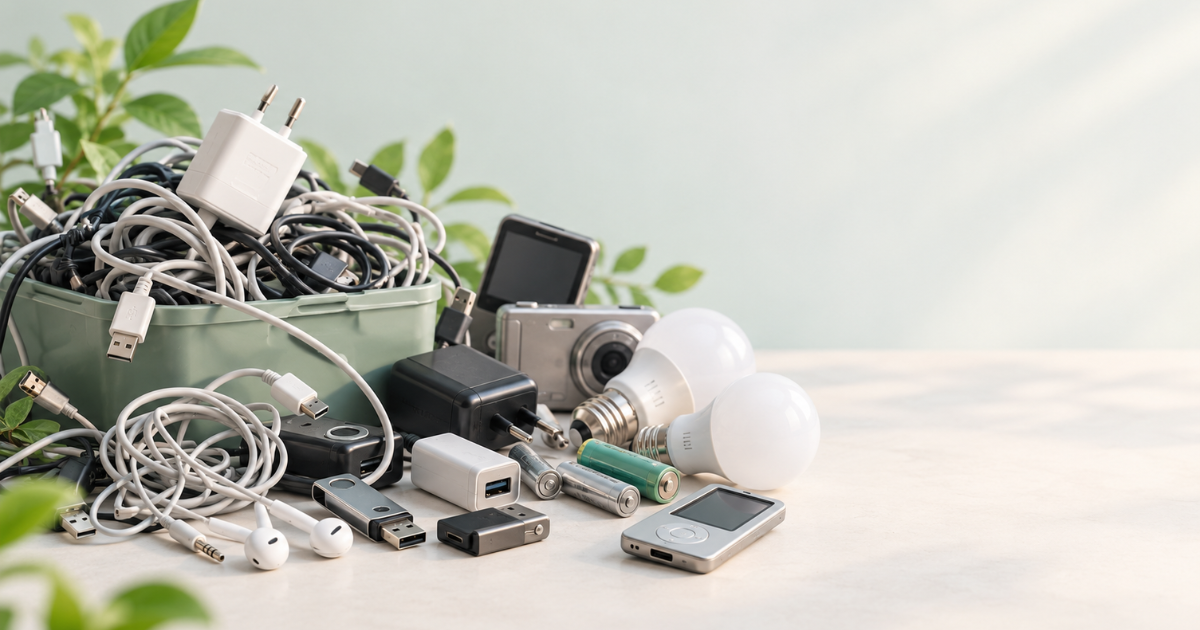
October 14 marks International E-Waste Day, drawing attention to a growing environmental problem: millions of small electronic devices that are forgotten in drawers or discarded with household trash.
This year’s campaign, organized by the WEEE Forum, focuses on “Fast Tech | Don’t Bin It, Bring It!” The ninth annual observance highlights inexpensive electronic products that people buy, replace, and often throw away without considering their environmental impact.
Headphones, charging cables, USB adapters, LED lights, mini fans, and electronic toys may seem insignificant individually. Together, however, they contribute to one of the world’s fastest-growing waste streams.
62 Million Tons of Electronic Waste
According to the United Nations’ Global E-waste Monitor 2024, the world generated approximately 62 million metric tons of electronic waste in 2022.
Only 22.3% was documented as formally collected and recycled.
If current trends continue, global electronic waste could reach 82 million metric tons annually by 2030.
Electronic waste contains valuable materials that can be recovered and reused. Improper disposal can also release hazardous substances into the environment.
Small devices containing lithium-ion batteries present an additional danger. When damaged or crushed in garbage trucks or waste-processing facilities, these batteries can cause fires.
Three Steps to Reduce E-Waste
The 2026 campaign encourages three actions.
Recognize: Small electronic products containing plugs, cables, electronic components, or batteries should be recognized as potential e-waste rather than ordinary household garbage.
Return: Unwanted devices should be taken to authorized recycling facilities, designated collection points, or participating retailers.
Demand Responsibility: Online sellers and electronic manufacturers should comply with applicable recycling laws and contribute to the collection and treatment of discarded products.
The campaign also raises concerns about inexpensive electronic products sold through online marketplaces without adequate systems to finance their recycling.
New Jersey Already Has an E-Waste Law
For New Jersey residents, the campaign carries particular significance.
Under the state’s Electronic Waste Management Act, covered electronic devices cannot be discarded in the regular waste stream.
The restrictions include televisions, computers, laptops, monitors, desktop printers, and desktop fax machines.
Through the New Jersey E-Cycles program, residents can recycle these devices free of charge at participating authorized collection locations.
Smaller electronic products, including cables, headphones, and electronic toys, are not all covered by the same recycling requirements. Residents should check with their municipal recycling coordinators or local collection facilities for appropriate disposal options.
From Recycling to Reusing
International E-Waste Day also reminds consumers that recycling is not always the first step.
A functioning device can often be repaired, donated, shared, or reused rather than replaced.
The same principle is reflected in community sustainability initiatives such as Make It New, which encourages people to give existing materials a new purpose instead of immediately throwing them away.
Extending the useful life of products reduces waste and the demand for new raw materials.
The message of International E-Waste Day is simple: before throwing away an old electronic device, consider whether it can be repaired, reused, donated, or properly recycled.
Sometimes, protecting the environment begins with something as small as an unused charging cable.
Sources:
- WEEE Forum — International E-Waste Day 2026
- United Nations / ITU — Global E-waste Monitor 2024
- New Jersey Department of Environmental Protection — New Jersey E-Cycles
- New Jersey Electronic Waste Management Act
By NJ RADAR Team