


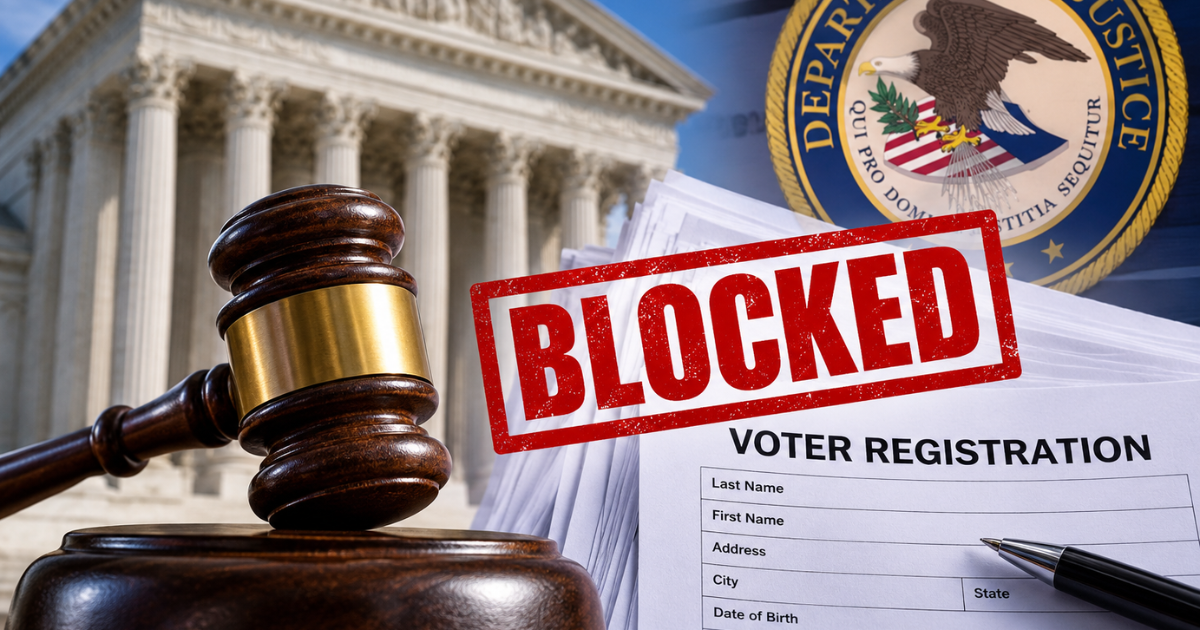
WASHINGTON, D.C. — A federal judge has struck down a Trump administration policy requiring states to provide voter registration records to the U.S. Department of Justice for citizenship verification, ruling that the federal government exceeded its legal authority and violated longstanding protections governing voter information.
U.S. District Judge Sparkle Sooknanan issued the ruling Friday, dealing a significant legal setback to the administration’s efforts to expand federal oversight of voter registration ahead of the November midterm elections.
Justice Department Sought State Voter Records
Under the disputed policy, the Justice Department requested detailed voter registration lists from states across the country.
Federal officials intended to compare those records with the government’s Systematic Alien Verification for Entitlements (SAVE) database to identify individuals suspected of being registered to vote without U.S. citizenship.
The administration maintained that the initiative was necessary to protect election integrity and prevent noncitizens from voting in federal elections.
However, voting rights organizations challenged the program, arguing that it exceeded federal authority, threatened personal privacy, and could lead to eligible voters being incorrectly removed from registration lists.
Judge Warns of Wrongful Voter Removals
In her ruling, Judge Sooknanan concluded that the Justice Department lacked the authority to operate the program as designed.
The court also raised concerns about the reliability of the SAVE database, which may contain outdated citizenship information.
Naturalized American citizens could be particularly vulnerable to incorrect classifications if federal records fail to reflect changes in their immigration status.
The judge emphasized that election administration is primarily the responsibility of individual states and that federal agencies must operate within the limits established by Congress.
The ruling invalidated the Justice Department’s disputed voter-record collection and review policy.
Does This End Citizenship Verification?
The decision does not eliminate citizenship requirements for voting in federal elections.
Under federal law, non-U.S. citizens are prohibited from voting in federal elections, and states retain responsibility for maintaining accurate voter registration records.
Instead, the ruling addresses how the federal government obtains, processes, and uses voter information.
It establishes that efforts to identify ineligible voters must comply with federal law, privacy protections, and the constitutional division of authority between state and federal governments.
New Jersey Faces Its Own Voter Registration Questions
The decision comes amid separate concerns over voter registration procedures in New Jersey.
State officials have faced scrutiny following reports that approximately 6,600 individuals were mistakenly registered despite records indicating possible noncitizen status.
The New Jersey controversy has prompted questions about registration safeguards, government data accuracy, and how election officials identify and correct administrative errors.
However, the New Jersey registration issue is separate from the federal court case, and the ruling does not determine the legality of those individual registrations.
A Major Election-Year Legal Dispute
The ruling comes just weeks before the November congressional elections, when election administration and voter eligibility remain prominent national political issues.
Supporters of stricter citizenship verification argue that stronger safeguards are necessary to maintain public confidence in elections.
Voting rights advocates counter that inaccurate databases and broad federal data collection could prevent lawful American citizens from exercising their right to vote.
The Justice Department may seek further judicial review of the ruling.
For now, the decision reinforces the legal limits on federal involvement in state voter registration systems while leaving existing citizenship requirements intact.
Sources: Reuters, CBS News, The Washington Post, U.S. District Court for the District of Columbia.
By NJ RADAR Team