


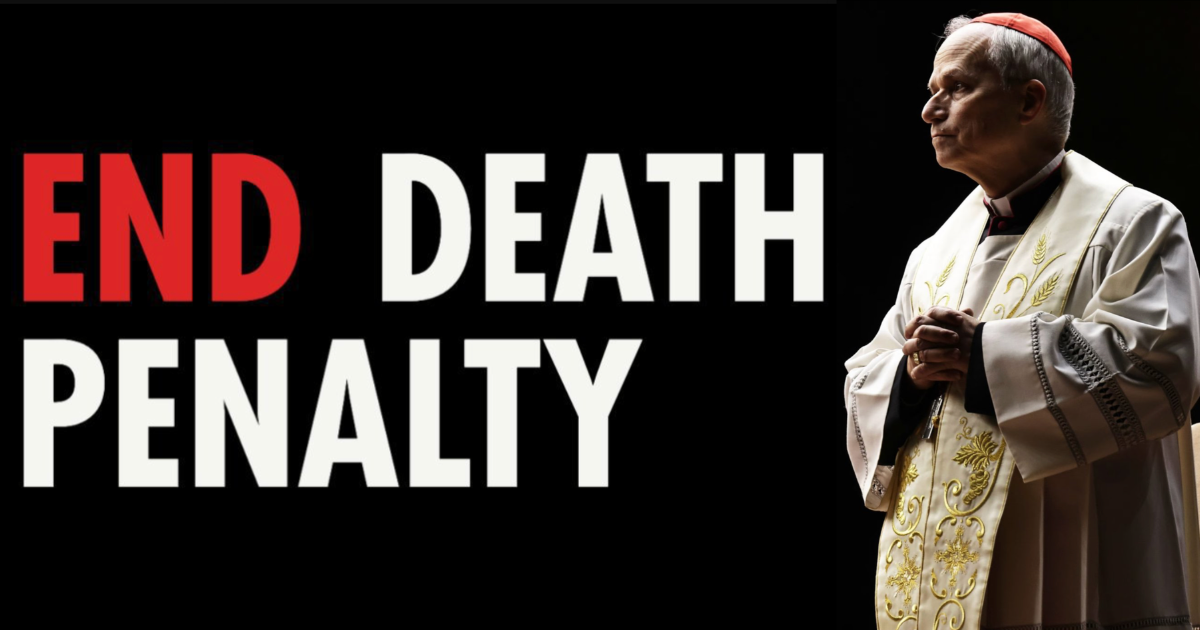
As the world marks the World Day Against the Death Penalty on October 10, religious leaders, international human rights organizations and United Nations representatives are renewing calls to abolish capital punishment. Their messages come amid growing controversy over American plans to livestream an execution by firing squad.
The annual observance raises awareness about the use of capital punishment, wrongful convictions, human dignity and the fundamental right to life.
This year’s commemorations have taken on particular significance in the United States, where a planned military execution and a recent failed lethal injection have reignited debate over whether the government should have the power to take a human life.
Pope Leo XIV: The Death Penalty Is Inadmissible
Pope Leo XIV, the first American-born pontiff, marked October 10 with a message rejecting capital punishment.
In a statement posted on his official social media account, the Pope described the death penalty as an attack on the dignity and inviolability of the human person.
He emphasized that modern justice systems can protect society without resorting to executions and that even those convicted of serious crimes should not be completely deprived of the possibility of redemption.
His position reflects Catholic teaching revised under Pope Francis in 2018, when the Church formally declared capital punishment inadmissible in all circumstances.
United Nations Condemns Death Penalty and Public Executions
The United Nations has reaffirmed its opposition to capital punishment, emphasizing that the death penalty does little to deter crime and carries the irreversible risk of executing innocent people.
The UN also strongly condemned US plans to livestream the execution of Nidal Hasan. UN spokesperson Stéphane Dujarric described the proposal as “abhorrent,” warning that broadcasting an execution could violate international prohibitions against torture and inhuman punishment.
The United Nations continues to call for a global moratorium on executions and the eventual abolition of the death penalty worldwide.
Amnesty International: The Death Penalty Is Cruel and Inhuman
Amnesty International issued a strong statement on October 9, condemning the planned American execution by firing squad and proposals to broadcast it publicly.
Justin Mazzola, Deputy Director of Research at Amnesty International USA, described the announcement as reprehensible and warned that turning an execution into a public broadcast would intensify the cruelty of capital punishment.
The organization reiterated that it opposes the death penalty in every case, regardless of the crime committed.
Amnesty also rejected the argument that executions provide a uniquely effective deterrent against serious crime, pointing to the lack of convincing evidence supporting that claim.
Mazzola referred specifically to the recent failed execution of Christa Pike in Tennessee, arguing that the incident further demonstrated fundamental problems within America’s capital punishment system.
Amnesty International
United Nations: A Global Movement Toward Abolition
The United Nations has consistently encouraged countries to suspend executions and move toward the complete abolition of the death penalty.
On October 9, the UN organized an international discussion highlighting successful experiences with moratoriums on executions in different regions.
The event was held in connection with World Day Against the Death Penalty and ahead of further discussions on a United Nations General Assembly resolution concerning a global moratorium.
The UN’s position emphasizes protecting the right to life, preventing irreversible miscarriages of justice and encouraging criminal justice systems that respect human rights.
Vatican Officials Condemn Plans to Broadcast an Execution
The strongest reactions this week followed the Pentagon’s announcement that the execution of Nidal Malik Hasan, convicted of killing 13 people at Fort Hood in Texas in 2009, would be carried out by firing squad on December 3.
U.S. Defense Secretary Pete Hegseth announced plans to livestream the execution.
Cardinal Pietro Parolin, the Vatican’s Secretary of State, directly condemned the proposal, saying that turning a person’s death into public entertainment was unacceptable.
Archbishop Paul Coakley, president of the United States Conference of Catholic Bishops, described the decision as a barbaric promotion of a culture of death and urged authorities to reconsider.
The bishops emphasized that condemning Hasan’s crimes does not require supporting a public execution.
Criticism Also Comes From American Political Leaders
The proposed broadcast has generated objections across political lines.
Republican Senator Thom Tillis criticized the idea of a public execution, while Democratic Senator Mark Kelly questioned whether the United States should associate itself with practices seen in countries such as Iran and Taliban-controlled Afghanistan.
Vice President JD Vance also expressed reservations about the proposed livestream, saying he would not watch it.
President Donald Trump has said he will make the final decision about whether the execution should be broadcast.
European Union and Council of Europe: The Death Penalty Must End Everywhere
The European Union and the Council of Europe issued a joint statement marking October 10, reaffirming their opposition to capital punishment in all cases and under all circumstances.
EU foreign policy chief Kaja Kallas and Council of Europe Secretary General Alain Berset warned that recorded executions increased by 78% in 2025, even though more than two-thirds of the world’s countries have abolished the death penalty in law or in practice.
Only 17 countries were known to have carried out executions in 2025. The officials expressed particular concern about executions in Iran and other countries, including the United States.
They called on all countries that retain capital punishment to immediately suspend executions and work toward complete abolition, stressing that the death penalty constitutes inhuman and degrading treatment.
A Question of Justice, Punishment and Human Dignity
Supporters of capital punishment argue that the most serious crimes deserve the most severe penalties and that executions can provide justice for victims and their families.
Opponents argue that punishment should never involve intentionally taking a human life, particularly when wrongful convictions, unequal application of the law and the risk of cruel executions remain unresolved.
For Pope Leo XIV, Amnesty International and the United Nations, the central question extends beyond how executions are carried out.
It concerns whether capital punishment itself is compatible with human dignity and the right to life.
As October 10 is observed around the world, the debate remains deeply relevant: Can justice be achieved without taking another human life?
Sources: Vatican News, Amnesty International, United Nations, Associated Press, Reuters, CBS News, Al Jazeera.
By NJ RADAR Team