


The state’s Emergency Medical Services task force warns it could be forced to stop operating after September unless new funding is secured, a move that could jeopardize the coordination of emergency services statewide.
A Summer That Shows Just How Needed the Team Is
While funding talks stall, the NJ EMS Task Force itself has spent this summer in nonstop action. On July 4th alone, team members evacuated a nursing home in Voorhees — home to more than 200 residents — after its air conditioning failed during a heat wave that would go on to claim a record 29 lives statewide.
During that same stretch, the team was deployed to fireworks events in five counties, America250 celebrations along the Delaware River, tracked wildfires in South Jersey, and provided standby support at World Cup matches in East Rutherford — an assignment that ultimately totaled 8,500 personnel hours over five weeks, the largest undertaking in the task force’s history.
Who They Are and Why They Exist
The nonprofit organization, founded in the wake of the September 11th attacks, serves as the state’s backup emergency medical response force and leads preparedness planning for large-scale emergencies. In 2025 alone, the team deployed at least 225 times to evacuate nursing homes or hospitals and assist with major emergencies, while also leading 1,500 hours of emergency preparedness training.
Task force chairman Michael Bascom (who also serves as Neptune’s chief financial officer and emergency management coordinator) warned: “We are at a critical point. We will lose capabilities in some areas, and long-term, it will jeopardize our ability to operate.”
Where the Problem Started — Promised Money That Never Arrived
The task force was once funded directly through the state Department of Health. Under Gov. Phil Murphy, it was pushed to become an independent nonprofit, with officials promising it would receive funding through grants — money that, according to officials, has still not materialized.
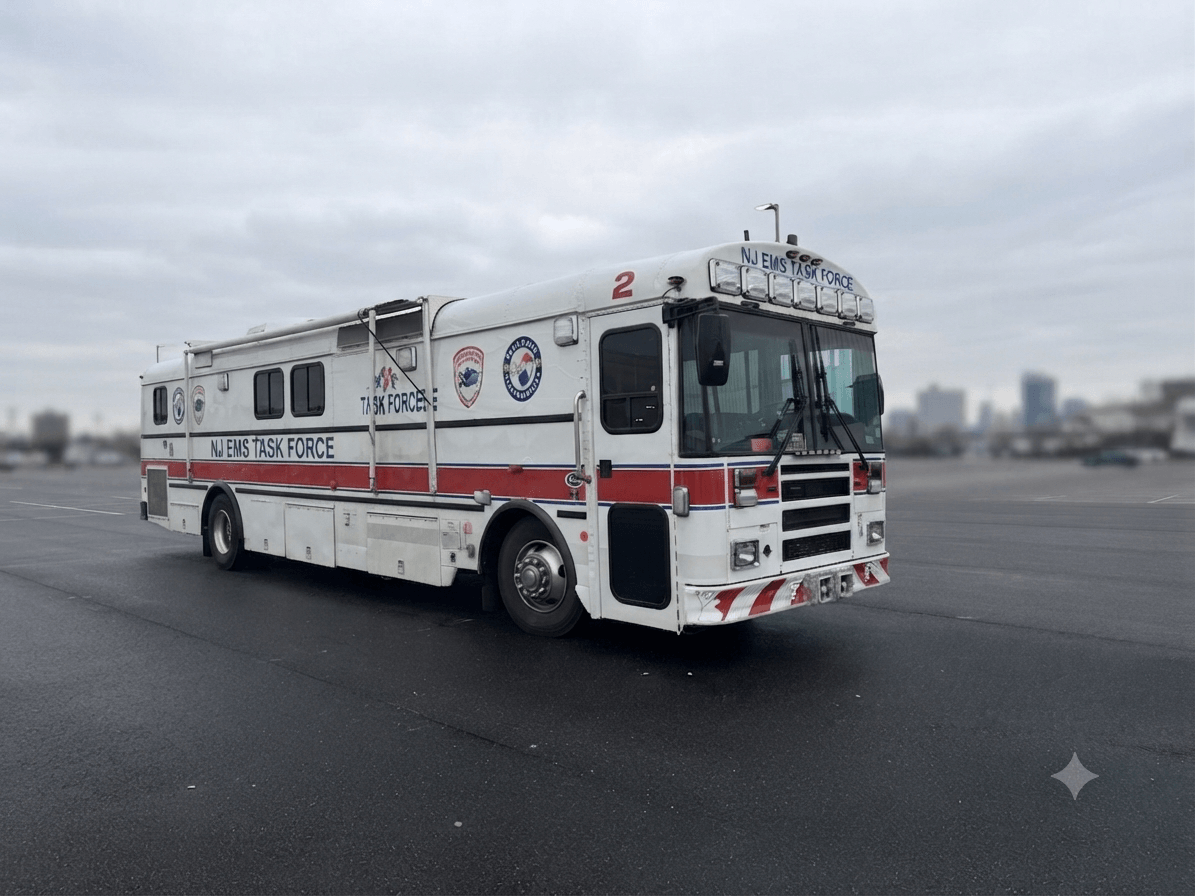
The task force estimates it needs $23 million in federal funding to replace aging equipment — chiefly 13 of its 17medical ambulance buses stationed across the state, eight of which have already reached the end of their roughly 15-year lifespan, along with tow vehicles and protective gear for personnel.
Who Makes Up This Team
More than 200 career and volunteer EMS providers from 60 partner agencies across the state make up the task force — including specialized modules trained for chemical, biological, radiological, nuclear and explosive (CBRNE) emergencies, as well as medical ambulance buses capable of handling up to 20 patients, strategically stationed throughout the state.
What’s at Risk if the Team Disappears
The task force also played a key role during the COVID-19 pandemic, helping transport more than 800,000 vaccine doses between locations with surpluses and those in need. Without stable funding, New Jersey would lose the backup system that has stood ready for decades to handle hospital and nursing home evacuations, wildfires, mass gatherings, and pandemics — the exact kind of support that, just this summer alone, was called on again and again within a matter of weeks.
Source: New Jersey Monitor