


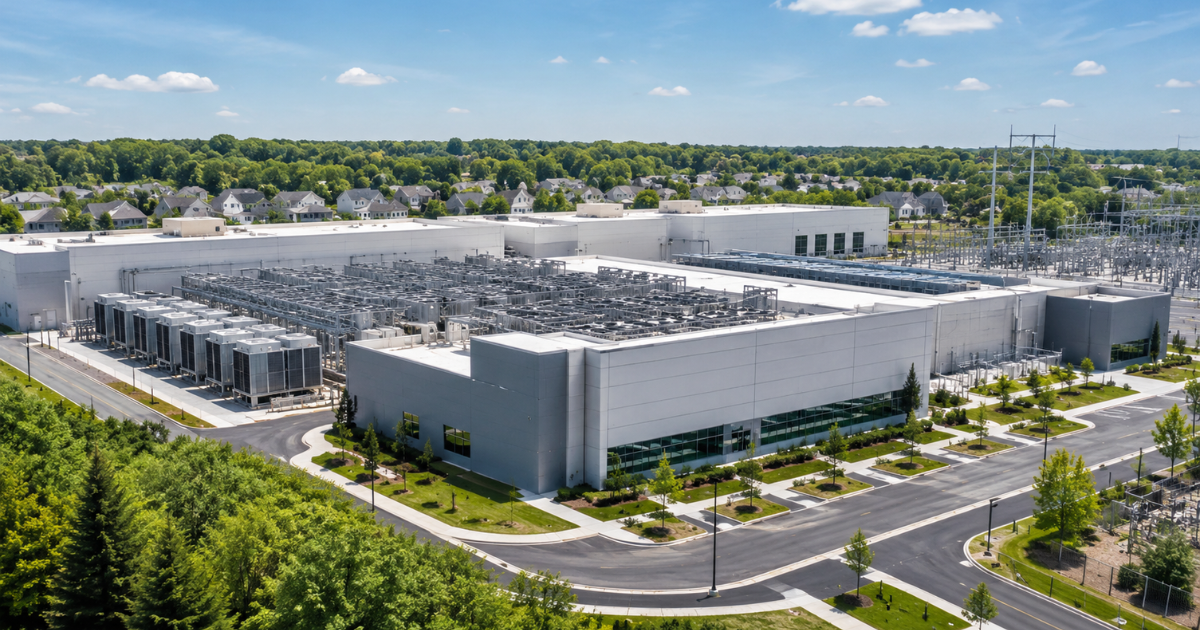
As artificial intelligence drives demand for massive new data centers, resistance to the facilities is growing in New Jersey, where residents and local officials are raising questions about electricity costs, water use, noise, pollution and the long-term impact on their communities.
The debate has become especially visible in Vineland, where residents living near the DataOne AI data center have filed a class-action lawsuit alleging that persistent industrial noise from the facility is disrupting sleep and daily life. The 350-megawatt project has drawn growing community opposition as construction continues.
Residents have described low-frequency noise and vibration coming from the site, while other complaints surrounding the project have raised questions about gas turbines, construction permits, stormwater management and a large liquefied natural gas storage tank. Those issues remain the subject of allegations, regulatory scrutiny and community complaints rather than final legal findings.
The backlash is not limited to Vineland.
In Union Township, officials recently advanced an ordinance that would prohibit new artificial intelligence data centers, reflecting a broader concern among municipalities about allowing large projects before local zoning and infrastructure rules can catch up with the rapid growth of the industry.
The pressure is coming at the same time that Governor Mikie Sherrill’s administration is introducing statewide rules intended to give communities more control over data center development.
Last week, Sherrill signed legislation requiring data center owners and operators to report their energy and water consumption every six months to the New Jersey Board of Public Utilities. Reports must include overall electricity consumption, energy used for cooling and computing equipment, peak daily water use, water sources and information about on-site and backup power systems.
The administration has also issued guidance to help municipalities negotiate Community Benefits Agreements with developers. Those agreements can address local concerns including infrastructure demands, emergency services, noise, pollution, workforce development and investments in schools or other community projects.
Earlier this summer, New Jersey adopted additional measures requiring large data centers to contribute more directly to the energy infrastructure needed to support them. Sherrill has argued that ordinary utility customers should not be forced to absorb the cost of rapidly increasing electricity demand from the industry.
The debate reflects a much larger national divide.
AI tools are becoming increasingly common, but communities across the country are pushing back against the physical infrastructure required to power them. Concerns frequently center on electricity demand, water consumption, noise, environmental effects and whether the relatively small number of permanent jobs created by data centers justifies their impact. National opposition has become strong enough to unite political figures who otherwise agree on very little.
For New Jersey, the question is increasingly not whether AI and data centers will continue to grow, but under what conditions communities will be willing to accept them — and who will pay for the resources they consume.
Sources: New Jersey Governor’s Office; The Guardian; TAPinto Union; Tom’s Hardware
By NJ RADAR Team