


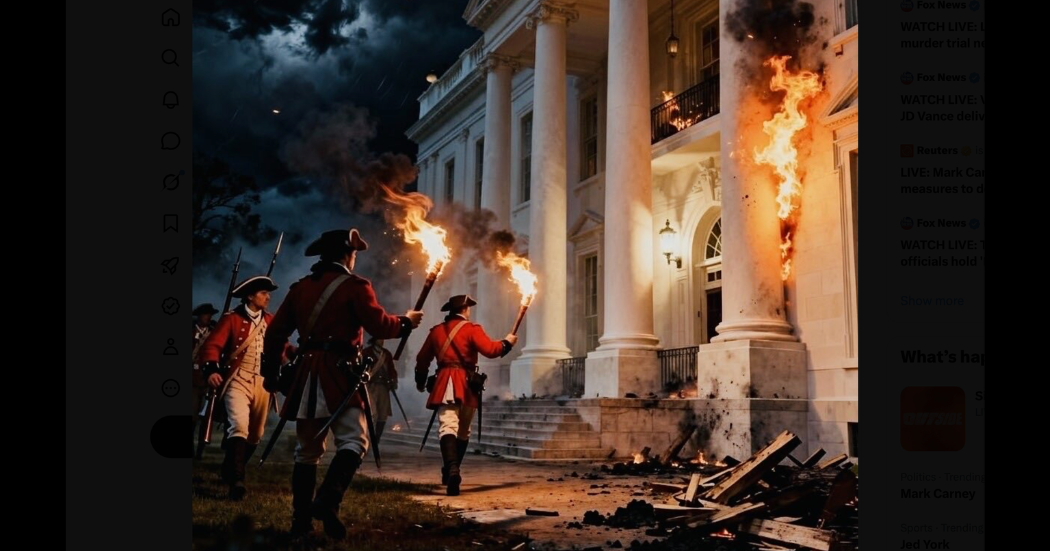
On August 24, 1814, British forces entered Washington, D.C., and set fire to the White House, the U.S. Capitol and other government buildings during the War of 1812.
The attack came after a period of escalating fighting between the United States and the British Empire. A year earlier, American forces had attacked and burned government buildings in York, the settlement that later became Toronto.
The destruction of Washington is therefore often described, at least in part, as British retaliation for the American attack on York.
After defeating American forces at the Battle of Bladensburg, British troops advanced into the capital. President James Madison and other government officials had already fled the city.
First Lady Dolley Madison famously left the White House shortly before the British arrived. Before leaving, she helped ensure that a large portrait of George Washington was removed from the building so it would not be destroyed.
British troops then set fire to the President’s House, as the White House was known at the time, as well as the Capitol and several other public buildings.
A severe storm hit Washington the following day and helped extinguish many of the fires.
The White House was later rebuilt, and President James Monroe moved into the reconstructed building in 1817.
One detail is worth clarifying when retelling the story today: while some people describe the attackers as forces from what is now Canada, the more historically accurate description is British forces serving the British Empire. Canada did not yet exist as the modern country we know today.
More than two centuries later, the burning of Washington remains one of the most dramatic moments in the history of the U.S. capital.
Sources: White House Historical Association, U.S. history records
By NJ RADAR Team