


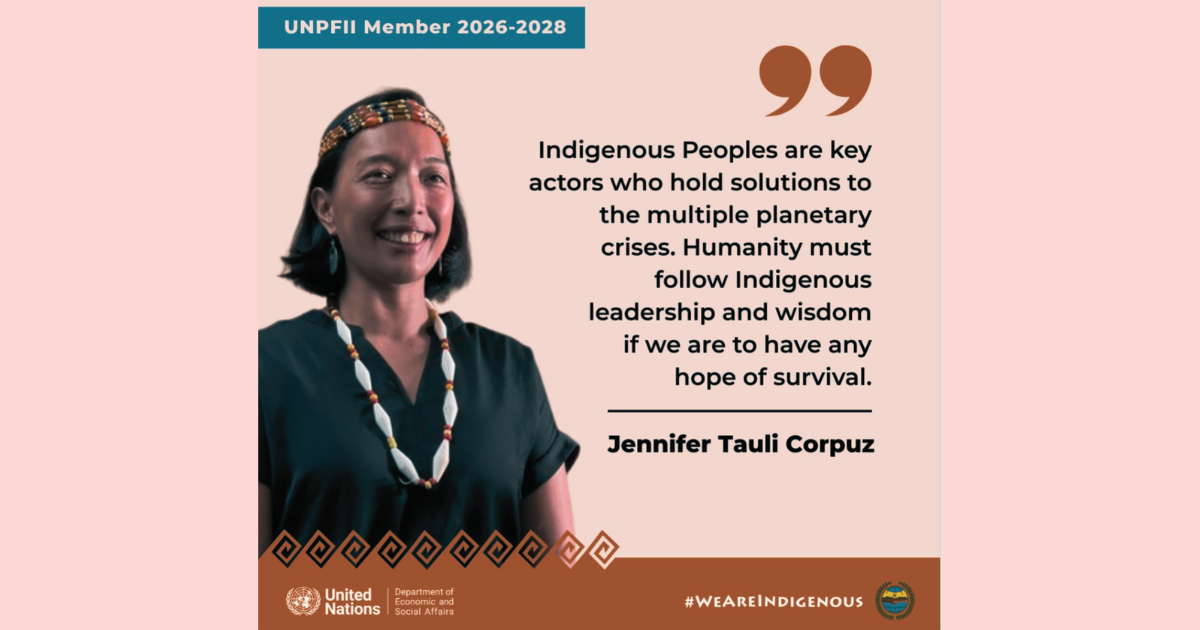
Indigenous Peoples should be recognized not only as communities affected by climate change and environmental destruction, but as key partners in solving some of the world’s most serious ecological challenges, according to UN Indigenous rights expert Jennifer Tauli Corpuz.
“Indigenous Peoples are key actors who hold solutions to the multiple planetary crises,” Tauli Corpuz said in remarks shared by United Nations Geneva. “Humanity must follow Indigenous leadership and wisdom if we are to have any hope of survival.”
Tauli Corpuz is a member of the United Nations Permanent Forum on Indigenous Issues, which advises the UN system on economic, social, cultural and environmental issues affecting Indigenous Peoples.
Traditional Knowledge as an Environmental Resource
Her message reflects a broader argument increasingly heard within the United Nations: Indigenous communities often possess generations of knowledge about managing forests, water, soil and biodiversity.
At the recent UNCCD COP17 conference, Tauli Corpuz said Indigenous Peoples have been disproportionately affected by drought, land degradation, climate change and biodiversity loss despite contributing relatively little to the causes of those crises.
At the same time, she argued that Indigenous communities bring practical knowledge developed through centuries of close relationships with land and nature.
“We are here to offer solutions that are born from our close relationship with nature and with the land,” she said during the conference.
Indigenous Voices Seek a Greater Role in Global Decisions
Indigenous representatives have also been pushing for stronger participation in international environmental decision-making.
COP17 marked the first formal meetings of both the Indigenous Peoples Caucus and the Local Communities Caucus under the UN Convention to Combat Desertification.
The conference also saw the largest Indigenous representation in the history of a UNCCD COP, according to the convention.
The broader debate goes beyond climate policy.
Indigenous leaders have called for stronger recognition of land rights, traditional knowledge, free, prior and informed consent, and greater access to climate and conservation financing.
Tauli Corpuz has also emphasized that environmental programs and carbon markets must respect Indigenous land tenure and community consent if they are to operate with legitimacy and integrity.
A Different Approach to Environmental Protection
The growing focus on Indigenous leadership reflects a shift in how global institutions approach environmental policy.
Rather than treating Indigenous communities solely as vulnerable populations requiring protection, many UN initiatives increasingly recognize them as environmental stewards whose experience can contribute directly to climate adaptation, biodiversity protection and land restoration.
Tauli Corpuz’s message is that those communities should have a meaningful role in shaping global solutions — not simply be consulted after decisions have already been made.
As climate change, biodiversity loss and land degradation intensify around the world, the debate over who participates in environmental decision-making is becoming increasingly important.
Sources: United Nations Geneva, United Nations Permanent Forum on Indigenous Issues, UNCCD
By NJ RADAR Team