


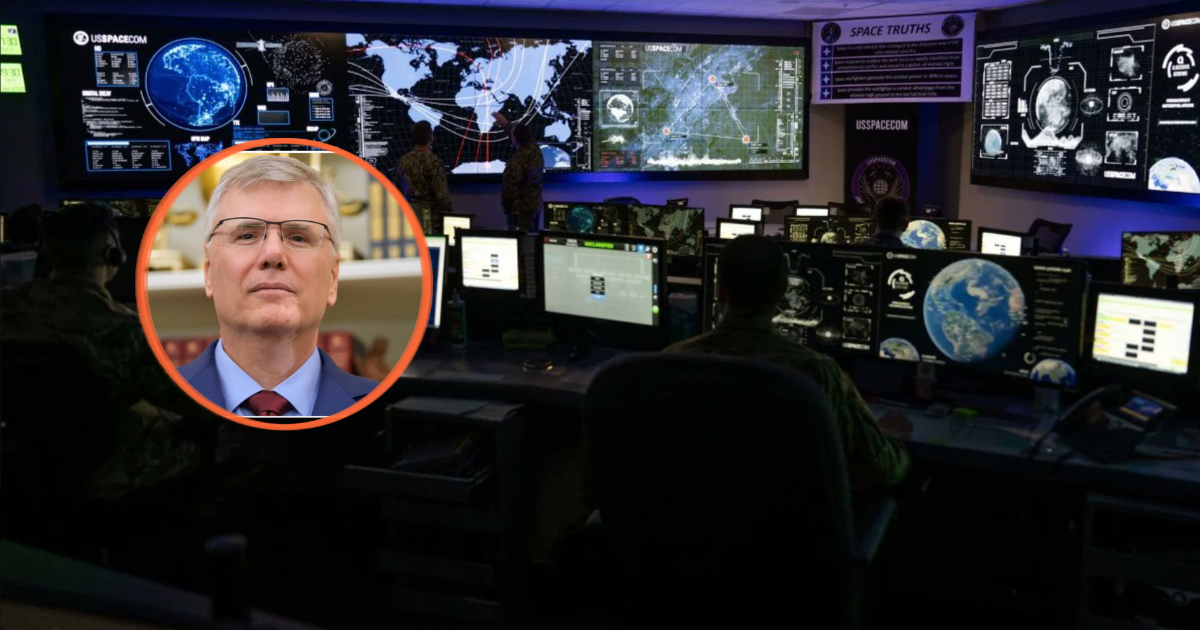
The United States has publicly acknowledged that it now has a space-control weapon deployed in orbit, marking a significant shift in how openly Washington discusses military capabilities in space.
Air Force Secretary Troy Meink made the disclosure during a speech at an Air & Space Forces Association conference in Maryland, saying the United States now has “on-orbit, space-control weapons” capable of protecting U.S. forces against hostile action.
The Pentagon has not disclosed what the system is, how it operates or what kind of targets it could affect. It is also unclear whether the capability is designed primarily to disable enemy satellites, interfere with communications, protect U.S. spacecraft or perform
The phrase “space-control weapon” generally refers to a system intended to protect friendly space assets or deny an adversary the ability to use its own space systems effectively.
The announcement comes after years of U.S. warnings that China and Russia have been developing and testing counter-space capabilities, including systems that could threaten satellites. U.S. officials have increasingly described space as a potential military domain rather than simply a communications and navigation environment.
The disclosure is especially significant because Washington has historically been cautious about publicly acknowledging offensive systems in orbit.
Meink’s comments suggest that the United States now wants potential adversaries to know that it has an operational capability already in space.
The announcement also raises broader questions about the growing militarization of orbit. The 1967 Outer Space Treaty prohibits nuclear weapons and other weapons of mass destruction from being placed in orbit, but it does not impose a blanket ban on all conventional weapons in space.
For now, the most important fact is also the most limited one: the U.S. government has confirmed that it has an operational space-control weapon in orbit, but almost everything about the system itself remains classified.
The new orbital capability could also have relevance in a broader confrontation with Iran, although there is no public evidence that it was deployed specifically for that purpose. U.S. space systems already play an important role in missile warning, tracking launches, communications, navigation and battlefield intelligence. Those capabilities can help detect and respond to Iranian missile activity and support U.S. operations in the region. However, because details of the newly acknowledged “space-control weapon” remain classified, it is not publicly known whether it is designed to protect U.S. satellites, interfere with adversary space systems or perform another mission.
Sources: The Washington Post | Air & Space Forces Association reporting | U.S. Space Force | Washington Times; BBC
By NJ RADAR Team