


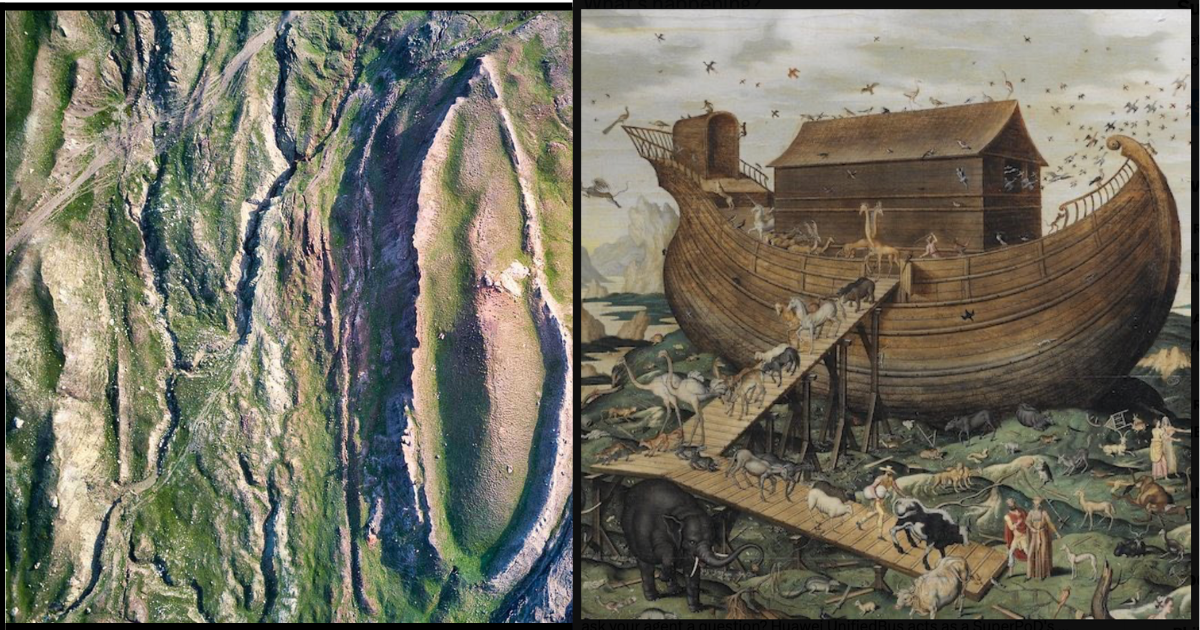
A decades-old mystery in eastern Turkey is attracting fresh attention after authorities approved a new scientific investigation of the Durupınar formation, a boat-shaped geological site near Mount Ararat that some have long associated with Noah’s Ark.
The 2026 research project was officially authorized in June and is being led by Prof. Dr. Cenker Atila of Sivas Cumhuriyet University in cooperation with Noah’s Ark Scans. Researchers are using non-destructive methods including geophysical surveys, topographic mapping and geological analysis to better understand what lies beneath the formation.
The site has fascinated believers, researchers and skeptics for decades because of its unusual shape and location near the region traditionally linked to the biblical and Qur’anic story of Noah.
But the scientists involved are careful about what the evidence actually shows. The research program itself says it does not authenticate religious or historical claims and that its purpose is to document the site scientifically. In other words, the formation has not been proven to be Noah’s Ark.
Still, the mystery has survived for centuries — and not only in eastern Turkey.
One of the most famous legends connected to Noah’s Ark can be found hundreds of miles away in Hagia Sophia in Istanbul. The enormous Imperial Gate, traditionally reserved for the Byzantine emperor, is about seven meters high. Medieval Byzantine tradition claimed that its wood came from Noah’s Ark. Historical scholarship records that references to the door as a relic made from the Ark’s timber appeared as early as the 10th century.
There is no scientific evidence proving that the wood actually came from the Ark, and today the claim is treated as a historical religious tradition rather than established fact. Yet the story shows just how deeply the legend of Noah’s Ark became woven into the cultural memory of the region.
That combination of geology, history and centuries-old tradition is exactly why the Durupınar formation continues to attract attention.
The new research may eventually provide clearer answers about how the formation was created and what lies beneath it. Whether it has any connection to one of humanity’s oldest flood narratives remains an open question — but for now, scientists finally have official permission to investigate the site more closely.
Sources: Noah’s Ark Scans / Sivas Cumhuriyet University; academic research on Hagia Sophia and the Imperial Gate
By NJ RADAR Team
[…] site, near Mount Ararat in Ağrı Province, has attracted researchers, archaeologists and religious interest for decades because of its […]