


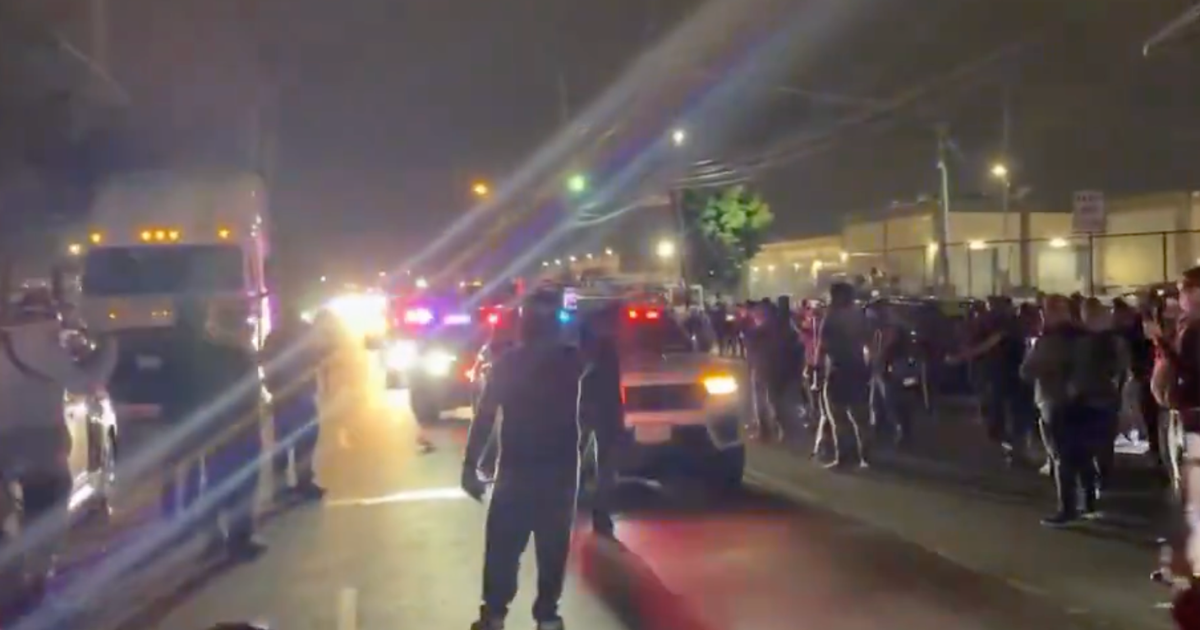
New Jersey Bill Would Target Those Who Finance Riots — But Where Is the Line Between Funding Protest and Funding Crime? A newly introduced New Jersey bill is drawing attention because it would not focus only on people who commit violence during riots or disorderly demonstrations. It would also seek to create criminal penalties for those who finance the criminal activity behind them.
Assembly Bill A5555, sponsored by Republican Assemblyman Gerry Scharfenberger and Assemblywoman Victoria Flynn of Monmouth County’s 13th Legislative District, is titled the “Conspiracy to Fund Criminal Activities Act.”The Legislature’s current synopsis says the bill would create penalties for the financing of riots and violent disorderly conduct. However, as of September 21, the full legislative text had not yet been publicly posted, meaning some of the most important legal details are still unknown.
The proposal is about financing criminal conduct — not simply paying for a protest
That distinction is important.
Organizing a protest, paying for buses, printing signs, hiring staff, renting equipment or helping demonstrators travel to an event is not, by itself, a crime. Political organizations, advocacy groups, unions and campaigns routinely spend money supporting demonstrations protected by the First Amendment.
The legal question becomes different when money is knowingly used to facilitate criminal conduct — for example, violence, property destruction or other offenses connected to a riot. Shore News Network, which first reported on A5555, emphasized that paid demonstrators would not automatically become criminals under the proposal; the issue would be whether financial support was knowingly connected to criminal activity.
That difference may ultimately become the most important part of the debate over the bill.
New Jersey already distinguishes peaceful assembly from riot-related crimes
A5555 does not appear in a legal vacuum.
New Jersey already has laws defining riot, disorderly conduct and other offenses committed during violent public disturbances. Separate legislation introduced this session, Senate Bill S763, would go further by creating a specific offense called “promotion of violent, disorderly assembly.”
Under that proposal, a person could face criminal liability if they conspired as an organizer, supervisor, financier or manager to commit specified crimes during a riot or at the site of a peaceful assembly. The bill would also increase penalties depending on the seriousness of the underlying offense.
That earlier proposal shows the legal problem lawmakers are trying to address: the person who throws a brick may be easy to identify, while the person who allegedly organized, financed or directed criminal conduct may be far removed from the scene.
The difficult question is intent
Any law aimed at financing riots will likely turn heavily on knowledge and intent.
There is a major legal difference between:
A group paying for transportation to a lawful demonstration where violence unexpectedly breaks out, and a person knowingly providing money, equipment or logistical support for planned criminal activity.
That distinction matters because peaceful political protest is protected by the First Amendment. A broadly written law that treated ordinary protest funding as criminal could raise serious constitutional questions. A narrower law aimed at knowingly financing specific criminal acts would present a different legal issue.
Because the full text of A5555 has not yet been released publicly, it is not yet possible to determine exactly how the bill would define that boundary.
Why lawmakers are looking beyond the people in the street
The proposal also reflects a broader question that has emerged during large demonstrations around the country: when violence occurs, should criminal responsibility stop with the people physically committing the acts?
Supporters of legislation like A5555 may argue that someone who knowingly finances or coordinates criminal violence should not escape responsibility simply because they were not physically present.
Critics of similar approaches may be concerned that vague definitions of “funding,” “organizing” or “support” could discourage lawful political activity or expose organizations to investigation because of the actions of individual demonstrators.
Those concerns are not mutually exclusive. A law can attempt to target intentional support for violence while still raising legitimate questions about how prosecutors would prove intent and how broadly the statute might be applied.
A key distinction: riot versus peaceful protest
New Jersey law already treats riot and peaceful assembly differently.
Under current law and related proposals, riot generally involves coordinated disorderly conduct tied to criminal purposes, threats, weapons, property damage or injury. Other provisions expressly protect people from being treated as criminals merely because they are part of a gathering or because an audience forms around protected speech.
That means the politically important question surrounding A5555 is not simply whether someone “funded a protest.”
The more precise question is whether prosecutors could show that a person knowingly financed criminal conduct associated with that protest.
That may sound like a small wording difference, but legally it is enormous.
What remains unknown
At this stage, several important questions cannot yet be answered because the complete text of A5555 has not been published.
It is not yet clear exactly what level of knowledge prosecutors would need to prove, what kinds of financial or material support would qualify, what penalties would apply, or whether the bill will contain explicit safeguards for lawful political organizing.
Those details will determine whether the proposal is narrowly focused on financing criminal activity or whether it reaches more broadly into protest organization.
Until the full bill text becomes available, headlines saying New Jersey wants to “criminalize funding protests” would therefore be misleading. The official description is narrower: penalties for financing riots and violent disorderly conduct.
The debate is likely to be about the boundary, not the principle
Few people would argue that deliberately financing planned violence should automatically be protected simply because it occurs near a political demonstration.
The more difficult issue is where the state draws the legal line between support for lawful protest and knowing participation in criminal activity.
That is where A5555 is likely to receive the closest scrutiny once its full language becomes public.
For now, the proposal is still at an early stage. It has not become law, and the most important details — including exactly how New Jersey would define criminal financing and what evidence prosecutors would need — remain to be seen.
Sources: New Jersey Legislature, Shore News Network, StatePulse, New Jersey Senate Bill S763
By NJ RADAR Team