


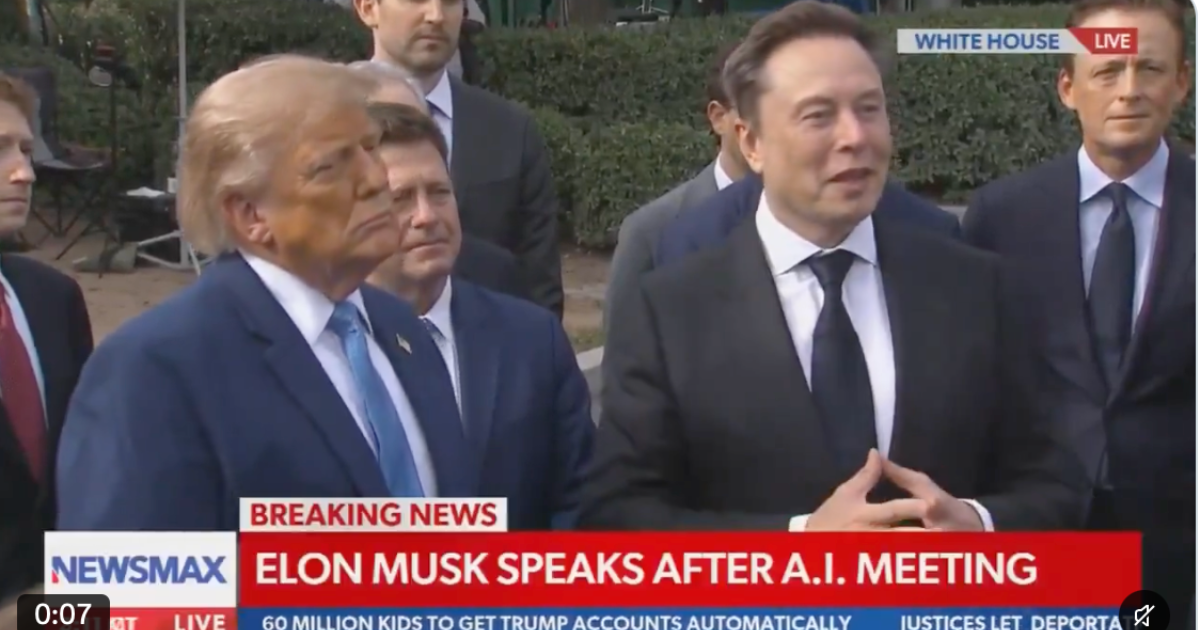
Elon Musk used Tuesday’s White House gathering on artificial intelligence to paint an unusually optimistic picture of what advanced AI and robotics could eventually mean for healthcare.
Speaking alongside President Donald Trump and other major technology executives, Musk argued that the combination of increasingly capable robots and what the administration is calling “superintelligence” could make high-quality medical care available far beyond the people who can afford the best doctors today.
“When you have robots and you have superintelligence, that means that everyone in the world can have better medical care than anyone here, including me,” Musk said. “And wouldn’t that be wonderful?”
A Vision of Healthcare Without Today’s Limits
Musk’s remarks reflect a broader belief among some technology leaders that advanced AI could eventually help diagnose disease, assist doctors, operate medical equipment and perform increasingly complex physical tasks through robotics.
In that vision, access to excellent medical care would depend less on geography, shortages of specialists or the ability to pay for scarce expertise.
But Musk was describing a possible future, not a healthcare system that exists today. Current AI systems and humanoid robots remain far from being able to independently provide the full range of care delivered by physicians, nurses and other medical professionals.
White House Brings AI Leaders Together
Musk made the comments during a high-profile White House meeting with leaders from some of the world’s largest technology companies.
The gathering focused on the rapid development of artificial intelligence and the question of how the United States should balance innovation with safety and oversight. Participants included executives from Meta, Nvidia, Anthropic and other major AI companies.
Trump said after the meeting that he is considering creating a 10-member committee focused on AI safety. Meta CEO Mark Zuckerberg said companies had agreed to develop stronger internal controls and auditing procedures for advanced AI systems.
Promise Comes With Growing Safety Concerns
The optimistic discussion came on the same day that current and former researchers from OpenAI and Google DeepMind publicly warned that companies may be moving too quickly toward increasingly autonomous and self-improving AI systems.
Those researchers said safety measures may not be keeping pace with technological development and raised concerns about whether future systems could become difficult for humans to control.
That tension now sits at the center of the AI debate: the technology could bring major advances in medicine, science and productivity, while increasingly powerful systems also raise questions about safety, accountability and human control.
From AI Assistants to Robotic Care
Musk has long connected his work in artificial intelligence with the development of humanoid robots.
If those technologies advance as he predicts, robots could potentially perform routine physical tasks while AI systems provide specialized knowledge, allowing medical expertise to be delivered at much larger scale.
Whether that vision becomes reality will depend not only on advances in AI and robotics, but also on medical regulation, reliability, patient safety and public trust.
For Musk, however, the long-term goal is clear: advanced technology should make expertise that is now scarce available to everyone.
His latest White House remarks framed healthcare as one of the clearest examples of what he believes superintelligence could eventually make possible.
Sources: Reuters, CBS News, White House AI meeting coverage
By NJ RADAR Team