


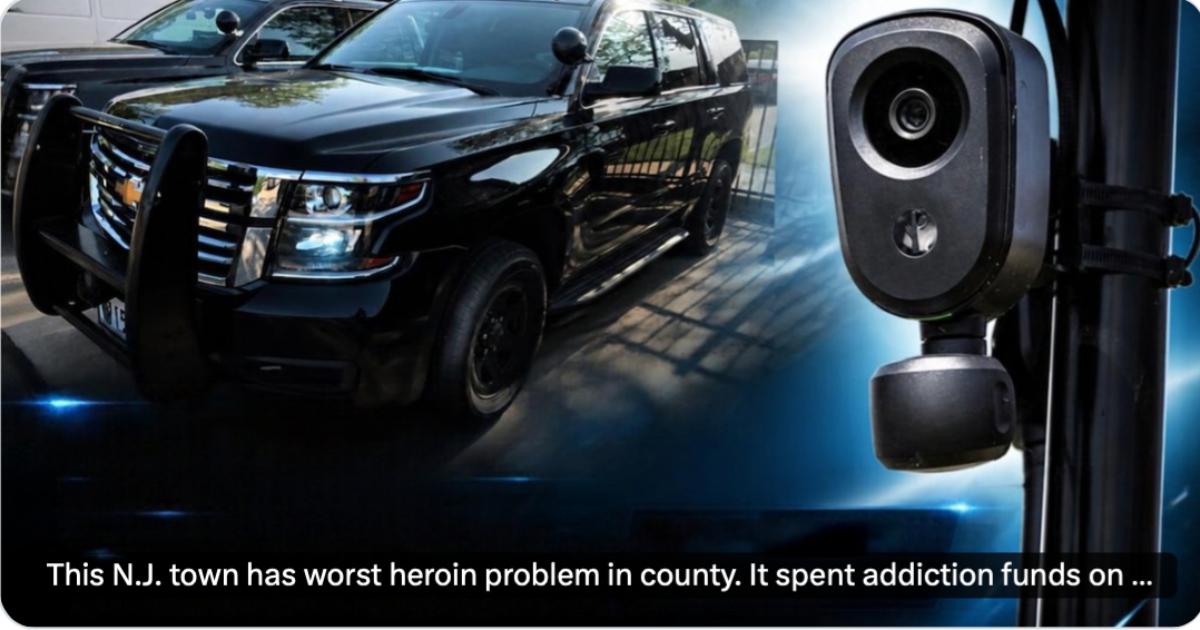
An investigation found that Washington Township reported spending more than $170,000 on drug education, while financial records show purchases of police vehicles and surveillance cameras.
WASHINGTON TOWNSHIP, NJ — A New Jersey municipality is facing scrutiny after an investigation revealed that money intended to help communities recover from the opioid epidemic was used to purchase police SUVs and surveillance cameras rather than the drug education programs reported to the state.
According to an investigation published by NJ.com on October 9, Washington Township in Gloucester County reported spending $170,446.70 in opioid settlement funds on substance abuse education and prevention programs during 2024 and 2025.
However, municipal financial records showed that the same amount was spent on two Chevrolet Tahoe police SUVs and 15 surveillance cameras manufactured by Flock Safety.
The discrepancy raises questions about how local governments are using money intended to address one of the country’s most devastating public health crises.
Money Intended to Fight Addiction
The funds came from nationwide legal settlements involving pharmaceutical manufacturers, distributors, and other companies implicated in the opioid epidemic.
New Jersey is expected to receive more than $1 billion in settlement funds through 2038.
The money is intended to support addiction treatment, prevention, recovery services, overdose prevention, and other programs addressing the consequences of opioid abuse.
Washington Township, a community of approximately 50,000 residents, has experienced serious problems related to opioid addiction.
According to state data cited in the investigation, the township recorded 95 heroin treatment admissions in 2025, among the highest totals in Gloucester County.
What the Financial Records Revealed
The township’s reports to New Jersey officials indicated that the settlement money had supported drug education programs, including initiatives targeting schoolchildren.
But records reviewed by investigators showed different expenditures.
The $170,446.70 reported for education matched the cost of two Chevrolet Tahoe police vehicles and the first 15 Flock license plate reader cameras.
A separate review of township financial records by the independent Opioid Audit project found that total spending from the dedicated opioid settlement account had reached $267,924.50 by April 2026.
That figure included police vehicles, additional equipment, camera purchases, and related expenses.
The project’s review found no corresponding spending on addiction treatment, recovery services, school prevention programs, or naloxone from that account during the period examined.
Officials Defend Police Equipment Spending
Township officials have argued that police equipment and surveillance technology can contribute to public safety and assist law enforcement in addressing drug-related crime.
Flock cameras automatically capture vehicle license plate information and can help police identify vehicles connected to criminal investigations.
However, the central question is whether general police equipment qualifies as an approved use of money specifically designated for opioid remediation.
The township’s current administration has pointed to decisions made under previous leadership while emphasizing its commitment to transparency and addressing the opioid crisis.
Former Mayor Laurie Burns has disputed attempts to place responsibility solely on her administration.
Addiction Experts Question the Spending
The findings have drawn criticism from specialists who argue that opioid settlement money should directly support people affected by addiction.
Sandy Gibson, an addiction researcher and professor at The College of New Jersey, criticized the reported spending and questioned the lack of stronger state oversight.
The controversy is particularly significant because Washington Township has experienced substantial demand for addiction treatment services.
Critics argue that spending on vehicles and surveillance equipment may divert resources from programs that could directly prevent overdoses, support recovery, and educate young people about substance abuse.
Questions About State Oversight
The investigation also revealed concerns about how New Jersey monitors opioid settlement spending.
Municipalities report their expenditures to the state, but routine submission of receipts and detailed supporting records has not been required.
This creates the possibility that reported spending categories may not match the transactions recorded in local financial accounts.
The Washington Township case is not isolated.
Investigations have identified other New Jersey municipalities where opioid settlement funds were reportedly spent on equipment or activities whose connection to addiction prevention and treatment has been questioned.
These findings have prompted calls for stronger auditing procedures, more transparency, and clearer accountability.
Will the Money Be Recovered?
It remains unclear whether Washington Township will be required to reimburse its opioid settlement account or redirect money toward approved addiction programs.
The financial discrepancies are documented, but a formal determination of wrongdoing would require review by the appropriate oversight authorities.
The case highlights a broader challenge facing New Jersey as settlement money continues flowing to local governments: ensuring that funds intended to address the opioid epidemic are used for their designated purposes.
For families affected by addiction, the issue is not simply how municipal budgets are managed.
It is whether money intended to prevent overdoses, support recovery, and protect future generations is reaching the people and programs it was meant to help.
Sources: Opioid Audit | The Philadelphia Inquirer | NJ Opioid Settlements
By NJ RADAR Team