


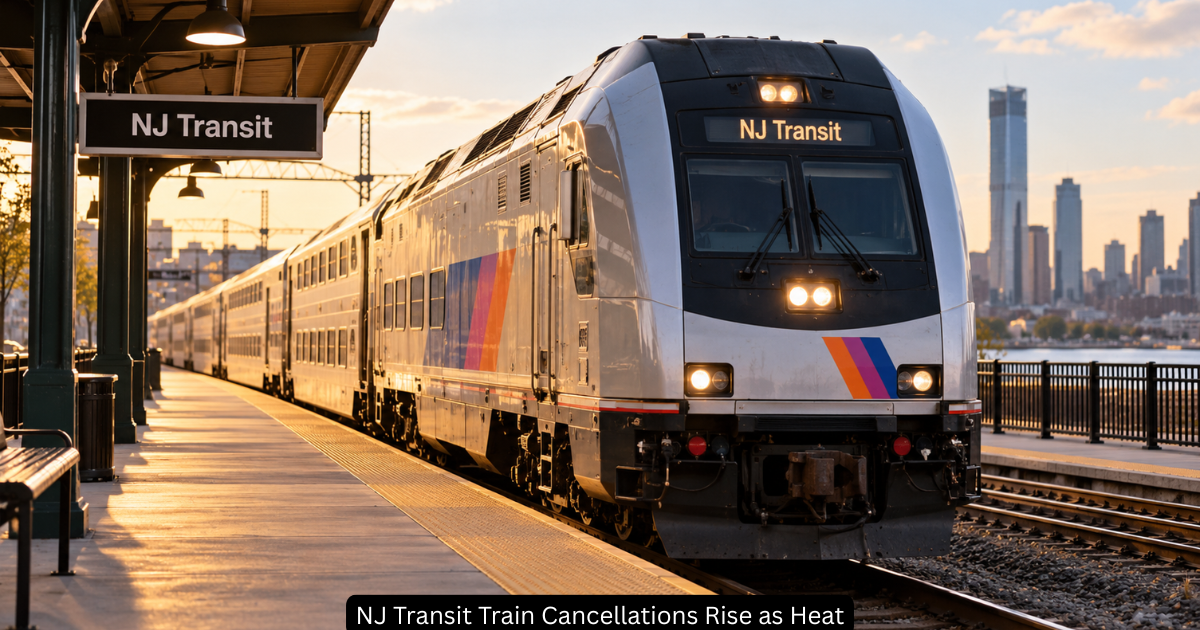
NJ Transit canceled 1,715 trains between June 1 and August 31, a slight increase from 1,646 cancellations during the same period last year, as extreme heat, severe storms, aging equipment and Amtrak-related disruptions continued to affect rail service across New Jersey.
Extreme Heat and Storms Drove the Increase
NJ Transit said weather was the biggest reason for the increase this summer.
The agency recorded 657 cancellations tied to unpreventable issues, a category that includes weather-related disruptions, compared with 288 last year. July was particularly difficult because of intense heat and severe storms.
NJ Transit spokesperson Jim Smith said one severe storm brought down more than 50 trees along the Morris & Essex Line.
Extreme heat can also cause overhead electrical wires to sag and rail tracks to expand, creating delays, speed restrictions and service disruptions.
Aging Trains Remain a Major Problem
Mechanical problems were the second-largest cause of cancellations.
NJ Transit reported 459 cancellations caused by mechanical issues, down from 634 last summer but still far above the 174 recorded in 2019.
Some trains in the agency’s fleet have been operating for decades, making repairs more frequent and, in some cases, more difficult because replacement parts are harder to obtain.
NJ Transit is replacing its rail fleet with 374 new multilevel train cars, and the agency says the first of those cars are still expected to enter service this year.
Amtrak Problems Also Added to Cancellations
Amtrak-related cancellations rose to 164 this summer, up sharply from the low double digits last year.
Many NJ Transit trains use Amtrak-owned infrastructure, particularly on the Northeast Corridor. Problems with overhead catenary wires were among the main causes of the disruptions, especially during periods of extreme heat.
Still, that was an improvement compared with the summer of 2024, when Amtrak-related problems were blamed for 527 NJ Transit cancellations.
Staffing Remains a Challenge
Crew and engineer-related cancellations declined slightly to 231, but staffing remains an issue.
The locomotive engineers’ union says retirements have reduced the number of available engineers, while NJ Transit’s training program takes about 20 months to complete, making it difficult to quickly rebuild staffing levels.
The summer numbers highlight the combination of problems NJ Transit continues to face: extreme weather, old equipment, staffing shortages and dependence on aging regional rail infrastructure.
Sources: New Jersey Monitor, NJ Transit
By NJ RADAR Team