


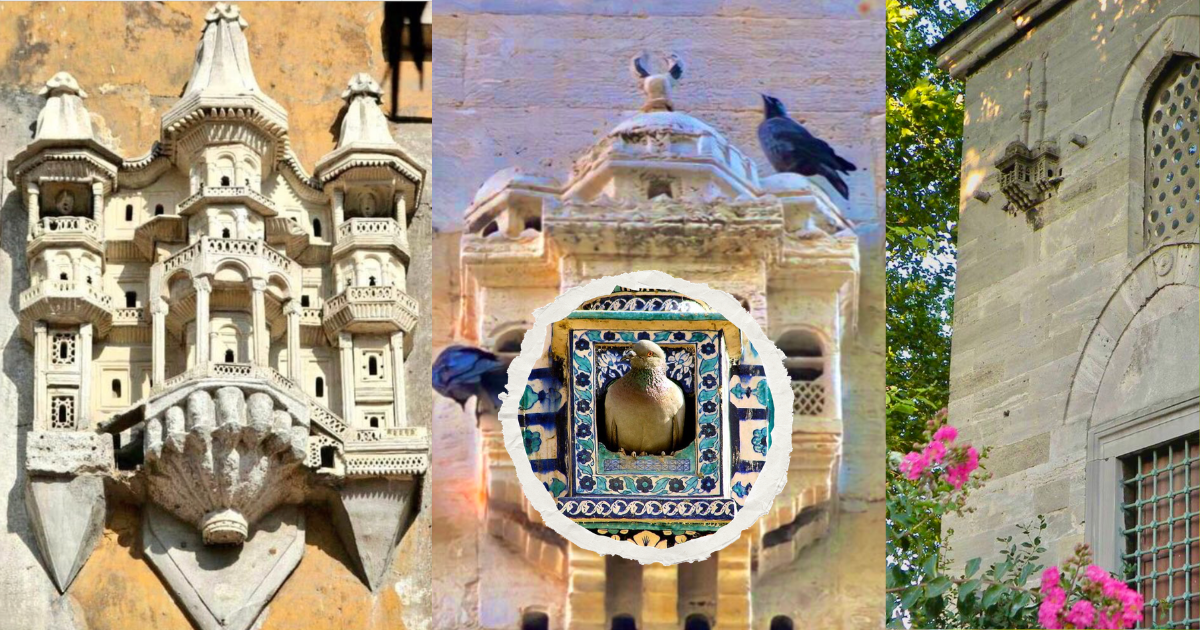
Centuries ago in the Ottoman Empire, compassion for animals became part of everyday life and even part of architecture. In cities across present-day Turkey, people fed birds during harsh winters and built ornate shelters for them into mosques, fountains and public buildings. These miniature bird palaces reflected a belief that mercy and charity should extend to all living creatures.
In the Ottoman Empire, particularly in the territory of present-day Turkey, there was a deeply rooted tradition of caring for animals and other living beings.
Inspired by Islamic teachings on mercy, charity, and responsibility toward God’s creation, people would scatter wheat and other grains during the winter months so that birds would not go hungry.
This tradition was not limited to ordinary people. Ottoman sultans, state officials, and wealthy benefactors also supported the care of animals through charitable foundations and other forms of public giving.
Miniature Palaces for Birds
One of the most beautiful expressions of this tradition was the construction of decorative birdhouses directly into the walls of mosques, madrasas, caravanserais, fountains, and other public buildings.
They were often designed like miniature palaces, mansions, or castles, complete with tiny windows, balconies, and intricate decorative details.
Their purpose was practical, providing birds with shelter, but they also reflected a broader idea: even the smallest and most vulnerable creatures deserved protection.
Charity Beyond Human Beings
In Ottoman society, caring for animals was often understood as a form of charity.
Providing food, water, or shelter for birds could be seen as a good deed carrying spiritual value, and some charitable foundations were established specifically to help animals.
Bird palaces became one of the most visible symbols of this compassionate approach toward living beings.
A Tradition That Survives Today
Examples of these structures can still be seen in Istanbul and other Turkish cities today, especially on historic Ottoman buildings.
Some surviving examples are centuries old and remain striking reminders of a time when architecture was designed not only for people, but also for the animals living alongside them.
This tradition also reflects the broader Islamic emphasis on mercy toward all living creatures.
That idea is beautifully reflected in the Qur’an:
“Whoever does an atom’s weight of good will see it, and whoever does an atom’s weight of evil will see it.”
Qur’an 99:7–8
Ottoman bird palaces may have been small in size, but their message was much larger: kindness and mercy were understood as values that extended beyond human society to all of creation.
By Aziza Smailovic