


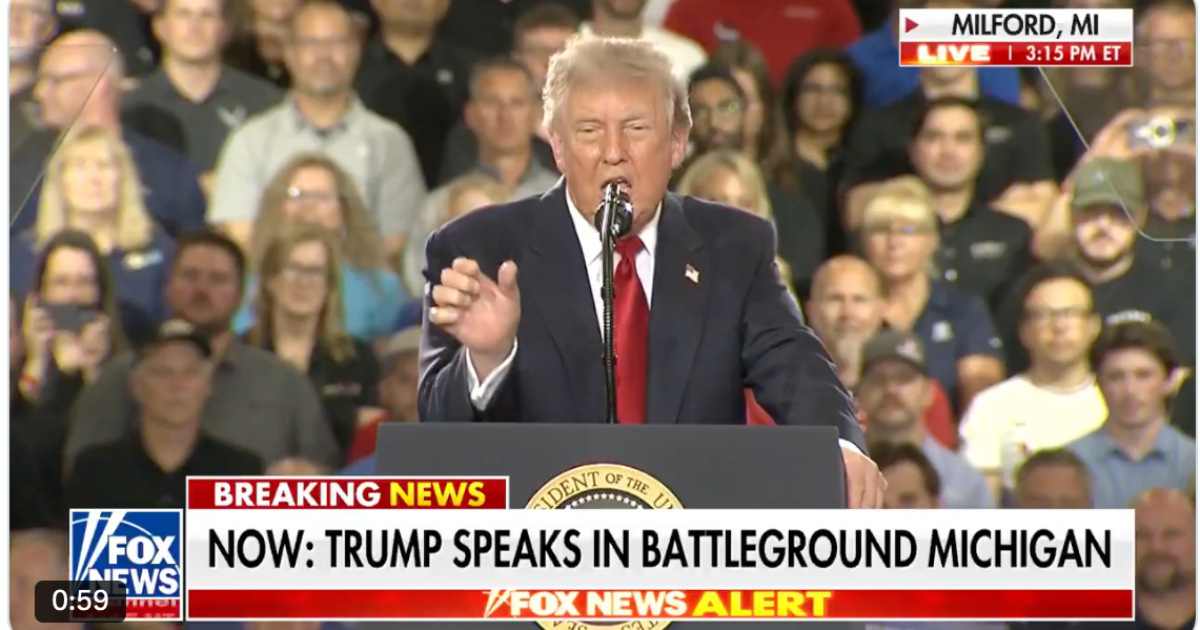
President Donald Trump is linking newly approved fuel economy standards to a broader effort to reshape the American auto industry, arguing that looser federal rules will lower vehicle prices, expand consumer choice and encourage automakers to build more vehicles in the United States.
In a post on his social media account Saturday, Trump wrote: “BIG DAY FOR AMERICAN AUTO WORKERS AND CAR BUYERS! I have just approved new Fuel Economy Standards that TERMINATE Sleepy Joe Biden and Pete Boot-EDGE-EDGE’s ridiculous EV Mandate.”
Trump said the new standards would help manufacturers including General Motors, Ford and Stellantis build more vehicles domestically and would ultimately reduce prices for consumers.
What the New Fuel Economy Rules Change
The rules involve the federal Corporate Average Fuel Economy, or CAFE, standards, which determine how fuel-efficient automakers’ fleets must be on average.
The Trump administration has moved to sharply lower the requirements that had been set under President Joe Biden. Reuters reported that the revised approach would target a fleetwide average of about 34.5 miles per gallon by 2031, compared with the Biden-era target of 50.4 mpg.
Trump and his administration describe the previous standards as an “EV mandate.” That is their political characterization of the rules: the Biden standards did not literally require consumers to buy electric vehicles, but they were designed in a way that encouraged automakers to sell more EVs and other highly efficient vehicles in order to meet fleetwide targets.
The administration argues the rollback will make new vehicles more affordable. NHTSA estimated that the relaxed rules could lower average vehicle costs by about $930, while also projecting significantly higher fuel consumption and carbon dioxide emissions over time.
Trump Connects the Rules to Michigan and U.S. Manufacturing
Trump’s latest message fits into a broader argument he has been making for months: that U.S. auto production is returning and that federal policy should make it easier for manufacturers to build gasoline-powered trucks, SUVs and other vehicles Americans continue to buy.
During a July visit to the General Motors Proving Ground in Milford, Michigan, Trump told GM workers that the country was building more auto factories and plants than at any time in its history.
He thanked autoworkers, technicians, mechanics, welders and engineers, saying they were helping rebuild the country.
Trump also said:
“At long last, Michigan finally has a president who stands up for Michigan Auto Workers and puts America first.”
The White House has pointed to billions of dollars in new and expanded automotive investment in Michigan, including GM investments and increased truck and SUV production.
GM, Ford and Stellantis at the Center of the Debate
Detroit’s major automakers have been adjusting production plans as consumer demand shifts between gasoline vehicles, hybrids and EVs.
The administration says its new rules will give manufacturers more flexibility rather than forcing them to move too quickly toward electric vehicles.
The wider auto industry, however, is still in transition. Reuters reported this week that some manufacturers are struggling with the scale and profitability of EV production while hybrids and traditional vehicles continue to attract significant demand. Reuters
That means the policy debate is no longer simply about gasoline cars versus electric cars. It is also about how quickly the industry should transition, how much consumers are willing to pay, and where those vehicles and their components will be manufactured.
A Broader Rollback of Biden-Era Auto Policy
The fuel economy changes are part of a larger reversal of Biden-era vehicle and climate policy.
Congress and the Trump administration have also moved against California’s ability to impose stricter vehicle emissions standards, including its plan to phase out sales of new gasoline-only vehicles by 2035. That issue remains tied up in litigation.
At the same time, the administration has ended or reduced several federal incentives that had encouraged EV adoption and has emphasized domestic manufacturing, tariffs and trade protections as central parts of its automotive strategy.
Supporters See Lower Costs; Critics See Higher Fuel Use
The central disagreement is straightforward.
Trump and supporters of the new standards say the previous rules made cars more expensive, limited consumer choice and pushed the industry toward electric vehicles faster than the market wanted.
Critics argue that weaker fuel economy standards will leave drivers using more gasoline over the life of their vehicles, increase emissions and slow the transition toward cleaner transportation.
NHTSA’s own projections reflect that tradeoff: lower upfront vehicle costs, but significantly more fuel burned over the coming decades.
For Trump, however, the message is broader than fuel economy alone.
He is presenting the new rules as another piece of his larger industrial policy: build more vehicles in the United States, give manufacturers more flexibility and put American autoworkers at the center of the strategy.
Sources: Reuters; NHTSA; White House; General Motors visit transcript.
By NJ RADAR Team