


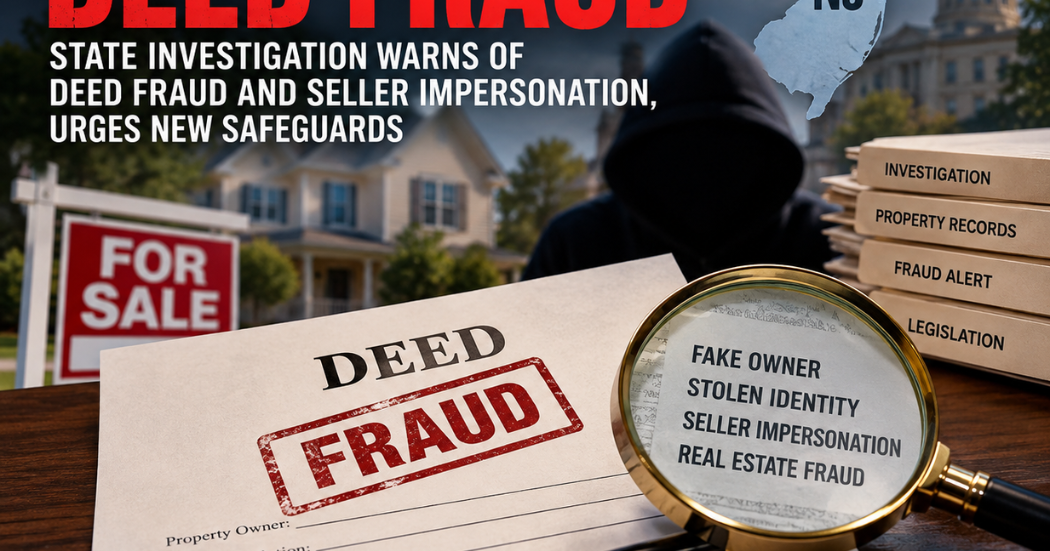
New Jersey is among the states with the highest number of reported deed fraud cases in the country, according to a new report from the New Jersey State Commission of Investigation.
Investigators, working with FBI data, identified approximately 135 reported incidents in New Jersey between 2020 and early March 2026. That number places New Jersey among the top three states nationally for reported cases during the period reviewed.
Deed fraud occurs when someone uses forged documents, stolen identities or fraudulent property records to make it appear that they legally own someone else’s home, land or other real estate.
In some cases, scammers impersonate the real owner and file a false deed transferring the property to themselves or to a company they control. They may then try to sell the property, obtain loans against it or otherwise profit before the legitimate owner realizes what happened.
The New Jersey investigation found notable concentrations of reported cases in Sussex, Bergen, Cape May and Ocean counties.
Investigators also warned that the true number could be higher. Some victims may never report the fraud, while other cases may be recorded under broader categories such as real estate fraud, seller impersonation or identity theft.
One of the weaknesses identified in the current system is timing. Many county property-alert programs can notify an owner when a document involving their property has been filed — but generally only after the document has already been recorded. That means an alert can warn a homeowner that something suspicious happened without necessarily preventing the fraudulent filing in the first place.
The issue can be especially serious for owners of vacant land, second homes, inherited properties or homes without mortgages, where fraudulent activity may be less likely to attract immediate attention.
The State Commission of Investigation is calling attention to gaps in the safeguards surrounding property transfers and has recommended stronger measures to detect fraudulent deeds before they become part of the official property record.
For homeowners, the report is also a reminder that property records are worth monitoring. A deed may look like an ordinary government document, but once a fraudulent transfer enters the system, reversing it can require lawyers, court proceedings and considerable time.
Sources: New Jersey State Commission of Investigation | FBI data cited by NJ SCI | News 12 New Jersey
By NJ RADAR Team