


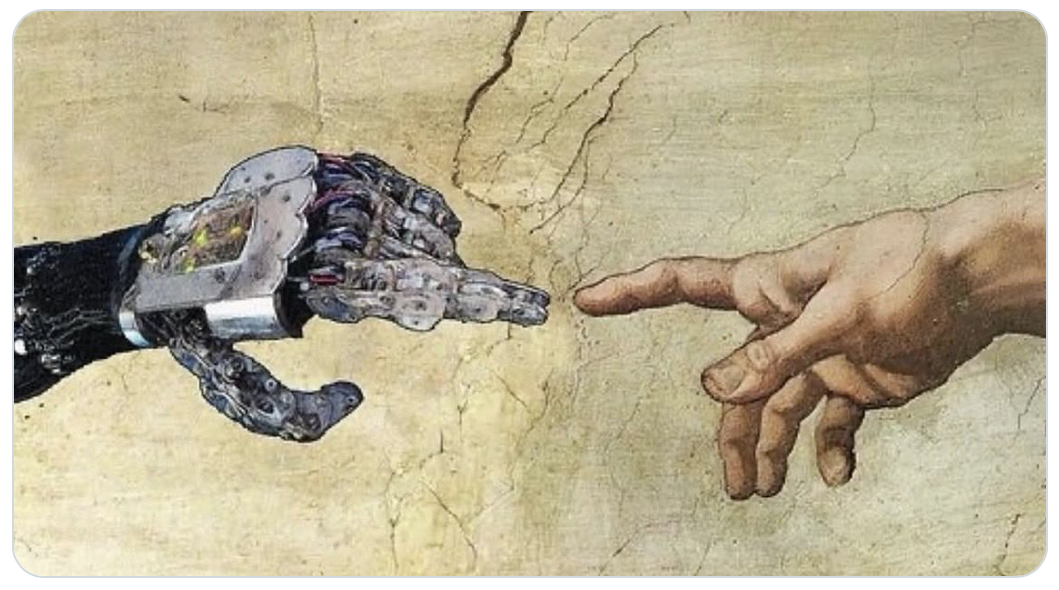
More than 160 years before today’s debates over artificial intelligence, English writer Samuel Butler was already asking a remarkably modern question: could machines eventually evolve beyond the humans who created them?
In 1863, while living in New Zealand, Butler published an essay titled “Darwin Among the Machines” in The Pressnewspaper in Christchurch. He signed the piece under the name “Cellarius.”
Inspired by Charles Darwin’s theory of evolution, Butler applied a similar idea to technology. He observed that machines were becoming more complex, more powerful and more capable with each generation, while technological change was happening at a pace far faster than biological evolution.
Then he made a striking prediction:
“It appears to us that we are ourselves creating our own successors.”
Butler suggested that humanity might be building a new kind of “mechanical life,” gradually giving machines greater power and increasingly self-regulating abilities. He even imagined a future in which humans could become the inferior species.
This was not a prediction of computers or artificial intelligence in the modern technical sense. Computers did not yet exist. Butler was writing during the Industrial Revolution, surrounded by steam engines, machinery and rapid mechanical innovation.
But the philosophical question he raised feels remarkably familiar today: what happens if the tools humans create eventually become more capable than their creators?
Butler returned to the idea in his 1872 satirical novel Erewhon. In the fictional society he created, advanced machinery had been largely destroyed because people feared that machines could continue evolving and eventually escape human control.
More than a century and a half later, as artificial intelligence becomes increasingly capable, Butler’s 1863 essay is often read with new interest.
He was not writing about ChatGPT, robots or modern AI.
But he was already asking one of the questions that defines the technological age:
Are machines simply our tools — or are we creating something that may eventually succeed us?
Sources: The Press / Papers Past | Project Gutenberg | Wikisource | Samuel Butler archives
By NJ RADAR Team