


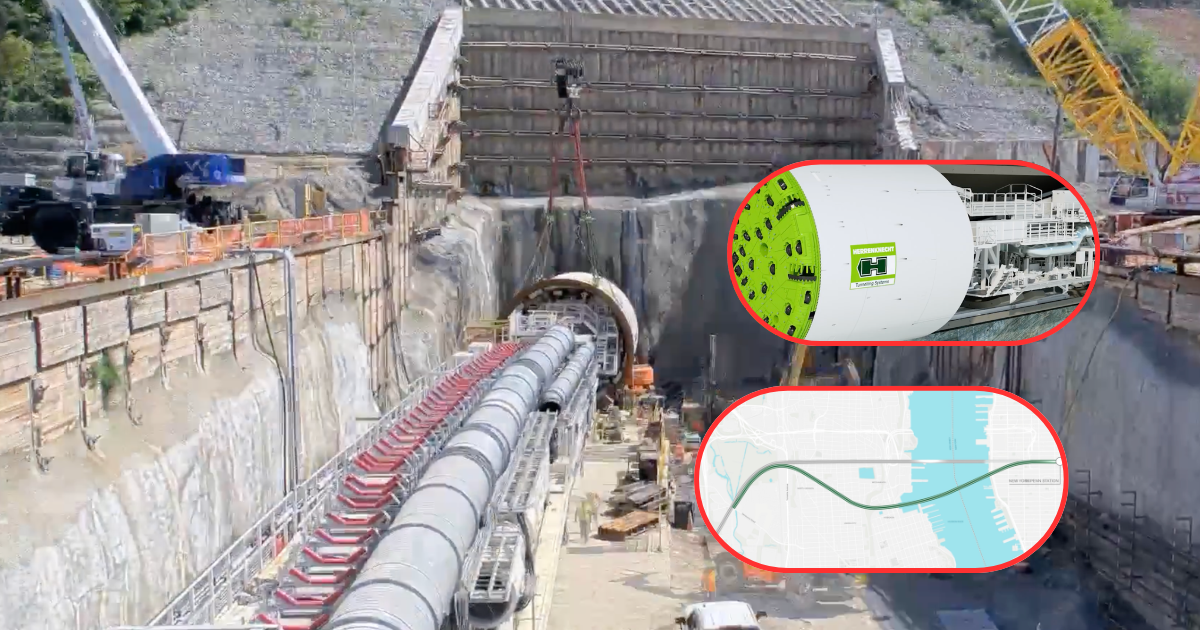
A massive tunnel boring machine has begun work on the long-awaited Gateway Project, marking a major step in the construction of a new rail tunnel beneath the Hudson River between New Jersey and New York City.
The project, valued at roughly $16 billion, is one of the largest infrastructure efforts currently underway in the United States and is designed to improve reliability on the Northeast Corridor, the busiest passenger rail route in the country.
New Tunnel Beneath the Hudson
The new tunnel will create two additional rail tracks between New Jersey and Manhattan and is intended to reduce pressure on the existing North River Tunnel, which opened in 1910.
That century-old tunnel was badly damaged by flooding during Superstorm Sandy in 2012 and has remained a major vulnerability for Amtrak and NJ Transit service.
Around 200,000 passengers travel through the existing tunnel on a typical weekday, making the Hudson crossing one of the most important rail links in the region.
A Major Construction Milestone
The launch of the tunnel boring machine marks the beginning of one of the most visible and technically complex stages of the Gateway Project.
The machine will slowly excavate underground while simultaneously installing sections of the tunnel lining behind it.
Once completed, the new Hudson Tunnel will allow the existing tunnel to be taken out of service one tube at a time for a full rehabilitation without cutting rail capacity between New Jersey and New York in half.
Critical for NJ Transit and Amtrak
The project is especially important for New Jersey commuters.
NJ Transit trains traveling into New York Penn Station rely on the same Hudson River infrastructure used by Amtrak. Any major failure in the existing tunnel could severely disrupt rail service between New Jersey and Manhattan.
Gateway officials have described the new tunnel as essential to the long-term stability of the Northeast Corridor and the regional economy.
The corridor connects major cities from Boston to Washington and carries hundreds of thousands of passengers every day.
Years of Delays Before Construction
The Gateway Project has been discussed for years and faced repeated political, financial and regulatory delays before major construction finally moved forward.
Federal funding now covers a large portion of the project, with New York and New Jersey also contributing to the cost.
The broader Gateway Program includes not only the Hudson Tunnel but also improvements to bridges, tracks and rail infrastructure on both sides of the river.
A Project With Regional Impact
Once completed, the new tunnel is expected to provide greater reliability and resilience for commuters, Amtrak passengers and the broader Northeast transportation network.
Construction will continue for several years, but the start of tunnel boring represents a major milestone for a project that regional officials have called critical for both transportation and economic growth.
Sources: Associated Press; Gateway Development Commission; Amtrak
By NJ RADAR Team