


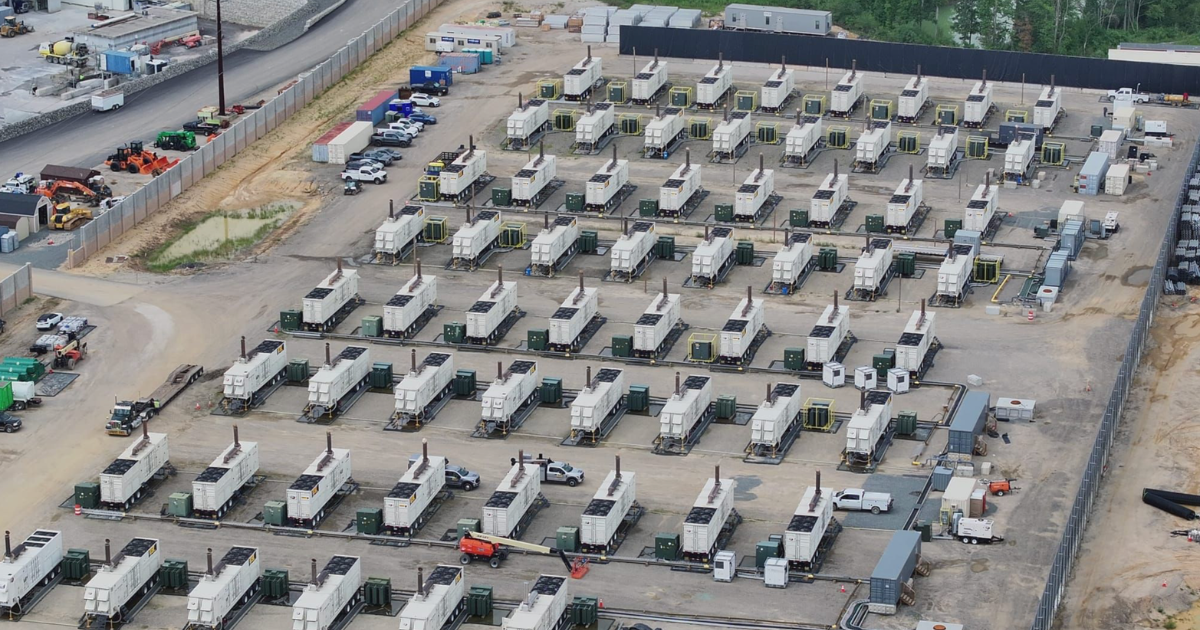
A major data center in Vineland operated dozens of large natural-gas generators for months without required state air permits, according to newly obtained public records that are raising fresh questions about pollution, oversight and the rapid expansion of data centers in New Jersey.
The New Jersey Department of Environmental Protection fined DataOne $1.07 million in September after inspectors found 62 large natural-gas generators operating at the Cumberland County facility without the required permits.
The penalty is the largest enforcement action against a data center in New Jersey history.
Generators Began Arriving in 2025
New records obtained by Floodlight and reported by the New Jersey Monitor provide a clearer picture of how long the generators had been operating.
According to a letter DataOne later sent to NJDEP, generators began arriving at the property in July 2025.
Sixteen were operating by October 2025, another 16 came online in February 2026, and by June all 62 were running.
By the time state inspectors identified the fleet during a July 29 inspection, the generators had accumulated more than 46,000 combined operating hours, according to the records.
NJDEP said the generators had not been observed during its previous inspection in December 2025.
Experts Estimate Significant Air Pollution
The generators burn natural gas and can emit nitrogen oxides, carbon monoxide, carbon dioxide and other combustion-related pollutants.
Using technical data obtained through public-records requests, Rutgers environmental scientist Xiaomeng Jinestimated that the facility may have emitted approximately 140 tons of nitrogen oxides, or NOx, during the period examined.
If that estimate is accurate, the facility would have ranked among New Jersey’s largest NOx emitters in 2025, according to the analysis published by Floodlight.
NOx contributes to smog formation and has been associated with respiratory and cardiovascular health problems.
Jin and former EPA air-enforcement official Bruce Buckheit also estimated that if all of DataOne’s generators operated at full capacity for a year, their potential NOx emissions could exceed 1,500 tons annually.
That figure represents potential emissions rather than a measurement of what the facility actually released.
Residents Had Complained About Noise
Residents near the Vineland facility had reported noise problems for months.
More than 100 complaints were submitted to the Cumberland County Department of Health beginning in March, according to records reviewed by Floodlight. Many identified generators as the suspected source.
One county inspector who visited the site in May in response to a complaint concluded that noise from generators exceeded nighttime limits.
The records have prompted residents to question how such a large generator fleet could operate for months before state environmental regulators intervened.
State Imposes Record Fine
NJDEP said each of DataOne’s generators has a capacity of 1,982 kilowatts.
New Jersey requires a preconstruction permit and valid operating certificate for generators with a capacity of 37 kilowatts or more.
The department concluded that DataOne violated the New Jersey Air Pollution Control Act by installing and operating the generators without those approvals.
The state ordered the company to obtain the necessary permits or stop operating the generators.
DataOne was given 45 days to comply, meaning the generators were not immediately shut down following the enforcement action.
DataOne Disputes the State’s Finding
DataOne has disputed NJDEP’s conclusion that the generators required the permits cited by regulators.
The company said it is moving toward a permanent power system using lower-emission fuel cells and said it already has the necessary approvals for that system.
DataOne nevertheless said it plans to apply for the generator permits required by the state.
Microsoft, which has been linked to the facility as a customer or partner, told Floodlight that it expects suppliers and partners to comply with applicable legal and regulatory requirements and said it is working with DataOne as the facility transitions to its permanent power system.
New Jersey Tightens Rules for Data Centers
The case comes as New Jersey moves to impose stronger rules on the rapidly growing data-center industry.
Gov. Mikie Sherrill has signed legislation requiring data centers to disclose their energy and water consumption and has backed policies intended to prevent the facilities’ large electricity demands from increasing costs for ordinary utility customers.
The state has also developed guidelines to help municipalities negotiate community-benefit agreements addressing issues including noise, pollution and infrastructure impacts.
DataOne’s Vineland facility has become an early test of how aggressively New Jersey will enforce those new expectations.
The newly released records also raise a broader question for communities across the state: whether existing environmental oversight can keep pace as increasingly large data centers seek massive amounts of electricity and, in some cases, generate significant amounts of their own power.
Sources: New Jersey Department of Environmental Protection; New Jersey Monitor; Floodlight; Office of Gov. Mikie Sherrill
By NJ RADAR Team