


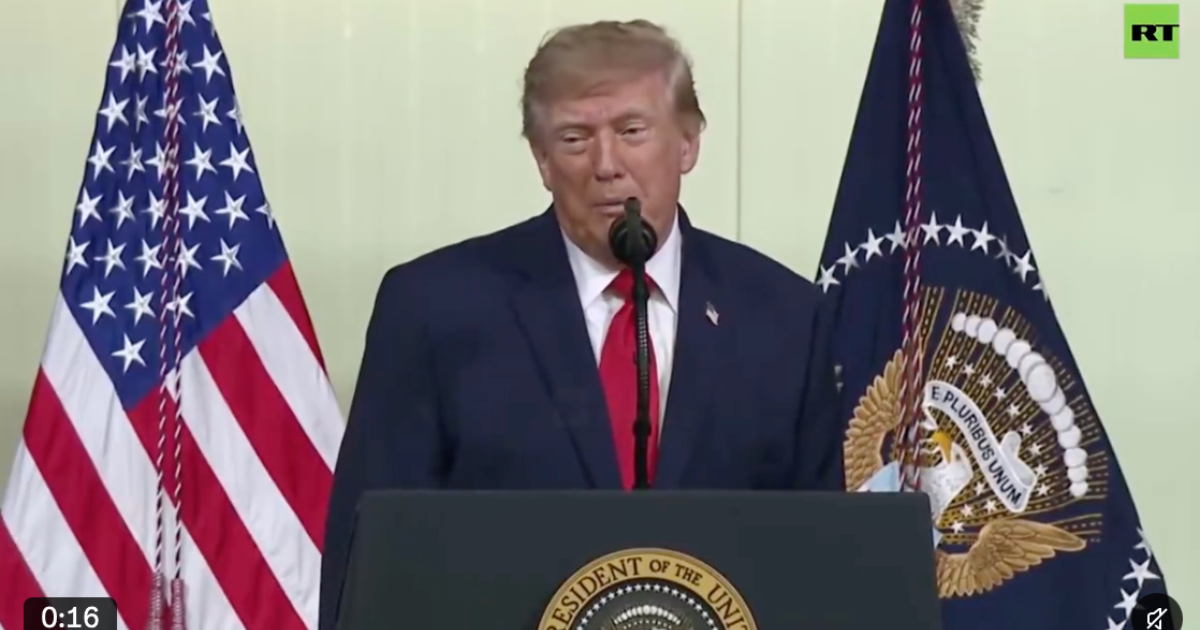
President Donald Trump said the United States is struggling to identify a reliable counterpart in Iran as tensions between Washington and Tehran remain high and diplomatic efforts continue to face major obstacles.
“We don’t know who the hell to deal with, to be honest,” Trump said in remarks circulated Thursday. He also referred to the loss of senior Iranian leaders and said the United States was “trying to be nice to the current person.”
Trump has made similar comments before, arguing that repeated losses within Iran’s leadership have complicated U.S. efforts to determine who has the authority to negotiate. In an August speech, he said one of his biggest problems was that he did not know “who the hell to deal with” in Iran.
Diplomacy Remains Uncertain
The remarks come as relations between the United States and Iran remain deeply strained.
Reuters reported Thursday that Tehran is preparing for a stronger military response if it is attacked again, while at the same time continuing limited diplomatic efforts through regional intermediaries. Iran has recently floated proposals for de-escalation, but the chances of a broader agreement remain uncertain.
Trump has repeatedly said Iran can contact the United States if it wants to negotiate. Earlier this year, he said Washington had secure channels available for talks, even as military confrontation and sanctions continued to complicate diplomacy.
U.S. Military Presence Is Growing
The latest comments also come as the United States increases its military presence in the Middle East.
Reuters reported Thursday that the U.S. is deploying additional forces to the region, including a third aircraft carrier and roughly 10,000 more troops, as Trump weighs the possibility of renewed military action against Iran.
Iran, meanwhile, has warned that any new attack would bring a broader and more forceful response, potentially involving U.S. interests and allies across the region.
Leadership Uncertainty Adds Another Layer
Trump’s comments point to another problem in the already complicated U.S.-Iran relationship: uncertainty over who currently holds enough political authority inside Iran to negotiate and deliver on an agreement.
That uncertainty follows months of conflict, political upheaval and leadership losses inside Iran.
The United States has not publicly endorsed a replacement political structure for Iran. Earlier this year, Trump also expressed doubts about whether exiled opposition figure Reza Pahlavi would have enough support inside the country to become a national leader.
For now, Washington and Tehran remain locked in a combination of military pressure, sanctions, threats and limited diplomatic contacts — with no clear path toward a broader settlement.
Sources: Reuters, Trump public remarks
By NJ RADAR Team