


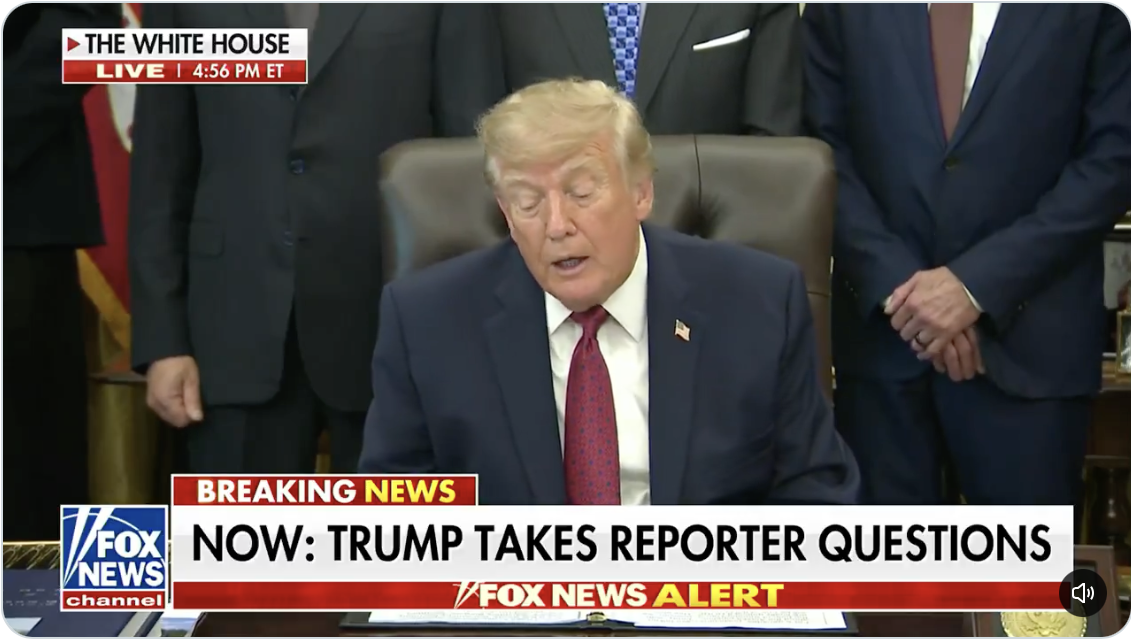
President Donald Trump used a major Alaska energy announcement Wednesday to argue that gasoline prices could fall as new energy projects come online, while also warning that a future Democratic administration could reverse that trend.
Speaking as his administration promoted a large new investment package tied to the long-planned Alaska LNG project, Trump said gas prices in Alaska are poised to “tumble.”
He then turned the issue into a political contrast, saying that if Democrats regain power, prices could rise sharply again.
“If the Democrats come along … the prices will double,” Trump said.
That prediction is Trump’s political assessment, not an independent forecast.
Alaska Gas Prices Remain Among the Highest in the Country
Gasoline remains expensive in Alaska.
AAA listed Alaska among the ten most expensive gasoline markets in the country this week, with regular gas averaging about $5.06 per gallon. AAA said high crude-oil prices and continued instability around the Strait of Hormuz are major factors keeping pump prices elevated nationwide.
Those market pressures complicate the political argument over who is responsible for high fuel prices. Current prices reflect a mix of global oil markets, refinery conditions, fuel inventories, transportation costs and geopolitical developments, not simply the policies of one political party.
Trump Links Lower Prices to New Energy Development
Trump’s remarks came as the White House highlighted plans for major South Korean investment in U.S. energy infrastructure.
Reuters reported that approximately $54 billion is expected to be directed toward the Alaska LNG project as part of a broader South Korean investment package in the United States.
The Alaska LNG project would transport natural gas from Alaska’s North Slope through an approximately 800-mile pipeline to a liquefied natural gas export facility in Nikiski. The overall project has been estimated at roughly $44.5 billion to $54.5 billion.
Trump argues that expanding domestic energy production and infrastructure will ultimately help lower energy costs.
Iran War Still Affecting Energy Markets
Trump also suggested that consumers could see additional relief once the war with Iran ends.
There is evidence that the conflict is contributing to current energy prices.
Reuters reported Wednesday that Brent crude closed at $103.50 per barrel, while U.S. West Texas Intermediate settled at $90.42. Oil prices have been supported by stalled U.S.-Iran talks, tight fuel markets and continued concerns about Middle East supply routes.
AAA has likewise repeatedly linked this year’s elevated gasoline prices to crude-oil costs and instability surrounding the Strait of Hormuz.
Trump Blames Democratic Energy Policies
Trump nevertheless placed significant responsibility for future gasoline prices on the political choices voters make.
He argued that Democratic energy policies would restrict production, undo the benefits of new projects and send prices higher.
He went further, warning that a Democratic return to power could contribute to a “depression, recession, something very bad.”
Democrats generally argue that energy prices depend heavily on global markets and have supported a mix of renewable energy, efficiency measures and domestic energy production. The effect of either party’s policies on gasoline prices depends on multiple factors and cannot be reduced to a single cause.
A Major Project With Questions Still Ahead
The Alaska LNG project has long been discussed but has faced questions over cost, financing and commercial viability.
Reuters notes that many of its current supply agreements are still non-binding and that the project faces competition from LNG exporters on the U.S. Gulf Coast and in Canada.
Still, the proposed South Korean investment could give the project one of its biggest boosts in years.
For Trump, the announcement has also become part of a broader political message: expand U.S. energy production now, and he says consumers will eventually pay less.
Tags: Donald Trump, Alaska, Gas Prices, Alaska LNG, Energy, Democrats, Oil Prices, Iran War, U.S. Economy, South Korea
Sources: Reuters, AAA, White House, Fox News;
By NJ RADAR Team