


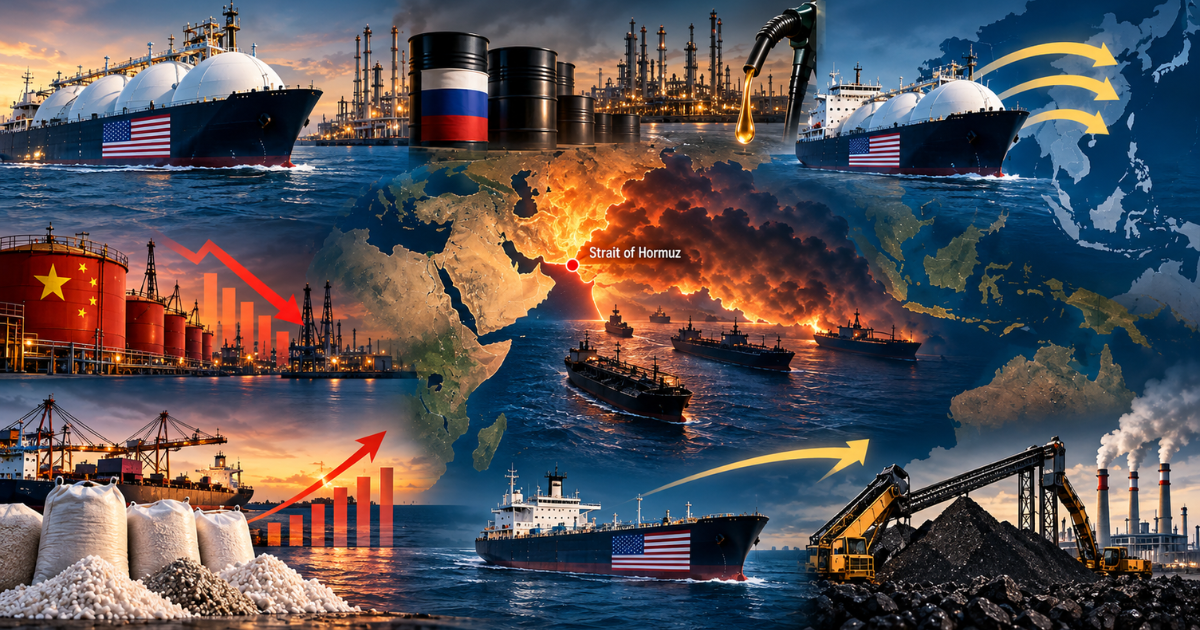
While most people are watching gasoline and electricity prices, the biggest physical shock to energy supply in modern history is unfolding in the background. The trigger is well known: the U.S.-Israeli war against Iran, which began on February 28, 2026, led to the near-total closure of the Strait of Hormuz — the chokepoint through which about one-fifth of the world’s oil and LNG trade passed before the war. The consequences have spread across the globe, and in ways that would have been difficult to imagine only a few years ago.
Here are seven of the strangest twists.
1. Qatar is buying American gas
Qatar, the world’s second-largest LNG exporter, has bought 33 cargoes of U.S. LNG this year for delivery to customers in South Korea, Taiwan, Bangladesh, India and Japan, after the war with Iran disrupted Qatari gas exports through the Strait of Hormuz. Qatar’s energy company even declared force majeure on its LNG supply contracts. According to Reuters calculations, those cargoes are worth around $1 billion. Why would one of the world’s biggest exporters buy from a country that until recently was its competitor? Because around 80 percent of Qatar’s LNG normally goes to Asia, so Qatar wanted to show customers that it remains a reliable supplier even when its own exports are not functioning. QatarEnergy buys 33 US LNG cargoes to offset Hormuz disruption: Sources | The Business Standard +2
2. Russia is importing gasoline made from… Russian oil
Ukrainian drones hit dozens of Russian refineries during the summer of 2026, pushing oil refining to its lowest level in two decades. The result is bizarre: by August 2026, Russia was importing 70 percent of its petroleum products, including gasoline, from India — the country that since 2022 has been the biggest buyer of Russian crude oil. The circle closes at the Vadinar refinery in India, which is partly owned, around 49 to 50 percent, by Russian state oil giant Rosneft; that refinery processes cheap Russian crude oil and sends finished gasoline back to Russian ports. Imports reached a record 125,000 barrels per day in August. A classic reverse trade flow — and a reminder that sanctions are easier to work around than they look on paper. India and Russo-Ukrainian war (2022%E2%80%93present) +2
3. America becomes Asia’s main savior
When Hormuz stopped, Asian buyers turned to U.S. LNG. According to data from the U.S. Energy Information Administration (EIA), the closure of the Strait of Hormuz contributed to a doubling of U.S. LNG shipments to Asia in the first half of 2026 compared with a year earlier. New terminals such as Golden Pass LNG, which began exporting in April 2026, further increased U.S. capacity. America has effectively taken over the role Qatar played for decades — only without the risk of a blocked strait. U.S. Energy Information Administration
4. China drastically cuts oil imports
Although the whole world is in an energy crisis, China, the world’s largest crude oil importer, imported an average of 8.1 million barrels per day in the second quarter of 2026 — 32 percent less than in the first quarter and the lowest level since this statistic began being tracked. The reason is not panic, but strategy: China spent the year before the war systematically building reserves and entered 2026 with an estimated 1.2 billion barrels in commercial and strategic stockpiles, equal to roughly 104 days of import coverage. Instead of buying at high wartime prices, Beijing is simply using what it already had — and in doing so is keeping oil prices from exploding. Energies MediaDiscovery Alert
5. Fertilizers are being hit too
The Strait of Hormuz also carries goods that few people think about when the phrase “energy crisis” is mentioned: fertilizers. According to an analysis by the World Trade Organization, the strait normally carries roughly one-third of the world’s seaborne fertilizer trade, including 34 percent of urea exports, 23 percent of ammonia and nearly 20 percent of phosphate exports. When the strait stopped, the price of urea jumped from around $400 to more than $850 per ton before partially stabilizing. The countries hit hardest are those with no real alternative: Sudan imports 54 percent of its fertilizer through Hormuz, Sri Lanka 36 percent, Tanzania 31 percent, Somalia 30 percent, Pakistan 27 percent and Kenya 26 percent. In other words — a war in the Middle East is directly threatening harvests in Africa and Asia. www.fertilizerdaily.com +2
6. America temporarily “forgives” sanctions on Russian oil
To ease the global price shock, the U.S. Treasury issued General License No. 134 in March 2026, temporarily allowing the sale and delivery of Russian crude oil and petroleum products loaded onto ships no later than March 12, 2026, with the authorization valid until April 11. The license was extended several times, and according to figures cited by the Treasury, it covered 140 million barrels of Russian oil already loaded onto ships around the world. So: the country that officially punishes the purchase of Russian oil itself opened the door to it for several months — just to keep the market from collapsing. shipandbunkernordot
7. Asia is returning to coal
Higher gas prices have pushed Asia back toward the dirtiest fuel. According to the International Energy Agency, global coal demand will rise by 1.2 percent in 2026 to a record 8.94 billion tons — in a year that was supposed to bring a decline in demand. Specifically: Thailand is restarting two coal-fired power plants that it shut down last year, while South Korea has removed the 80 percent limit on electricity generation from coal. Years of effort to move Asia away from coal have been almost wiped out in just a few months. miningweeklyFortune
In Short
The biggest physical shock to energy supply in modern history happened in 2026, and the market is holding together thanks to a combination of U.S. exports filling the gap, China using strategic reserves instead of panic buying, temporary sanctions relief for Russian oil and a massive return to coal in Asia. The cost of that stability is falling hardest on countries that have no reserves, diplomatic leverage or alternative suppliers — from Sudan to Sri Lanka.
The world of energy is no longer the same.
By Aziza Smailovic