


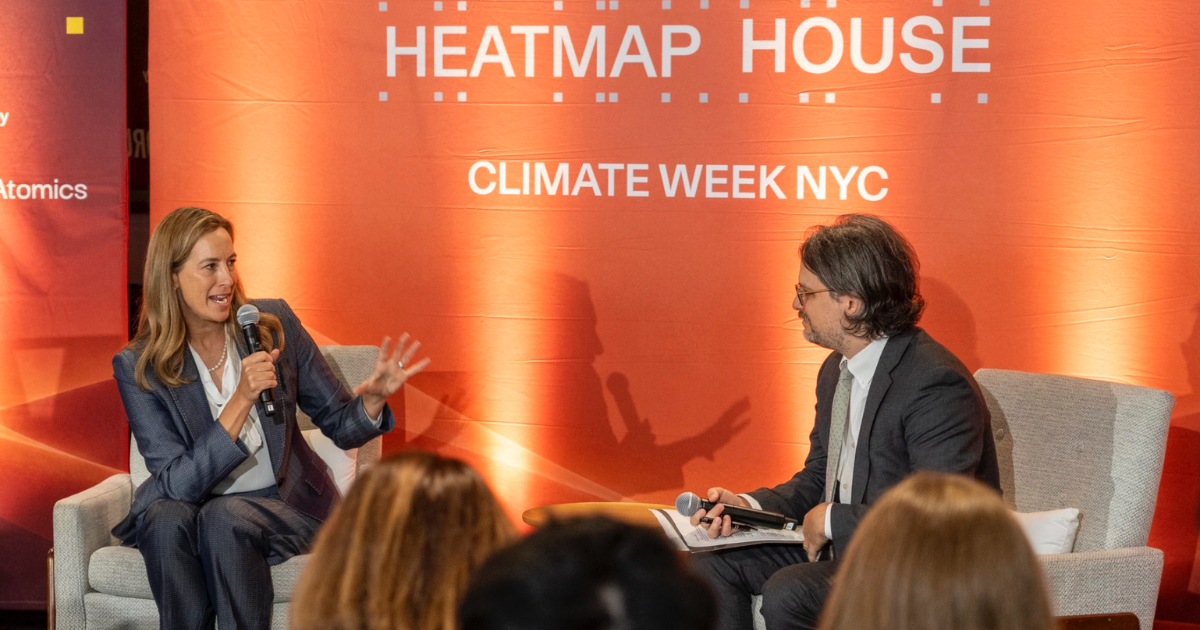
Gov. Mikie Sherrill used an appearance with Heatmap News during Climate Week to make the case that New Jersey should not have to choose between affordable energy and cleaner energy.
Her message was straightforward: the state’s energy system has to do both.
“We don’t have to choose between affordability and sustainability,” Sherrill said in a social-media post after the event, adding that New Jersey is working toward a cleaner and more reliable system that can lower costs while keeping the state economically competitive.
Energy Costs Remain a Major Focus
Electricity affordability has been one of Sherrill’s central policy priorities since taking office.
In July, she signed a package of energy measures aimed at increasing oversight of utility spending, improving the electric grid and preventing large data centers from shifting the cost of their rapidly growing electricity demand onto households and small businesses. Her administration says those actions, combined with other measures taken during her first six months, are expected to save ratepayers more than $1 billion annually, based on an analysis by Synapse Energy Economics.
The state also provided a $25 residential utility credit to 3.6 million ratepayers and an additional $150 credit for qualifying lower- and moderate-income households.
More Solar — Including for Renters
Sherrill has also continued to expand solar energy.
Earlier this month, she signed the Garden State Balcony Solar Act, allowing qualifying small plug-in solar systems of up to 1,200 watts to be used with fewer permitting and utility requirements. The law is designed in part to make solar more accessible to renters and apartment residents who cannot install traditional rooftop panels.
Her administration has also expanded New Jersey’s Community Solar Energy Program and approved additional solar and battery-storage projects.
Data Centers Must Pay Their Share
The rapid growth of data centers has become another major part of New Jersey’s energy debate.
Sherrill signed legislation requiring greater transparency around their water and electricity consumption and has backed rules intended to ensure that data centers pay for the energy and infrastructure they require rather than transferring those costs to other customers.
The state is trying to balance the economic opportunities associated with artificial intelligence and data-center development with concerns about electricity demand, water use and utility bills.
Nuclear Energy Is Also Part of the Plan
Sherrill’s strategy is not limited to renewable energy.
Her administration has also moved toward expanding nuclear generation, including legislation launching a procurement process for new nuclear energy and creating safeguards intended to protect ratepayers from unreasonable costs.
That reflects what the governor has described as an “all-of-the-above” energy strategy — combining solar, storage, nuclear power, grid modernization and other forms of generation rather than relying on a single source.
Affordability and Sustainability Together
Sherrill’s Climate Week appearance brought those policies together under one argument: New Jersey’s transition to a cleaner energy system will only succeed politically and economically if residents can afford it.
For households, that means utility bills remain at the center of the discussion. For the state, it means trying to increase electricity supply, modernize infrastructure and support new industries without placing the cost primarily on residential customers.
The challenge will be whether those policies can deliver both goals over the long term: a cleaner energy system and lower, more predictable costs for New Jersey families.
Sources: Office of Governor Mikie Sherrill; Heatmap News; New Jersey Board of Public Utilities.
By NJ RADAR Team