


A new bipartisan proposal in Congress could change something millions of Americans have long taken for granted: the cost of getting to work. Rep. Laura Gillen of New York, joined by New Jersey Reps. Tom Kean Jr. and Jeff Van Drew, introduced the Lowering Commuting Costs Act on September 21. The bill, H.R. 10511, would create a new federal above-the-line tax deduction for commuting expenses. It has been referred to the House Committee on Ways and Means.
What the Bill Would Do
According to information released with the proposal, qualifying expenses could include gas, public transportation, parking and tolls, with a deduction worth as much as $4,080 per year, or $340 per month.
Because it would be an above-the-line deduction, taxpayers would not have to itemize deductions in order to use it.
For millions of Americans, those costs are simply part of going to work. For commuters in northern New Jersey, however, the issue has an especially familiar meaning.
Why It Matters in Fort Lee
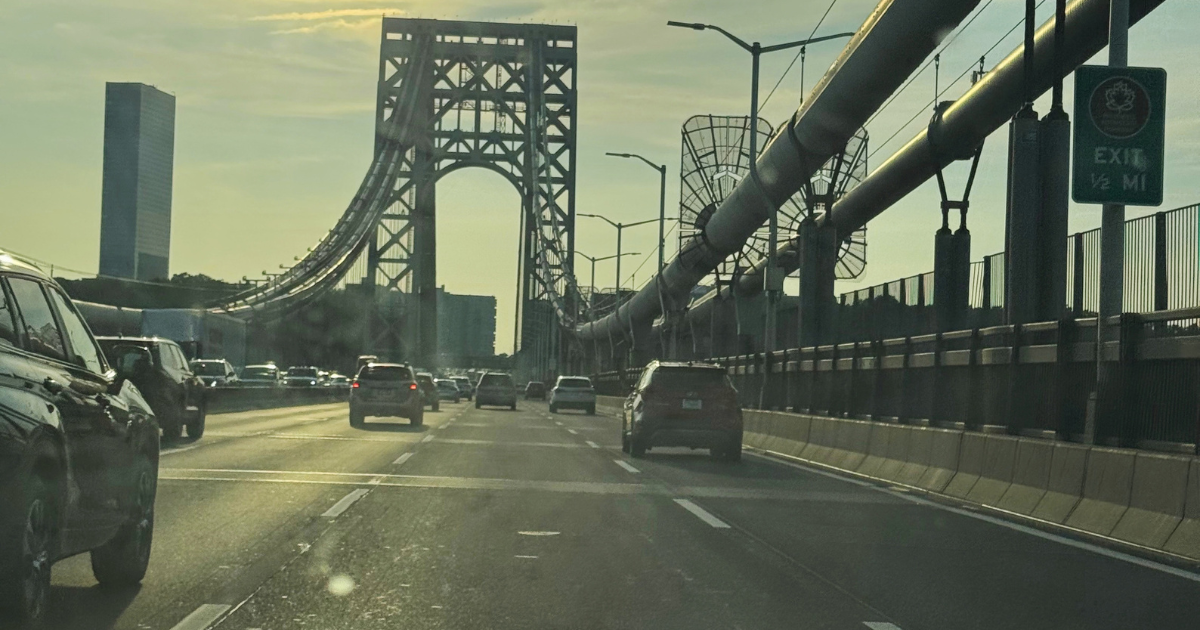
Fort Lee sits at the entrance to the George Washington Bridge, one of the busiest crossings between New Jersey and Manhattan.
For residents who drive to jobs in New York, bridge tolls are not an occasional travel expense. They are part of the regular cost of earning a living.
That burden has been part of the local conversation for years.
Fort Lee Mayor Mark Sokolich has repeatedly raised concerns about the financial pressure placed on commuters, particularly during the long dispute over New York City’s congestion pricing program.
Speaking publicly about the issue, Sokolich has argued that many Fort Lee residents work in Manhattan every day and already pay substantial costs simply to cross the Hudson. He has warned that adding more transportation charges on top of existing bridge tolls can place a significant burden on working- and middle-class residents.
A Long-Running Fight Over Commuting Costs
Fort Lee’s concerns have not been limited to the price paid by individual drivers.
The borough has also argued that transportation policies affecting Manhattan can have consequences on the New Jersey side of the bridge, including additional traffic, congestion and air pollution.
That history gives the new federal proposal particular relevance in Fort Lee.
The Lowering Commuting Costs Act would not eliminate George Washington Bridge tolls, and it would not resolve the broader dispute over congestion pricing.
Instead, it approaches the problem from another direction: allowing workers to deduct qualifying commuting expenses from their federal taxable income.
Tolls, Gas, Parking and Public Transit
The proposal is broader than bridge tolls alone.
Qualifying expenses could include gas, public transportation and parking, potentially making the measure relevant not only to drivers crossing the George Washington Bridge but also to New Jersey residents who commute by bus, train or other forms of transportation.
Rep. Jeff Van Drew has framed the proposal around a simple argument: if businesses can deduct expenses associated with doing business, workers should receive some recognition for the unavoidable cost of getting to and from their jobs.
For a commuter traveling from Fort Lee to Manhattan, that could mean that at least part of the real cost of the daily trip would finally be recognized in the federal tax system.
It Would Be Relief — Not Free Commuting
There is an important distinction.
A tax deduction would not eliminate tolls or give commuters an immediate discount when crossing the George Washington Bridge.
The benefit would generally appear later, when federal income taxes are calculated. The actual value of the deduction would also depend on a taxpayer’s income and tax situation.
Lower-income commuters with little taxable income could therefore receive less benefit than workers in higher tax brackets.
The Bill Is Only at the Beginning
The proposal is still in the early stages of the legislative process.
It has been introduced in the House of Representatives, but it has not yet passed the House or Senate and has not been signed into law.
Whether it ultimately advances remains to be seen.
But the proposal puts an issue familiar to New Jersey commuters into the national conversation: for many workers, commuting is not optional, and the cost of simply reaching a job can consume a meaningful part of a household budget.
For Fort Lee, where the George Washington Bridge is part of everyday life, that argument is especially easy to understand.
After years of local concern over tolls, congestion pricing and the growing cost of commuting into New York, a bipartisan proposal in Congress is now trying to address at least part of that burden through the federal tax system.
U.S. Congress / H.R. 10511; Rep. Laura Gillen; Quiver CongressRadar; reporting on the Lowering Commuting Costs Act and its proposed deductions for gas, public transit, parking and tolls.
By Aziza Smailovic